


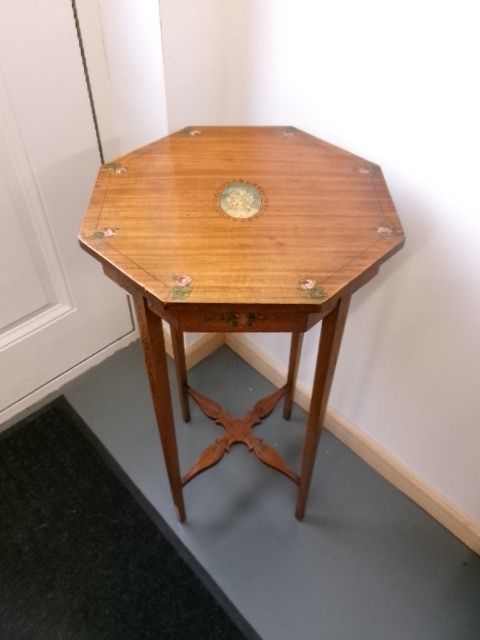


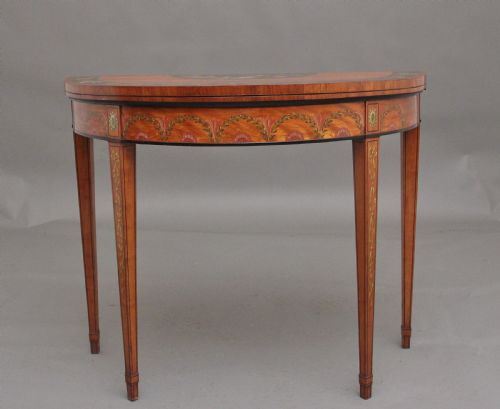
Hand Painted Satinwood Table
A hand painted satinwood table brings bright, classical ornament into a room through pale timbers and delicate brushwork.
Hand Painted Satinwood Table
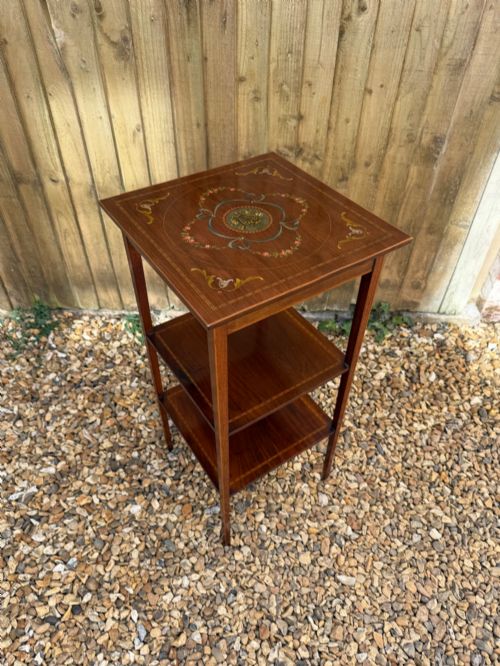
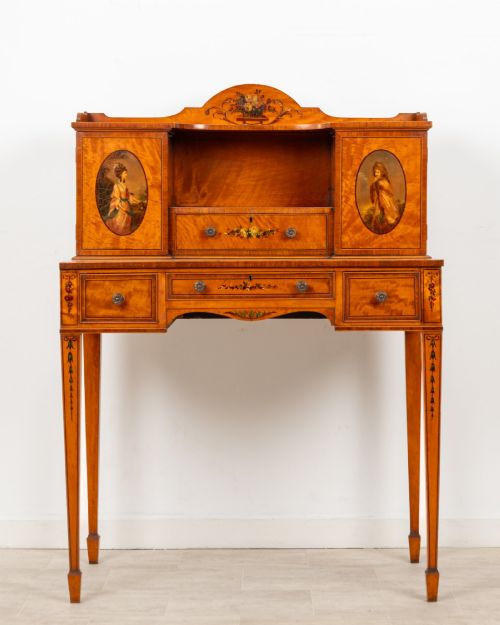
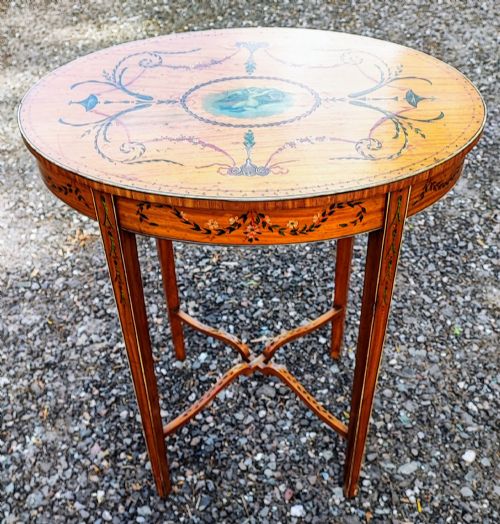
When searching for a hand painted satinwood table, buyers encounter a variety of forms designed for refined drawing rooms and boudoirs. Occasional tables, side tables, writing desks, and card tables dominate the selection, spanning from the Georgian and Victorian eras through to the Edwardian period.
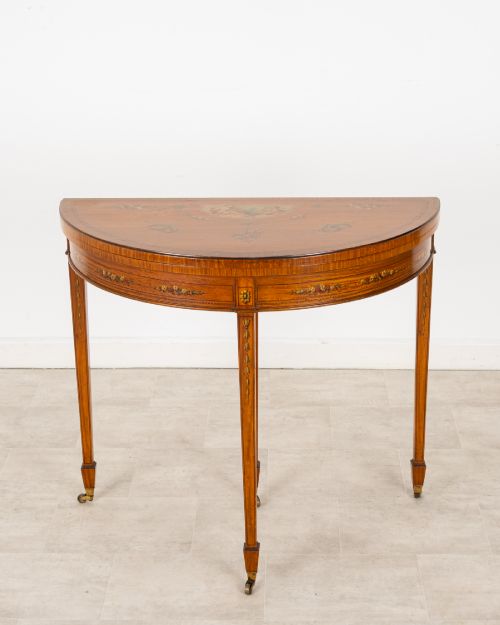
The most common examples on this page date from the Edwardian era and the late nineteenth century, often reflecting Sheraton Revival or neoclassical tastes. These lighter items range from small lamp tables and demi-lune console tables to fitted ladies writing desks with painted panels.
Older pieces from the eighteenth century appear alongside later interpretations, showing how cabinet makers utilised satinwood as a smooth ground for decorative floral motifs and classical scenes. Every piece combines functional furniture forms with detailed painted decoration on timber.
How they were made
Makers constructed these pieces using satinwood veneers or solid timbers, frequently combining them with mahogany, satin birch, and painted wood for structural stability. Brass fittings, leather inserts, and glass components appear alongside timber elements on desks and games tables.
Surface decoration relies on hand painting and applied pigments directly onto the satinwood ground, often framed by fine inlay work. Artisans executed classical motifs, floral garlands, and neoclassical scenes by hand, sealing the finished woodwork to protect the painted details.
The listings on this site span multiple eras, encompassing Georgian, Victorian, and Edwardian periods alongside specific revivals.
What varies in quality
The sophistication of the hand painting largely defines the distinction between standard and superior pieces. Finer examples display crisp, confident brushwork in neoclassical or floral subjects, whereas simpler items feature repetitive or heavier decorative applications.
Timber selection and secondary woods also contribute to overall distinction. Tables built with well-figured satinwood veneers, precise mahogany framing, and integrated brass hardware represent the higher tiers of craftsmanship.
The Hand Painted Satinwood Table Glossary
- Satinwood
- A durable, lustrous timber native to tropical regions, prized for its golden-yellow colour and natural sheen. It provides a smooth, pale surface ideal for fine cabinet making and detailed painting.
- Demi-lune
- A half-moon shape commonly utilised for console, card, and pier tables designed to sit flush against a wall. This form allows decorative tables to occupy minimal floor space.
- Pembroke table
- A small, versatile table featuring two hinged drop leaves on opposing sides. These pieces often include a single drawer and slender legs supported by stretchers.
- Neoclassical
- A style drawing inspiration from classical antiquity, characterised by symmetry, restraint, and motifs such as urns, swags, and medallions. It heavily influences the painted scenes found on these tables.
- Sheraton Revival
- A late nineteenth and early twentieth century design movement that reinterprets the elegant, neoclassical furniture styles of eighteenth-century designer Thomas Sheraton. It frequently employs satinwood and hand-painted floral decoration.
Hand Painted Satinwood Table: Frequently Asked Questions
What is a satinwood table?
A satinwood table is a piece of furniture constructed from pale, glossy tropical timber, frequently ornamented with hand-painted floral or classical motifs. These tables range from small occasional stands to writing desks and card tables.
Cabinet makers favoured satinwood for its smooth, reflective surface, which acts as a bright canvas for decorative paintwork and delicate inlay techniques.
How do I date a painted table?
Dating relies on examining the construction methods, secondary timbers, and stylistic markers such as Sheraton Revival or neoclassical influences. Edwardian and late nineteenth-century pieces often feature lighter frames and specific painted palettes.
Earlier Georgian and eighteenth-century examples display heavier joinery, hand-cut components, and different patination on the timber surfaces compared to later revival items.
Where were these tables used?
These decorative tables served polite domestic functions in drawing rooms, boudoirs, and reception spaces during the eighteenth, nineteenth, and early twentieth centuries. Ladies used specialised writing desks and workboxes for correspondence and needlework.
Side tables, lamp stands, and demi-lune console tables functioned as display surfaces for ornaments or served guests during card games and tea.
How do I care for painted satinwood?
Care requires keeping painted satinwood tables away from direct sunlight and excessive moisture to protect the timber and delicate pigments. Regular dusting with a soft, dry cloth preserves the polished finish.
Avoid using harsh chemical polishes or modern cleaning sprays, as these can damage the historic painted decoration and the underlying varnish on the wood.