


Hand Painted Pitcher
A hand painted pitcher brings domestic history to life through colourful ceramic forms.
Hand Painted Pitcher
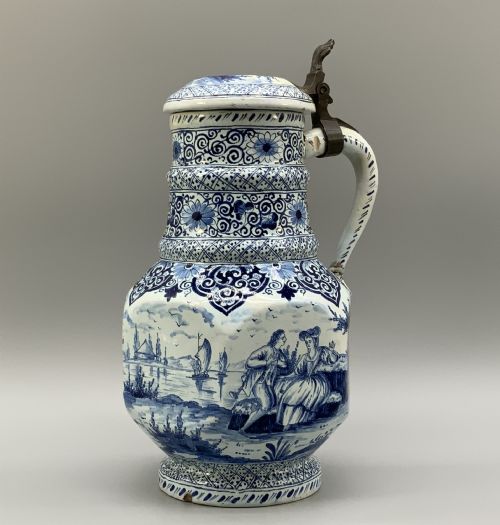
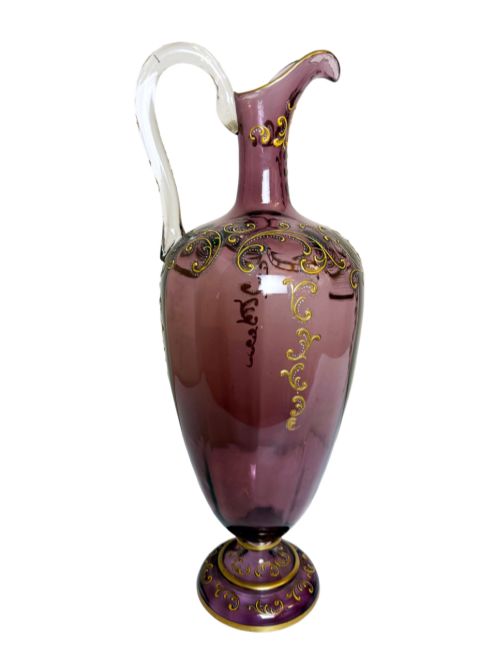
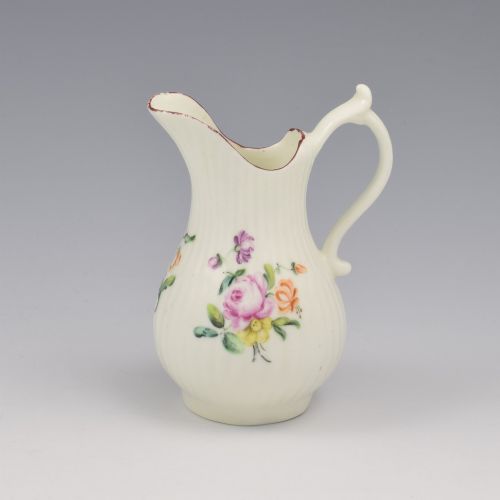
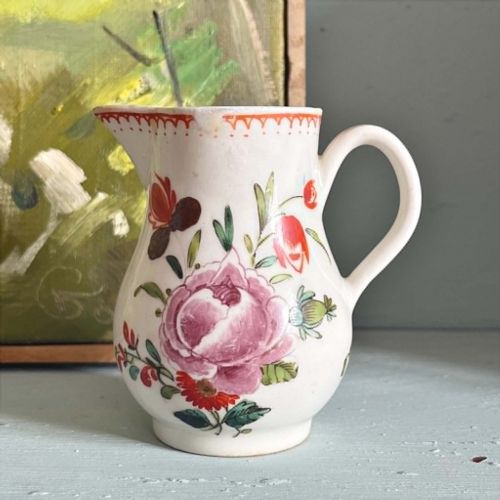
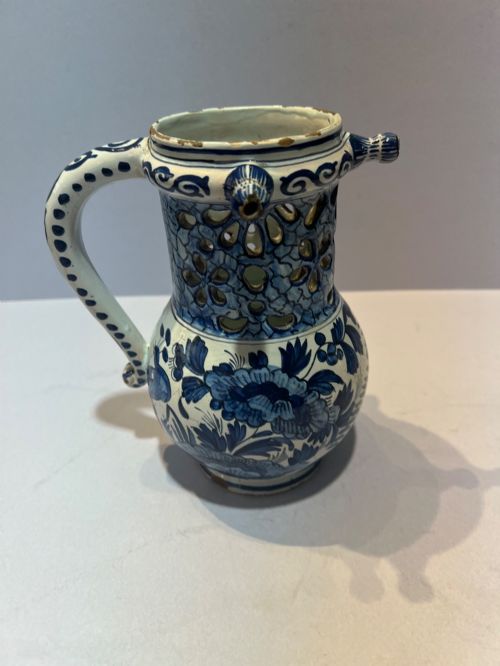
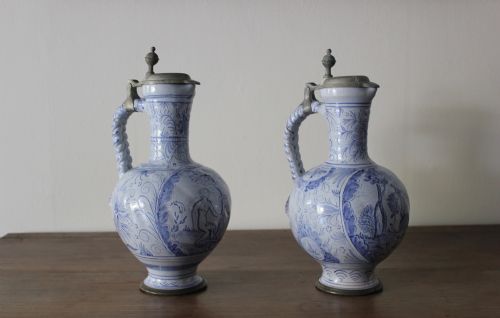
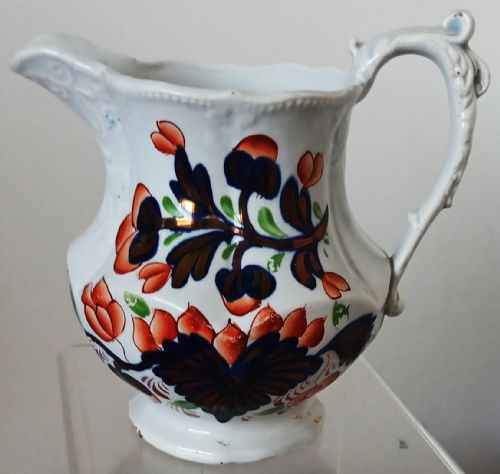
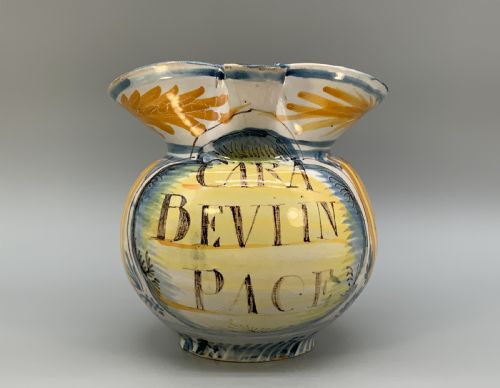
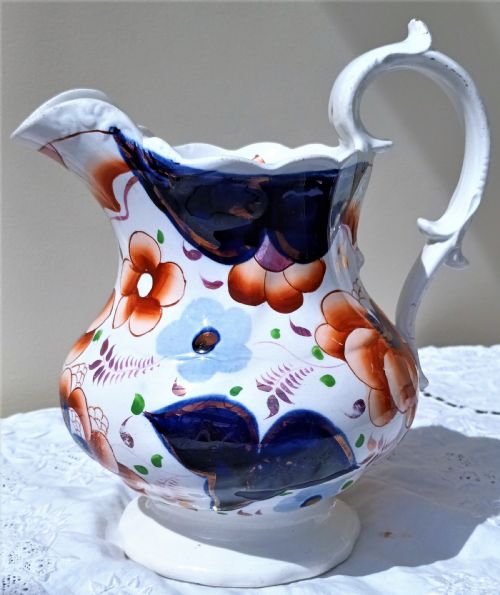
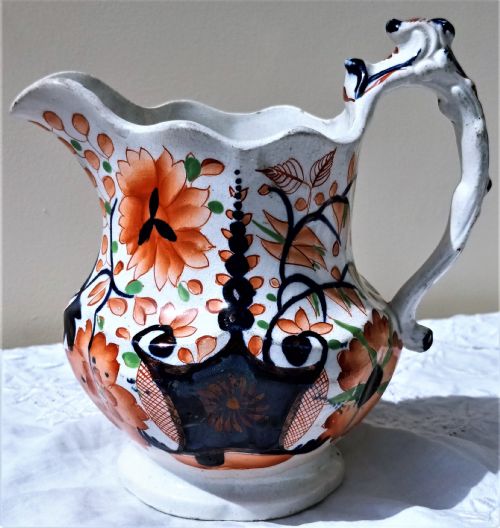
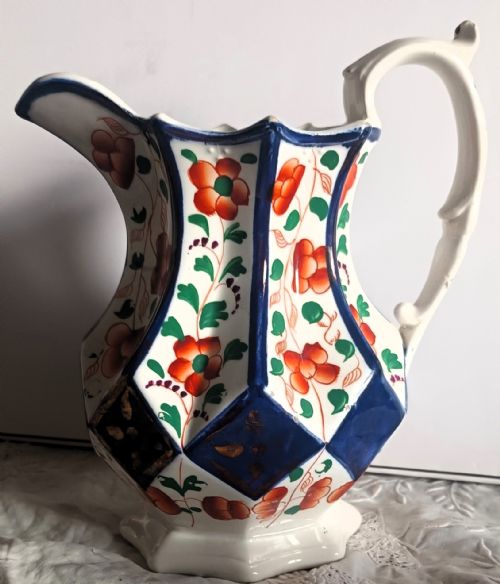
A hand painted pitcher encompasses a varied group of ceramic, glass and porcelain vessels designed for pouring liquids, spanning periods from the eighteenth century to the Edwardian era. The selection draws together forms ranging from small porcelain cream jugs and sparrowbeak creamers to large earthenware toby jugs, tin-glazed Dutch delftware, and robust ironstone jugs bearing traditional Gaudy Welsh patterns.
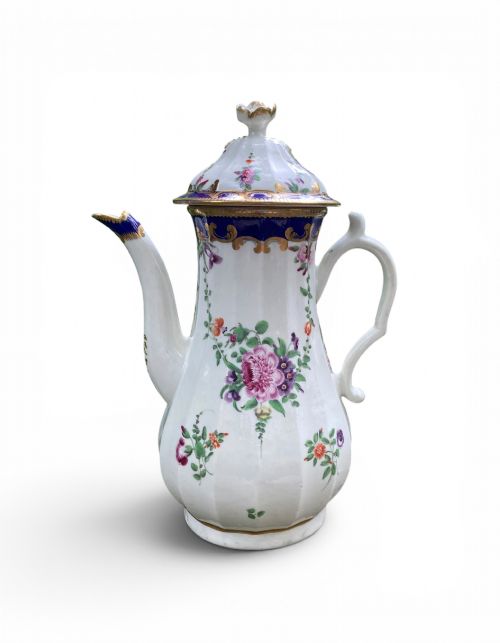
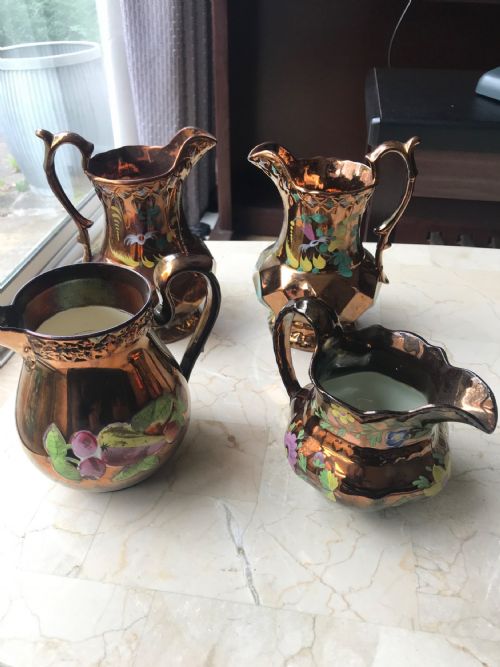
Buyers will encounter multiple regional traditions, including eighteenth-century English soft-paste porcelain from factories like Derby, Bow and Worcester, alongside continental tin-glazed pottery and nineteenth-century Staffordshire copper lustre wares. Forms shift from delicate fluted baluster cream jugs intended for tea service to heavy earthenware pharmacy jugs and decorative ewers designed for display.
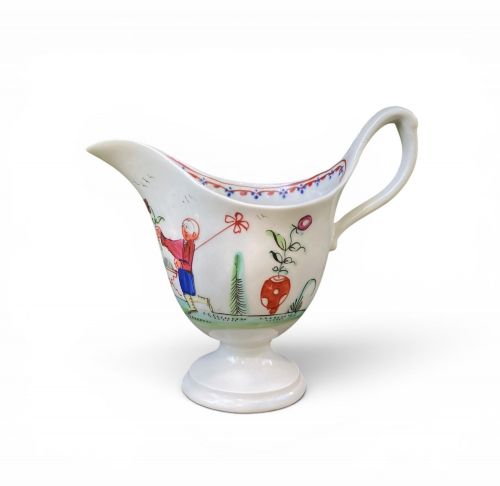
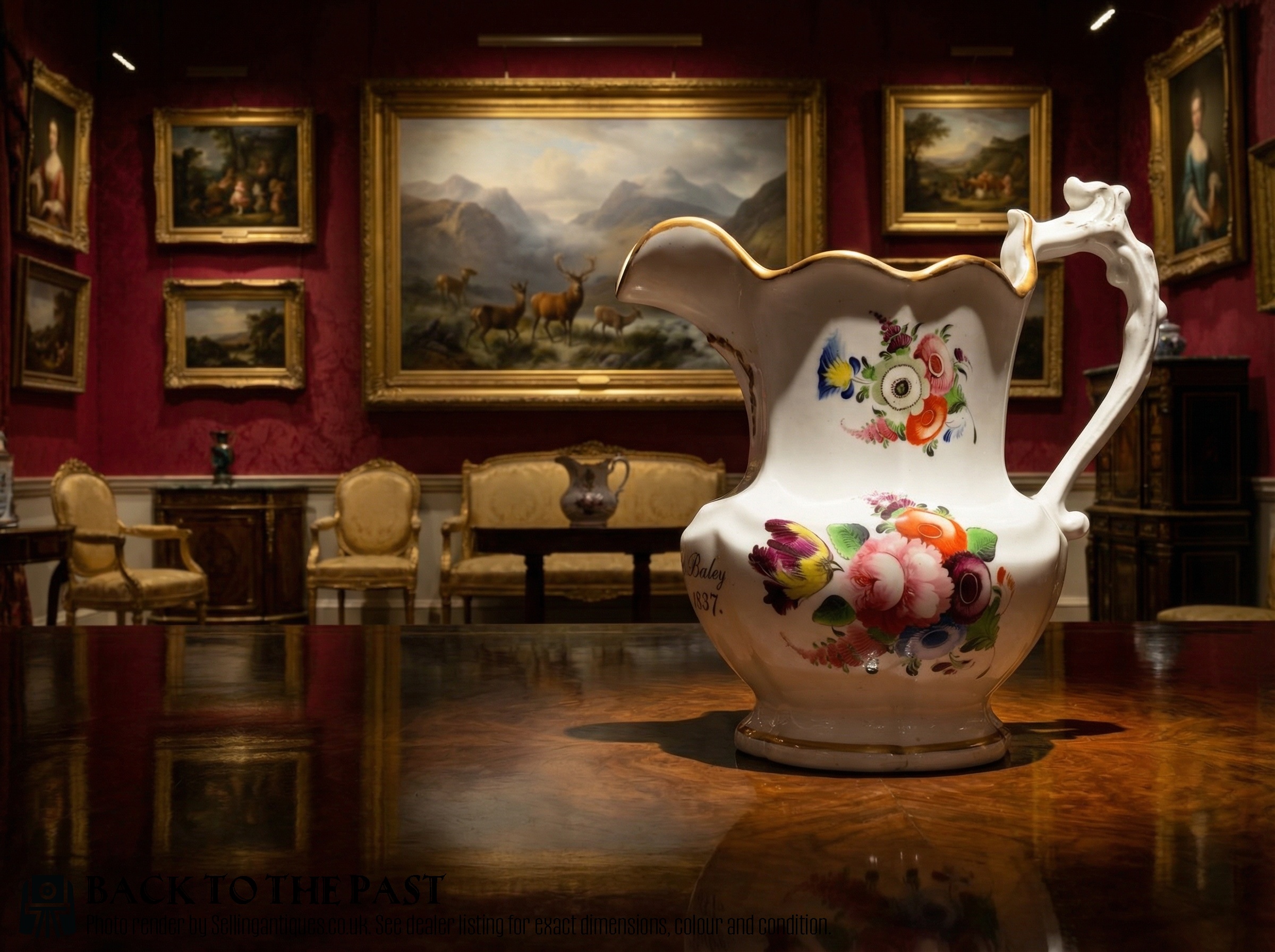
The decorative schemes applied to these vessels display considerable breadth, moving from hand-painted polychrome floral sprays and oriental scenes to gilt applique on blown glass and commemorative portraits of figures such as Lord Nelson. Whether examining a Georgian pearlware jug with cabbage leaf moulding or a Victorian enamel painted wine jug, each object records distinct period aesthetics and domestic uses.
How they were made
Makers shaped these vessels using earthenware, ironstone, pearlware, and porcelain, frequently finishing them with tin glaze or transparent lead glazes over hand-painted or transfer-printed motifs. Earthenware and porcelain bodies were formed either by throwing on the wheel or by moulding in sections, as seen in cabbage leaf moulded pearlware and fluted baluster profiles.
Decoration relied on direct brushwork utilising polychrome enamel colours, manganese, cobalt blue, and gold leaf gilt applique applied directly to the ceramic body or over the glaze. Tin-glazed pieces such as Dutch delftware required an opaque white enamel coating that accepted pigment before a final firing fused the design to the surface.
Specialised techniques defined specific bodies, including the application of copper lustre metallic finishes on Staffordshire pottery and the intricate hand-painting found on bone china cream jugs from factories operating during the Georgian and Victorian periods.
What varies in quality
Quality in a hand painted pitcher rests upon the crispness of the moulding and the surety of the brushwork applied across the surface. Pieces displaying fluid, confident hand-painted floral or figurerative details stand apart from stiffer, more repetitive decoration.
The refinement of the ceramic body itself dictates much of the distinction, separating thin, translucent eighteenth-century porcelain creamers from heavier nineteenth-century ironstone utility vessels. Preservation of delicate overglaze enamel colours, gold leaf gilt applique, and tin glazes without excessive rubbing preserves the visual intent of the original decorator.
Derby Porcelain·Bow Porcelain·Worcester Porcelain·New Hall Porcelain·H and R Daniel·Royal Worcester·Chamberlain Worcester·Meissen
The Hand Painted Pitcher Glossary
- Tin Glaze
- A lead glaze made opaque by the addition of tin oxide, providing a white surface for painting used on delftware and faience. This technique originated in the Middle East before spreading through European potteries.
- Gaudy Welsh
- A style of brightly coloured pottery decoration characterised by cobalt blue, copper lustre, and iron-red geometric or floral patterns. It was produced extensively in nineteenth-century Staffordshire and Welsh potteries.
- Pearlware
- A refined earthenware developed by Josiah Wedgwood in the late eighteenth century featuring a delicate bluish glaze that pooled in recesses to mimic Chinese porcelain. It bridges creamware and later white earthenware bodies.
- Baluster
- A vertical architectural form with a swelling lower portion that tapers toward the top, frequently seen in the profile of eighteenth-century jugs and creamers. This silhouette provides stability and a comfortable pouring balance.
- Sparrowbeak
- A small eighteenth-century cream jug featuring a distinctive pinched spout resembling a bird's beak. These diminutive pieces were essential accessories for Georgian tea tables.
Hand Painted Pitcher: Frequently Asked Questions
What is a hand painted pitcher used for?
These vessels originally served practical domestic roles at the table, functioning as containers for milk, cream, water, wine, or tea.
Over time, many larger examples transitioned into purely decorative objects, displayed on sideboards or used as umbrella stands and vases.
How do I distinguish earthenware from porcelain?
Earthenware is an opaque, porous ceramic body that requires a glaze to hold liquids and typically feels heavier and thicker in the hand.
Porcelain is a vitrified, non-porous material that often displays translucency when held to a strong light and produces a clear ring when tapped.
Can I use these antique jugs daily?
While structurally sound, antique vessels featuring overglaze enamel painting, gold leaf gilt applique, or soft glazes require careful handling to prevent surface wear.
Hand washing in lukewarm water without harsh detergents is necessary to preserve the historic hand-painted decoration.
How can I tell the period?
Dating relies on identifying the ceramic body, glaze characteristics, factory marks, and stylistic motifs associated with specific decorative movements.
Eighteenth-century pieces often show softer bodies and hand-potted irregularities, whereas nineteenth-century items frequently utilise harder ironstone or distinct transfer-printed and enamelled borders.