


Early Victorian Porcelain
Early victorian porcelain pieces are nineteenth century domestic objects in ceramic and bone china that bring hand-painted colour and period weight to a room.
Early Victorian Porcelain
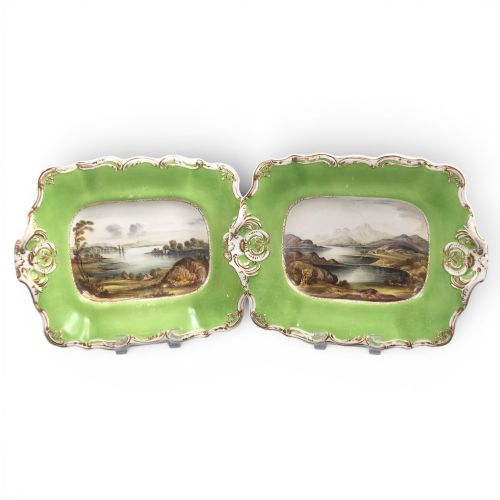
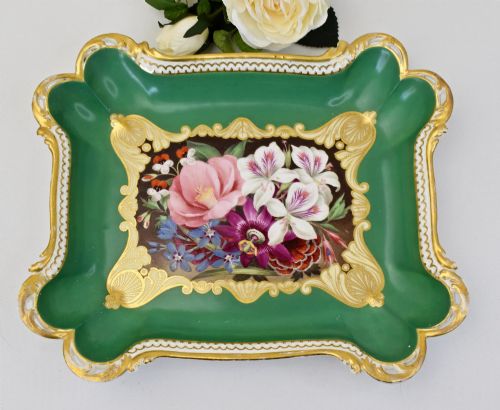
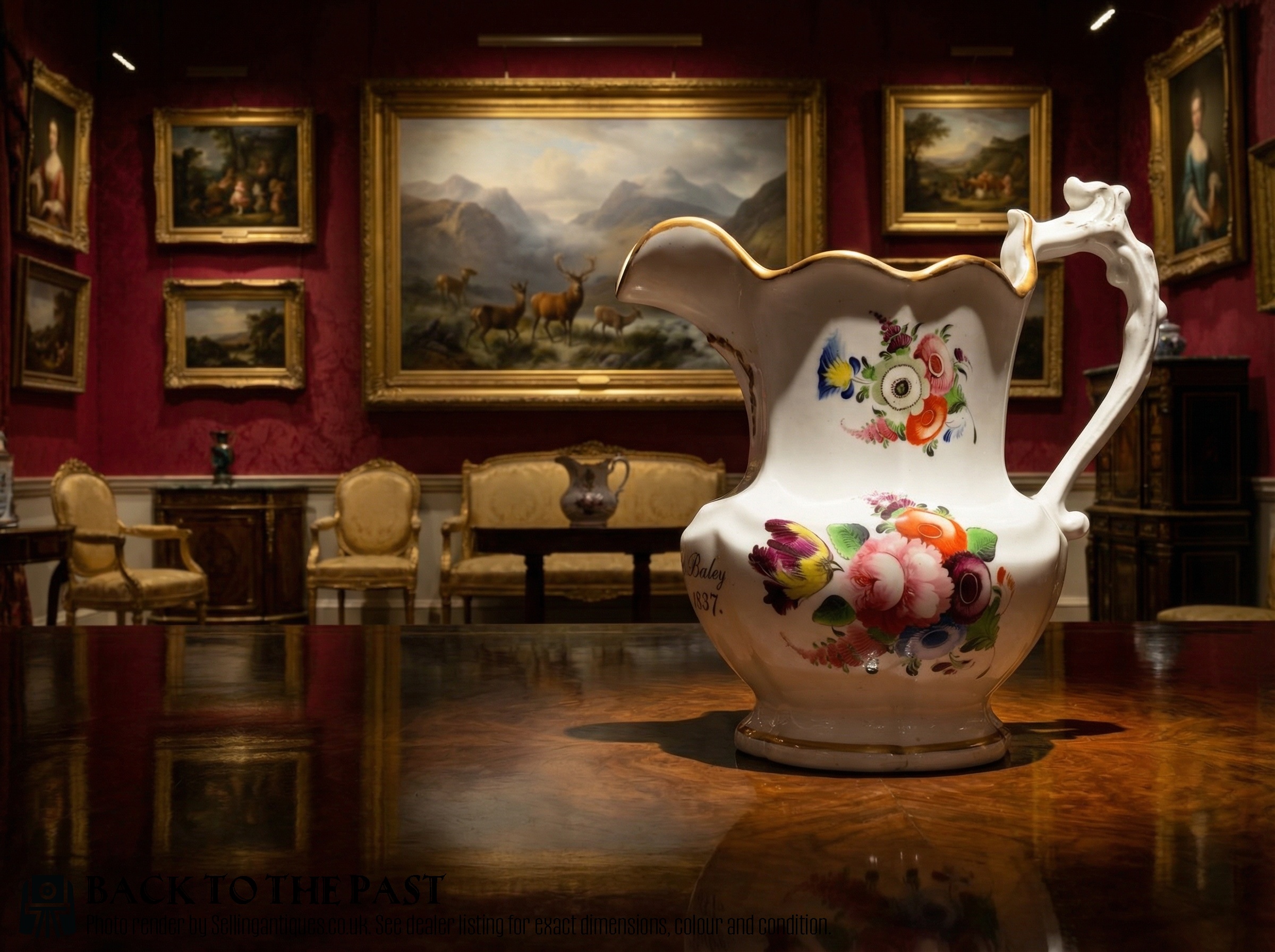
When you search for early victorian porcelain, you are looking at nineteenth century ceramics made for domestic use, display and desk service. The pieces range from serving dishes and mantel clocks to inkstands, ewers and commemorative jugs.
You are most likely to meet tableware, decorative trays and figures originating from English factories of the 1830s and 1840s. The forms span Rococo Revival curves, Chinoiserie motifs and Imari patterns.
The selection includes practical items fitted with porcelain knobs, alongside miniature iron sets and figural candlesticks. Each piece reflects the decorative tastes of the early nineteenth century domestic interior.
How they were made
Potters shaped these objects using porcelain, bone china and ironstone, sometimes building robust bodies for daily service or finer pastes for display items. Glaze provided the smooth foundational surface before decoration took place.
Craftsmen applied enamel colours by hand and added gold leaf or gilt details to highlight moulded handles, rims and figural elements. Cobalt blue grounds and intricate patterns required steady brushwork and careful kiln firing.
Listings feature 19th Century, Victorian, Georgian and Regency periods alongside materials including porcelain, gold leaf, enamel, bone china, ironstone, glaze, gilt and brass.
What varies in quality
Quality rests on the precision of the hand-painting, the crispness of the moulding and the preservation of the gilt or enamel work. Finer pieces show careful control over cobalt blue grounds and detailed figural modelling.
The weight of the porcelain body and the complexity of shapes, such as grotesque handles or figural bases, distinguish standard production from superior examples. Better preservation of the original gold leaf and painted scenes elevates a piece.
Copeland and Garrett·Doe and Rogers·Mintons·Mason·Royal Crown Derby
The Early Victorian Porcelain Glossary
- Bone china
- A type of porcelain containing bone ash, producing a durable ceramic body with a slightly translucent appearance. It allowed early nineteenth century makers to form thinner, more refined vessels.
- Ironstone
- A heavy, durable earthenware patent developed in Staffordshire, often decorated with Imari or Chinoiserie patterns. It offered a practical alternative to fine porcelain for utilitarian wares.
- Imari
- A decorative style featuring rich cobalt blue and iron red, often enhanced with gilt. This aesthetic was widely adopted by English potteries during the period.
- Gilt
- A thin layer of gold applied to the surface of ceramics to highlight handles, rims and moulded details. Its preservation indicates how carefully a piece has been handled over time.
- Chinoiserie
- European artistic interpretation of Chinese and East Asian motifs, popular on nineteenth century ceramics. It frequently appeared on ewers, plates and decorative vessels.
Early Victorian Porcelain: Frequently Asked Questions
How do I date early victorian porcelain?
Dating relies on stylistic clues, factory marks, and recorded production periods from the 1830s and 1840s. Forms like Rococo Revival curves and specific pattern numbers help narrow the decade.
Material composition, such as ironstone versus bone china, also points to the manufacturing practices of the era.
What was a dessert cream tureen used for?
A dessert cream tureen served liquid cream or custard at the formal dining table during the nineteenth century. These small vessels often came with a matching stand to protect the table linens.
Displaying them on sideboards was common when not in active use during multicourse meals.
Can I use antique porcelain daily?
While these pieces were built for functional use, age and delicate enamel or gilt decoration make gentle handling wise. Hand washing preserves the painted scenes and gold leaf far better than mechanical cleaning.
Displaying them in cabinets or on desks protects them from accidental chips and surface wear.
What is the difference between porcelain and ironstone?
Porcelain is a finer, often more translucent ceramic fired at high temperatures for decorative and fine dining wares. Ironstone is a dense, robust earthenware designed to withstand heavier everyday service.
Both materials were decorated with enamels and gilt during the early nineteenth century.