


Hand Painted Pearlware
Hand painted pearlware brings the vibrant domestic ceramics of the Georgian and nineteenth-century domestic interior straight to your table.
Hand Painted Pearlware
When you search for hand painted pearlware, you find earthenware ceramics spanning the late eighteenth and early nineteenth centuries. These pieces cover functional domestic forms including jugs, teapots, plates, sauce tureens, mugs, and desk accessories like pounce pots.
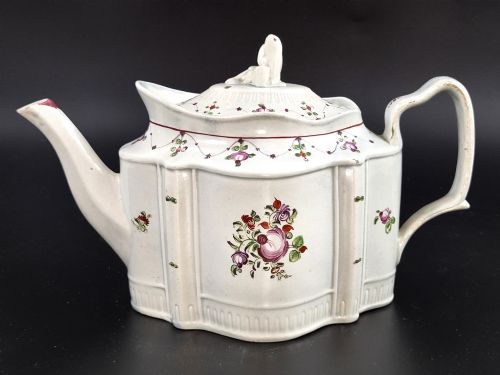
The objects on this page showcase forms such as commode-shaped teapots, frog mugs, loving cups, and octagonal teapots. They represent English and Welsh workshops from Georgian and Regency eras, extending into the nineteenth century.
Makers and decorators utilised cobalt glaze, enamel, and gold leaf alongside pearlware ceramic bodies. The designs incorporate botanical studies, peafowl motifs, Chinese pagoda scenes, and cabbage leaf moulding.
Materials and methods
Potters shaped these vessels from earthenware and pearlware ceramic bodies, often employing cabbage leaf moulding for textured relief on jugs and pitchers. Workshops applied pearlware glaze to achieve a characteristic pale bluish tint that distinguished the ware from earlier creamware.
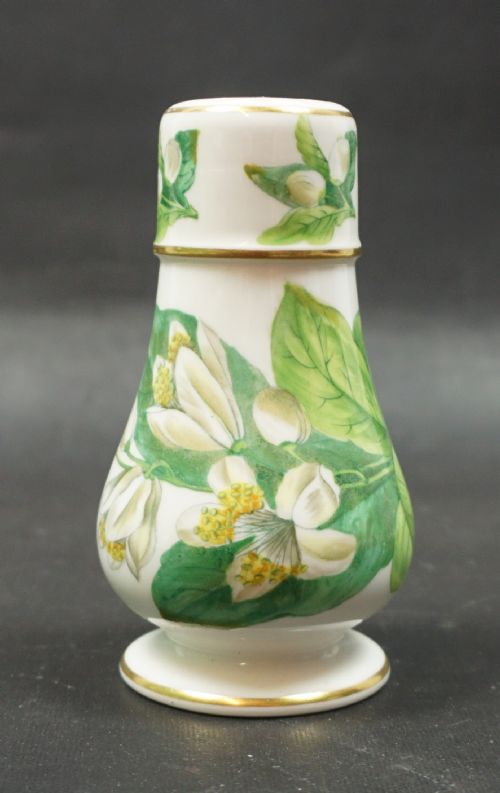
Decorators applied pigments by hand using enamel, gold leaf, and cobalt glaze. Motifs ranged from botanical illustrations of lilies of the valley to Chinese pagoda scenes and peafowl designs.
Listings feature eighteenth and nineteenth century pearlware items, spanning Georgian and Regency styles across earthenware bodies, glazes, and enamels.
Distinctions in quality
Quality in hand painted pearlware rests upon the crispness of the moulded relief, such as cabbage leaf details, and the precision of the brushwork. Hand-painted botanical subjects and figurative scenes like bull baiting demand superior draughtsmanship compared to simpler geometric borders.
The clarity and evenness of the pearlware glaze and cobalt glaze distinguish finer productions. Superior pieces maintain vibrant enamel colours and well-preserved gold leaf without heavy rubbing or discoloration.
Thomas Harley
The Hand Painted Pearlware Glossary
- Pearlware
- A refined earthenware developed by Josiah Wedgwood and others, featuring a slightly bluish glaze that pooled in crevices. This glaze neutralised the yellowish tone of standard creamware to imitate Chinese porcelain.
- Pounce pot
- A small container with a perforated lid used for sprinkling sand over wet ink to blot it dry. These desk accessories appear in ceramic forms during the Georgian period.
- Frog mug
- A drinking vessel featuring a small ceramic frog modelled inside the base, designed to surprise the drinker as the liquid lowered. They often commemorated individuals or specific dates.
- Feather edge
- A decorative moulded rim resembling bird feathers, typically painted in blue or green on plates and platters. This style was widely produced in Staffordshire potteries.
- Widow finial
- A small knob on a teapot lid, shaped like a seated mourning figure. They are characteristic of English earthenware teapots from the early nineteenth century.
Hand Painted Pearlware: Frequently Asked Questions
What is pearlware?
Pearlware is a refined earthenware body developed in late eighteenth-century Staffordshire. It uses a thin glaze containing a small amount of cobalt oxide, which gives the surface a pale, bluish-grey tint.
Potters created this ceramic to bridge the gap between heavy creamware and expensive Chinese export porcelain. The blue tint is especially noticeable where the glaze pools around handles and moulded details.
How do I date pearlware?
Dating relies on a combination of ceramic body characteristics, glaze colour, form, and painted decoration. Pieces from around seventeen-ninety often feature crisp moulded details like cabbage leaves, while nineteenth-century examples may incorporate bright enamels and named inscriptions.
Examining the base, potting weight, and cobalt application helps narrow the decade of production. Stylistic shifts from Georgian neoclassical to Regency motifs also provide clear chronological markers.
What is a frog mug?
A frog mug is a drinking vessel that contains a small, ceramic frog moulded inside the bottom. As the drinker finishes their beverage, the hidden amphibian appears as a playful surprise.
These mugs were popular in nineteenth-century taverns and often included personalized names, dates, or commemorative verses. They showcase the lighter, more humorous side of ceramic production during the period.
Where was pearlware made?
Pearlware was primarily produced in the Staffordshire potteries of England, though Welsh workshops also manufactured notable examples. Factories across these regions utilised local clays and specialised in hand-painted and transfer-printed decoration.
Staffordshire potters exported these wares extensively, supplying both domestic households and international markets with affordable, decorative ceramics.