


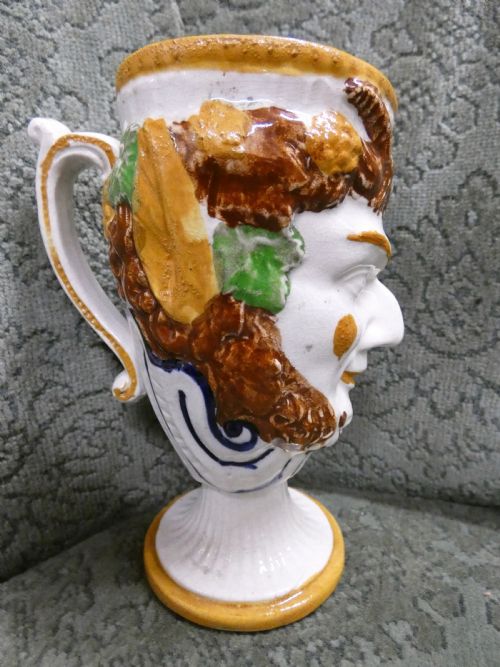


Polychrome Ceramic Mug
When you search for a polychrome ceramic mug, you are looking at vibrant vessels shaped in earthenware, porcelain, and soft-paste porcelain across the eighteenth and nineteenth centuries.
Polychrome Ceramic Mug
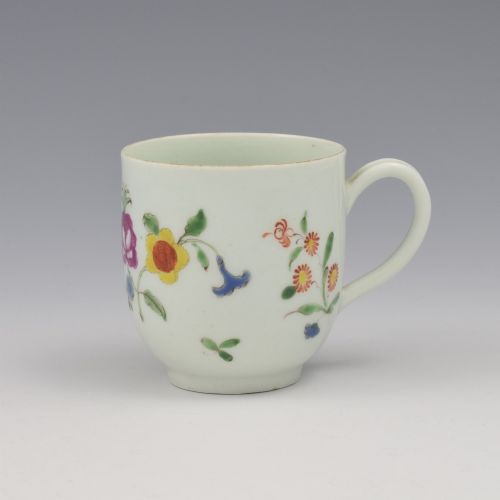
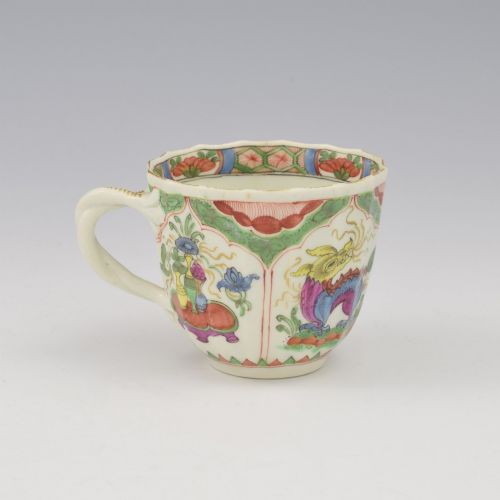
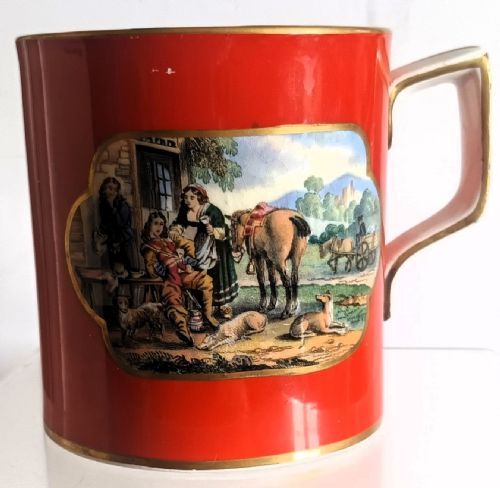
A polychrome ceramic mug encompasses drinking vessels ranging from Georgian creamware tankards and Liverpool porcelain coffee cups to large nineteenth-century frog mugs and German faience steins. The selection here leans heavily toward eighteenth-century Chinese export porcelain alongside English earthenware and soft-paste porcelain productions.
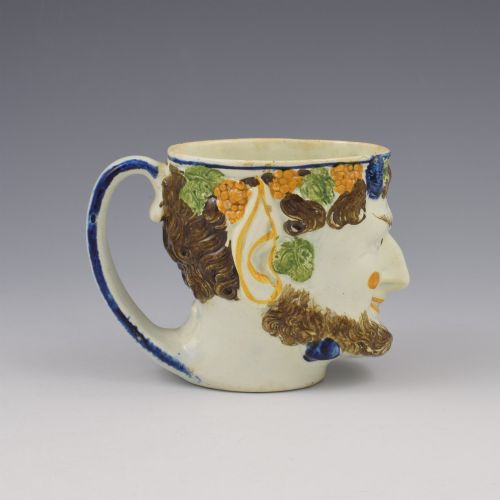
Forms vary from standard cylindrical mugs and two-handled loving cups to heavily modelled Bacchus satyr tankards and specialised Winchester measure vessels. Makers and decorators utilised diverse traditions, moving from Chinese Famille Rose and Mandarin Chinoiserie to Staffordshire pearlware and German historicism.
How they were made
Potters shaped these pieces using earthenware, creamware, pearlware, and hard or soft-paste porcelain, often finishing surfaces with a glossy glaze. Decoration relied on handpainted enamel pigments applied directly or over glazes, sometimes enhanced with gold leaf details.
The firing process required careful temperature control in kilns to fix the vibrant multi-coloured enamels onto the ceramic body. Pieces like Chinese export tankards and Staffordshire frog mugs show distinct throwing and moulding techniques characteristic of their respective origins.
Listings span the eighteenth and nineteenth centuries, featuring materials from soft-paste porcelain and pearlware to German faience.
What varies in quality
Quality rests in the crispness of the moulded form, such as the sharp relief of a Bacchus satyr face or the clean pull of an ear-shaped handle. Painted details dictate the upper tiers, where precise brushwork in multi-coloured enamels shows individual artistry rather than hurried factory output.
The choice of body material also elevates certain pieces, distinguishing translucent soft-paste porcelain from heavier utility earthenware. Superior examples maintain stability in their glazes, displaying rich colour saturation without heavy firing blemishes.
Richard Chaffers·Dr Wall·Duesbury and Kean
The Polychrome Ceramic Mug Glossary
- Polychrome
- Decorated in multiple colours. This multi-coloured enamel painting defines the palette of these mugs.
- Pearlware
- A refined earthenware with a bluish-tinted glaze. Developed in the eighteenth century, it imitated the appearance of porcelain.
- Frog mug
- A drinking mug featuring a small ceramic frog modelled inside the base. The amphibian emerges as the drinker finishes the beverage.
- Creamware
- A fine cream-coloured earthenware perfected in Yorkshire. It replaced heavier salt-glazed stonewares on many tables.
- Chinoiserie
- European artistic styles reflecting Chinese motifs. Painters applied these imaginative scenes to porcelain and pottery alike.
Polychrome Ceramic Mug: Frequently Asked Questions
What is a frog mug?
A frog mug is a drinking vessel containing a small ceramic frog modelled inside near the bottom. As the drinker consumes the beverage, the amphibian gradually appears.
These novelty mugs appeared frequently in nineteenth-century English earthenware, often commemorating specific names, dates, or drinking societies.
How do I date a porcelain mug?
Dating relies on examining the body material, glaze characteristics, and painting style. Soft-paste porcelain and specific paste formulas point toward eighteenth-century production.
Factory patterns, such as early Worcester or Chinese export Famille Rose, provide further chronological markers when compared against documented pieces.
What is Chinese export porcelain?
Chinese export porcelain refers to ceramics made in China specifically for the European market. These pieces combined traditional Eastern manufacturing with shapes and designs requested by Western buyers.
Mugs and tankards from the Qianlong period frequently featured elaborate Famille Rose or Mandarin enamel palettes tailored to European tastes.
How should I clean my ceramic mug?
These antique vessels require careful hand washing with mild soap and warm water. Avoid soaking pieces with old repairs or exposed earthenware bodies.
Enamel decorations and gold leaf details can wear down over time, so abrasive sponges and modern dishwashers must be avoided entirely.