




Hand Painted Imari Vase Pair
These hand painted imari vase pair items bring vibrant iron-red and cobalt blue palettes into a room, offering striking focal points for a mantel or side table.
Hand Painted Imari Vase Pair
A hand painted imari vase pair consists of matching ceramic vessels created in distinct Japanese styles across multiple centuries. Buyers encounter examples ranging from earlier export pieces to later creations from the Meiji period.
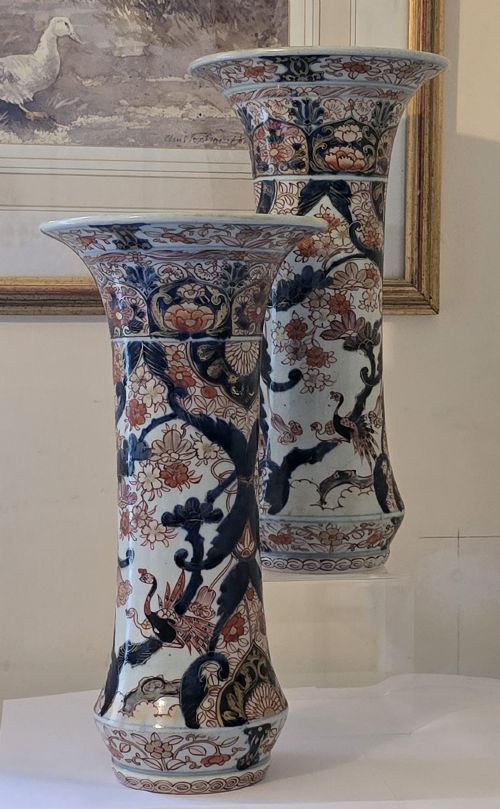
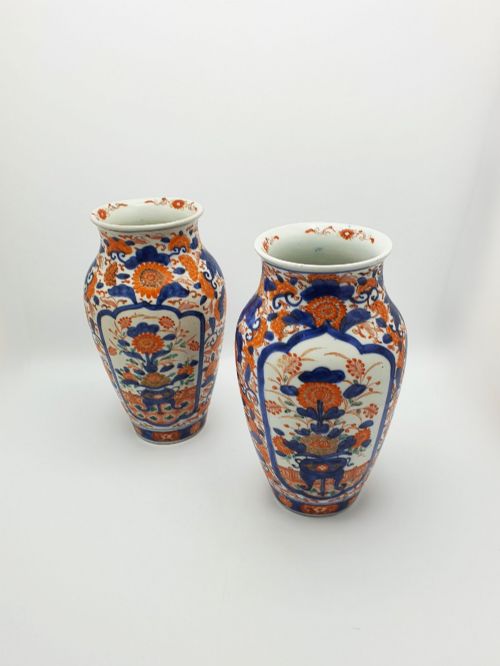
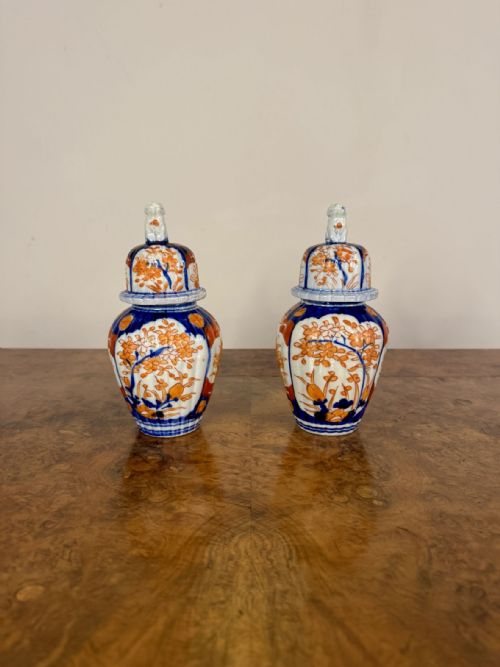
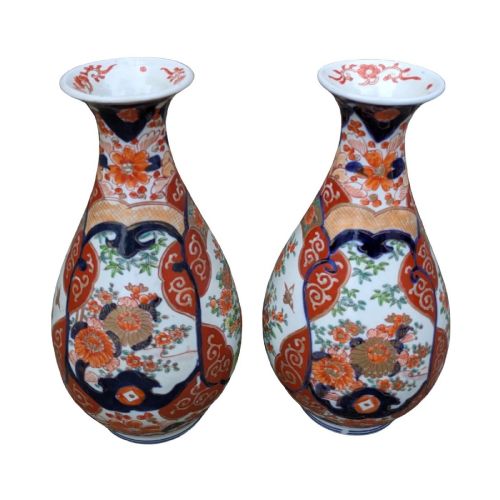
The forms span several classic silhouettes including trumpet shapes, double gourds, bottle shapes, baluster profiles, and lidded containers. Certain items appear adapted as table lamps while retaining their decorative ceramic bodies.
Origins trace primarily to Japanese workshops influenced by Edo and Meiji aesthetics, utilising traditional ceramic techniques. These pairs deliver symmetrical impact for interior display through repeated motifs and rich coloration.
Materials and Technique
Potters shaped porcelain and ceramic bodies before applying cobalt blue underglaze and iron-red enamel overglazes. Artisans integrated details using gold leaf and gilt highlights to enrich the painted panels.
Firing techniques fixed the complex pigments onto the porcelain surfaces, often accompanied by brass or fabric elements in secondary components such as lamp mountings.
Hand Painted Imari Vase Pair Retail Price Guide 2026
Typical asking prices for hand painted imari vase pair among the pieces listed under this phrase on Sellingantiques today, from the lower quarter to the upper quarter. They describe what is for sale here now, not the wider market.
Phoenix birds perch across centuries of glaze, watching over living rooms with unwavering decorative commitment.
Quality Variations
Excellence in these objects rests upon the precision of the hand-painted brushwork within the floral and phoenix panels. Superior pairs demonstrate tighter control over the iron-red and cobalt blue pigments.
The clarity of the glaze and the crispness of the porcelain body differentiate standard production from finer workshop outputs. Balanced proportions across both vessels also determine the strength of a pairing.
Fukagawa
The Hand Painted Imari Vase Pair Glossary
- Imari
- A style of Japanese porcelain featuring a distinct palette of cobalt blue and iron-red, often accented with gold leaf. The name derives from the port from which these goods were shipped to Europe.
- Meiji Period
- The era in Japanese history spanning from 1868 to 1912, characterised by opening trade and significant export production. Pieces from this time often exhibit detailed floral and animal motifs.
- Edo Period
- The period lasting from 1603 to 1868 in Japan, noted for foundational ceramic traditions. Items attributed here represent earlier periods of manufacture.
- Baluster
- A vase shape featuring a rounded body that tapers toward the base and swells near the lower centre. This traditional silhouette provides a stable and visually pleasing proportion.
- Double Gourde
- A vessel form fashioned with two stacked bulbous sections resembling a traditional squash. This shape requires advanced throwing skill to maintain balance between the upper and lower chambers.
Hand Painted Imari Vase Pair: Frequently Asked Questions
How do I display a hand painted imari vase pair?
Position the two vessels symmetrically on a sideboard, mantelpiece, or console table to let their matching patterns create a balanced focal point in the room.
Keep them away from direct foot traffic where they might be knocked, as ceramic bodies require stable placement to remain secure.
How do I tell Meiji period pieces apart?
Meiji period items typically date from the late nineteenth century and often exhibit vibrant colour applications alongside detailed export styling.
Earlier pieces from preceding centuries generally display different potting characteristics and distinct handling of the cobalt pigments.
Can these vases be used as lamps?
Some pieces arrive adapted with electrical fittings while maintaining their original ceramic bodies and painted decoration.
Such conversions allow the vessels to function as practical lighting while preserving the visual appeal of the antique porcelain.