



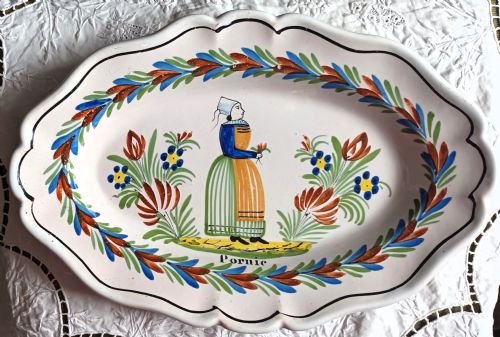
Hand Painted Earthenware Plate
These hand painted earthenware plate examples bring centuries of tin glaze, creamware and cobalt pigment directly to the table.
Hand Painted Earthenware Plate
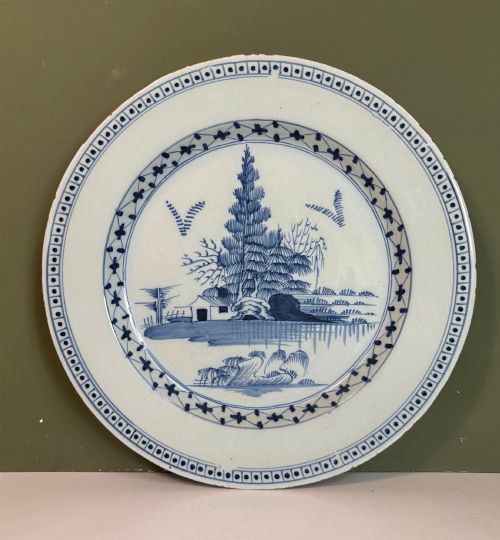
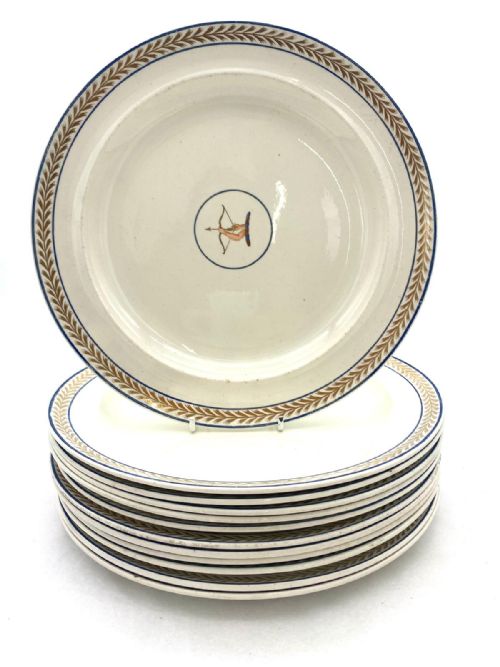
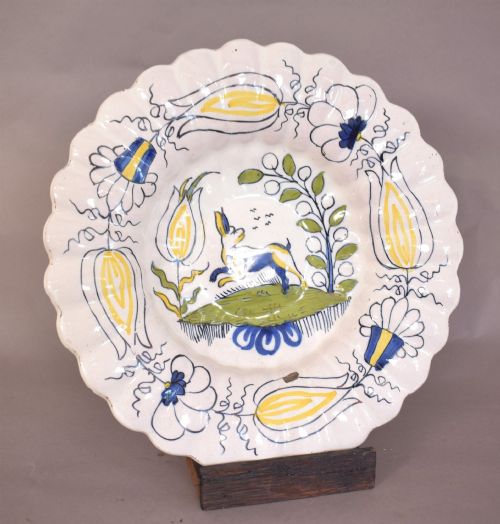
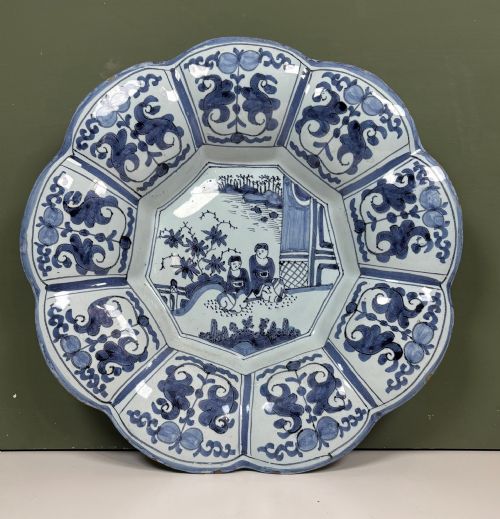
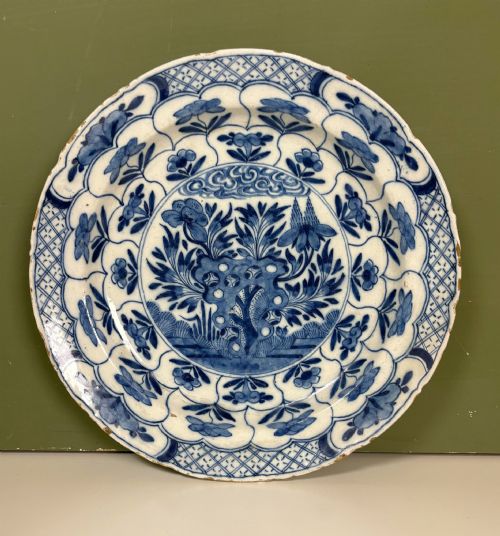
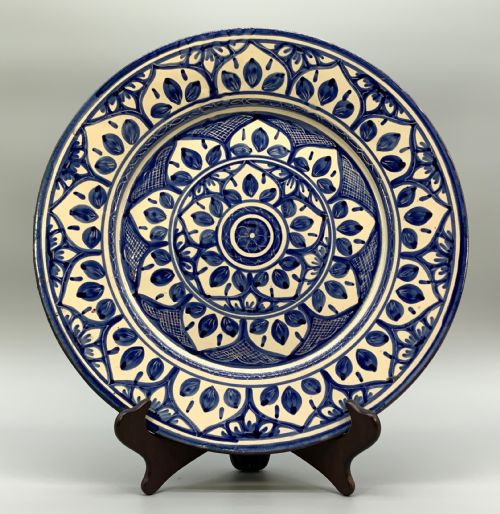
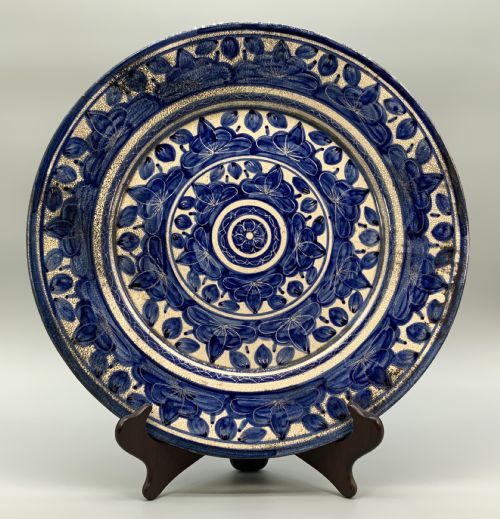
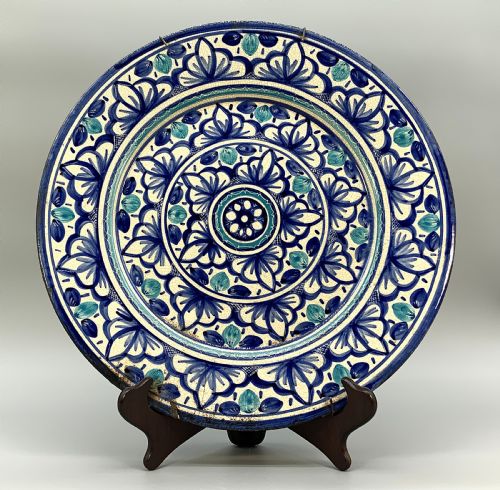
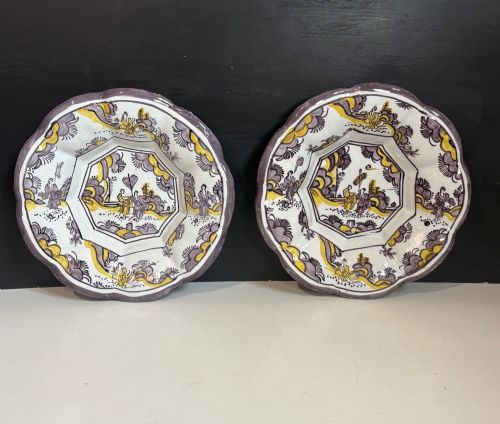
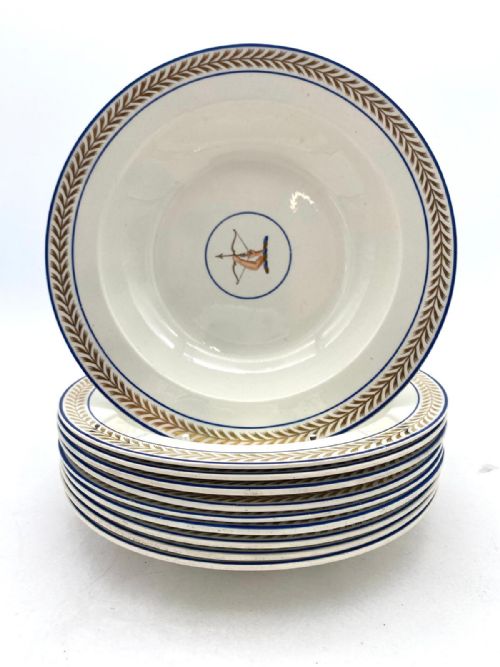
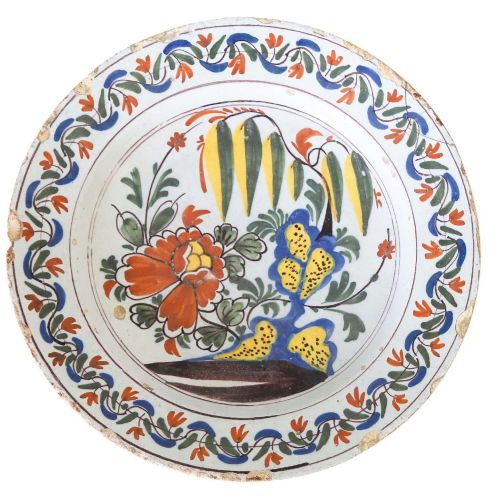
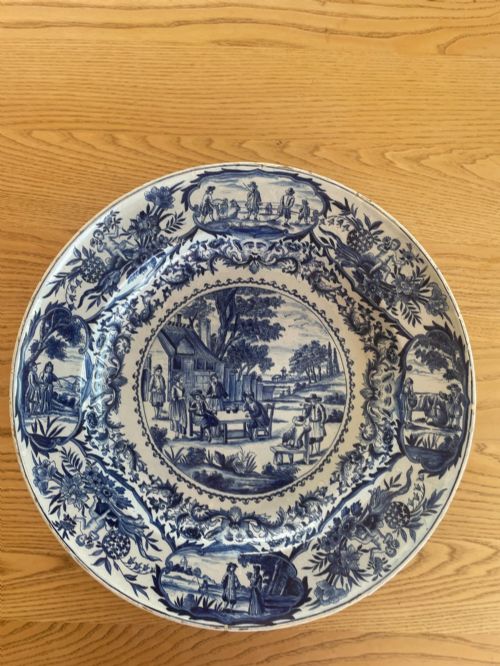
When you search for a hand painted earthenware plate, you encounter centuries of ceramic history ranging from early English and Dutch delftware chargers to later Victorian and Art Deco pieces. The most frequent form on this page is the large decorative charger or wall plate, often finished with cobalt oxide or enamel pigments.
Makers and potteries utilised various styles, including Georgian chinoiserie, Dutch Baroque, and Moorish patterns, shaping flat dishes into major display items. These objects served utilitarian and decorative roles in historic homes, frequently featuring hand-painted floral, geometric, or armorial motifs.
The material encompasses porous earthenware bodies coated in opaque tin glaze, creamware, or ironstone china, fired to hold colourful pigments. Pieces survive from the seventeenth century through to the twentieth century, reflecting shifting tastes across English, Dutch, French, and Japanese traditions.
How they were made
Potters shaped local earthenware clay on a wheel or pressed it into moulds, creating sturdy plates and deep chargers ready for an initial firing. This produced a porous biscuit body that required a smooth surface coating before decoration could begin.
Artisans applied a tin glaze, creamware slip, or enamel base to the fired clay, providing an opaque white or cream canvas. Cobalt pigment and other metal oxides were then painted directly onto the unfired or raw glaze, sinking into the surface during a second high-temperature kiln firing.
Listings span seventeenth-century Dutch delftware to twentieth-century Art Deco earthenware.
What varies in quality
The distinction between ordinary and superior pieces rests on the confidence and precision of the brushwork. Master painters executed floral sprays, figures, and armorial details with fluid control, whereas lesser examples show stiff lines and hasty application.
Glaze consistency and firing success also determine the upper tier of quality. Smooth, evenly distributed tin glaze without heavy pooling or extensive kiln debris elevates a plate, while well-controlled cobalt pigment delivers crisp, deep blue tones without blurring.
Wedgwood·Koshida·Royal Bonn·Copeland Pottery·Clarice Cliff·Crown Ducal
The Hand Painted Earthenware Plate Glossary
- Charger
- A large decorative plate intended for display on a sideboard or wall rather than for everyday dining.
- Tin-Glazed Earthenware
- Ceramic pottery coated with a lead glaze made opaque by the addition of tin oxide, providing a white surface for painting.
- Creamware
- A refined cream-coloured earthenware developed in England during the eighteenth century, notable for its lighter body and pale yellow glaze.
- Cobalt Pigment
- A metallic blue colouring agent used extensively under the glaze to produce deep blue painted designs on ceramics.
- Polychrome
- Decoration employing multiple distinct colours, commonly seen in hand-painted floral and geometric plate designs.
Hand Painted Earthenware Plate: Frequently Asked Questions
What is a hand painted earthenware plate used for?
Historic plates and chargers served for formal dining, festive occasions, or prominent display on walls and dressers.
Large chargers acted as centrepieces or serving platters in affluent households, while smaller plates handled daily meals.
How do I date a hand painted earthenware plate?
Dating relies on examining the glaze chemistry, clay body weight, and painted style alongside known factory periods.
Seventeenth and eighteenth-century delftware exhibits heavier earthenware bodies and tin glazes, while nineteenth-century ironstone and twentieth-century art pottery display distinct industrial marks.
Can I use an antique plate for dining?
Most antique earthenware pieces are intended for collection and display rather than active modern kitchen use.
Porous historic bodies and soft tin glazes can absorb liquids or suffer surface wear from modern cutlery.
How do I clean a ceramic charger?
Gentle dusting with a soft, dry cloth is usually sufficient for maintaining decorative plates on display.
Avoid immersing old earthenware in water or using harsh detergents, as moisture can penetrate old glaze crazing.