


Hand Embroidered Suzani
A hand embroidered suzani brings vibrant Central Asian textile art into a room, offering rich botanical motifs and tribal patterns stitched across silk and cotton.
Hand Embroidered Suzani
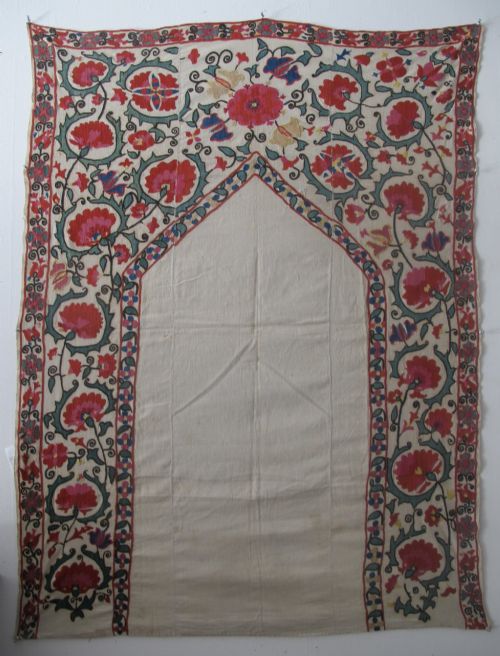
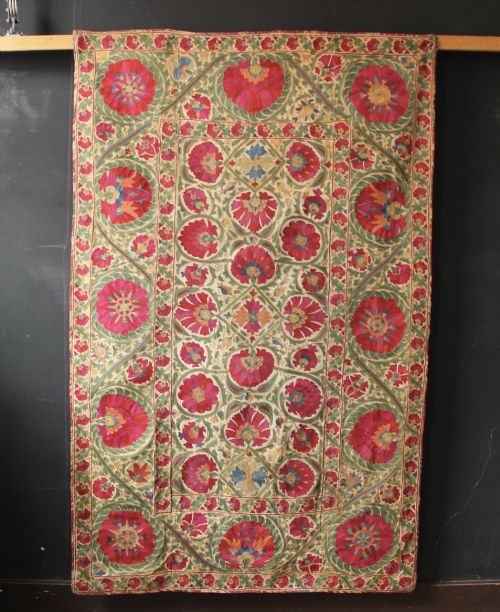
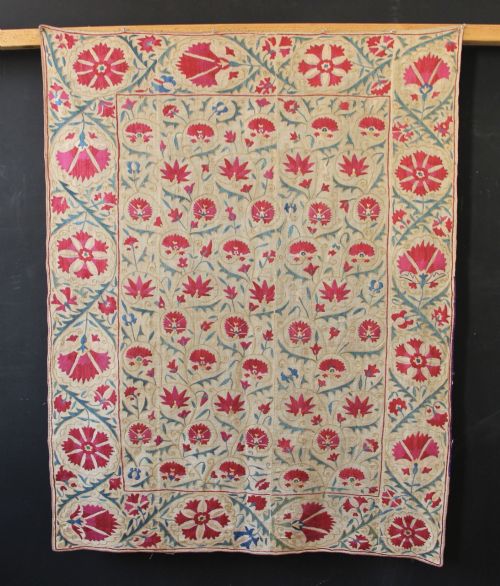
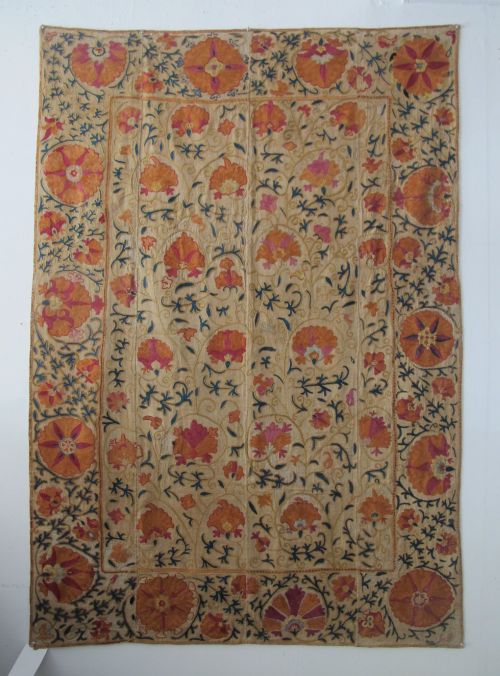
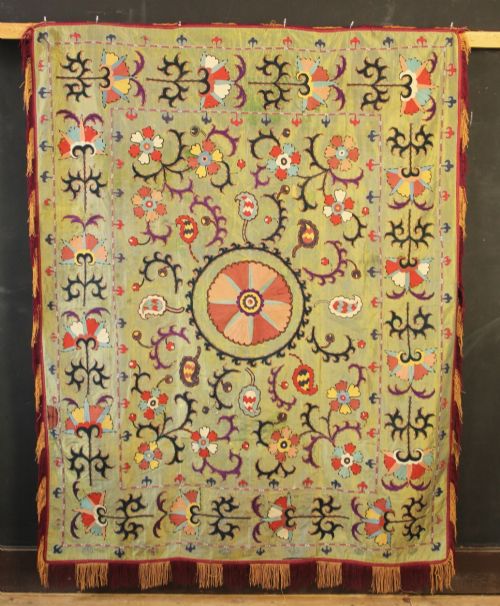
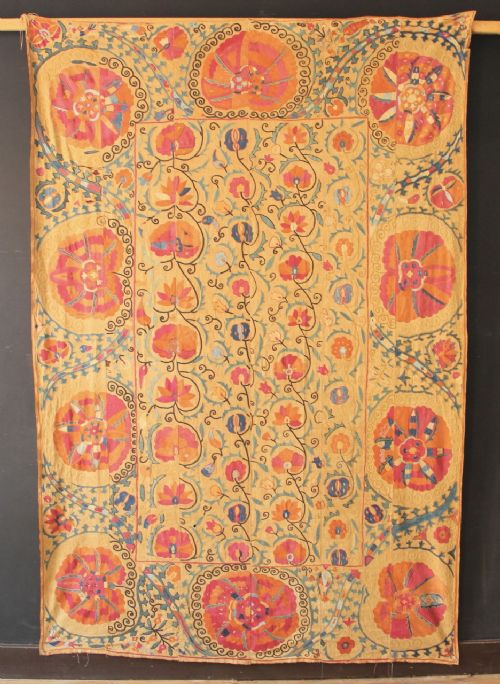
A hand embroidered suzani is a traditional Central Asian textile panel created as a wall hanging, bed cover, or ceremonial furnishing. These decorative pieces originate primarily from Uzbekistan and surrounding regions, spanning the nineteenth and early twentieth centuries.
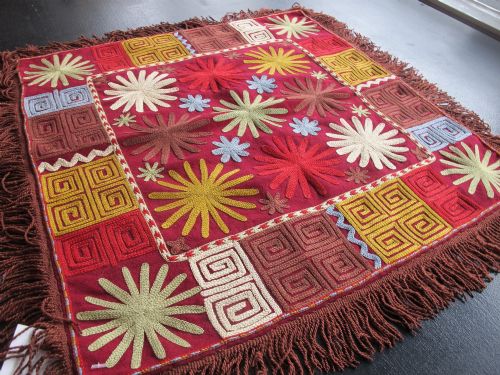
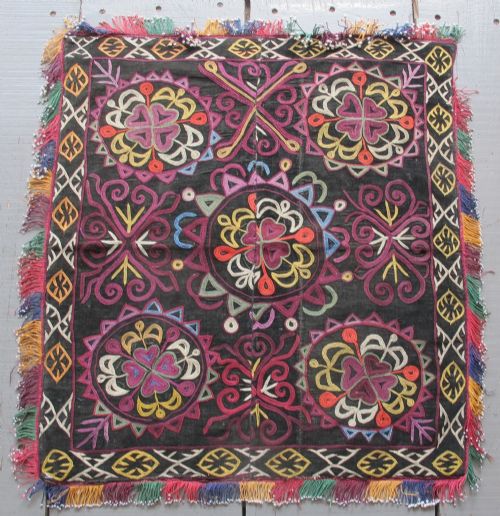
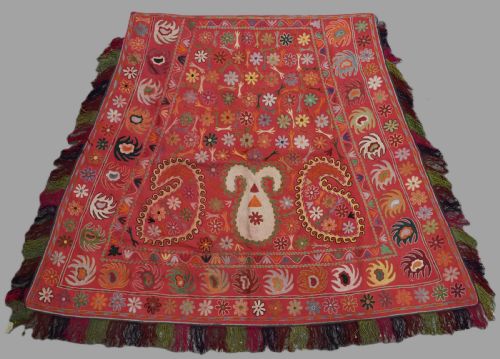
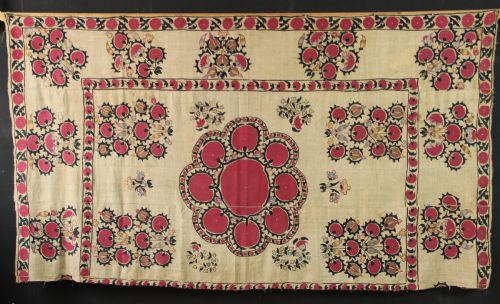
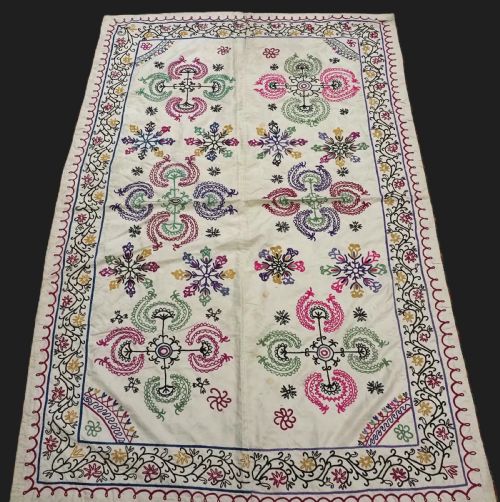
Buyers encounter various formats on this page, ranging from full-sized wall hangings and medallion variants to smaller nim suzanis, mirror covers, and specialised tribal horse covers. Regional variations include work from Bokhara, Tashkent, Samarkand, Nurata, and the Lakai tribe.
The forms function primarily as decorative textiles and tapestries, though specific regional types serve as prayer formats or yurt wall hangings. Each piece reflects the specific tribal or urban traditions of Central Asian folk art.
Materials and construction
Makers stitched silk thread onto ground fabrics made of cotton, linen, wool, or adras, which is a traditional silk and cotton blend. Some compositions incorporate glass beads alongside fine silk embroidery.
The construction relies entirely on needlework applied to woven foundations, producing dense surface patterns with architectural designs, central stars, and floral motifs. Grounds appear in various hues, including red, yellow, green, and black.
Hand Embroidered Suzani Retail Price Guide 2026
Typical asking prices for hand embroidered suzani among the pieces listed under this phrase on Sellingantiques today, from the lower quarter to the upper quarter. They describe what is for sale here now, not the wider market.
The inventory includes regional examples from Bokhara, Tashkent, Samarkand, Nurata, and the Lakai tribe.
Qualities of execution
Quality depends on the density of the stitching and the complexity of the design layout, distinguishing full-work panels from more sparsely decorated examples. The precision of the needlework and the depth of the palette dictate the visual impact of the textile.
The integrity of the ground fabric and the vibrancy of the silk thread contribute significantly to the overall presence of the piece. Regional styles also influence execution, with certain tribal and urban centres demonstrating distinct technical fluency.
The Hand Embroidered Suzani Glossary
- Suzani
- A large embroidered Central Asian textile panel whose name derives from the Persian word for needle. These pieces traditionally formed part of a bride's dowry.
- Nim suzani
- A smaller version of the standard textile panel, often translated as half suzani. These compact pieces suit smaller wall spaces.
- Palak
- A fully embroidered variant featuring a central star or medallion motif surrounded by dense floral designs. This type often covers the entire ground fabric.
- Adras
- A traditional Central Asian fabric woven from a mixture of silk and cotton. It provides a textured ground for silk embroidery.
- Torba
- A hanging bag or trapping produced by tribal groups. Examples include specific wedding or horse trappings.
Hand Embroidered Suzani: Frequently Asked Questions
How were original suzanis used?
These textiles served as decorative wall hangings, bed covers, and ceremonial furnishings within Central Asian households. Families also created them as part of traditional dowries for weddings.
Specific formats fulfilled distinct domestic functions, such as mirror covers, prayer panels, or horse covers for tribal ceremonies. Their versatile construction allowed them to function both as daily utilities and ceremonial displays.
How do I hang a textile safely?
Mounting a textile requires distributing the weight evenly across the entire upper edge to prevent stress on the antique fibres. Professional framers often use conservation-grade stitching to attach the piece to a padded support.
Avoid direct sunlight to protect the natural dyes in the silk thread and cotton ground from fading. Keeping the piece away from direct heat sources preserves the integrity of the historical materials.
How do I tell regional styles apart?
Regional attribution relies on the specific palette, ground fabric, and motif arrangements used in the embroidery. Urban centres like Bokhara and Tashkent often display refined floral compositions, while tribal groups like the Lakai employ distinct geometric and expressive layouts.
Examining the density of the silk thread work and the structure of the border patterns helps identify the origin. Certain towns, such as Nurata or Shakrisabz, developed signature styles that distinguish their output from surrounding regions.
What is a nim suzani?
A nim suzani is a smaller variant of the standard embroidered panel, historically used in more intimate domestic spaces. These pieces share the same materials and stitch techniques as their larger counterparts.
Collectors appreciate these smaller formats because they fit easily into modern residential interiors while maintaining traditional Central Asian designs.