
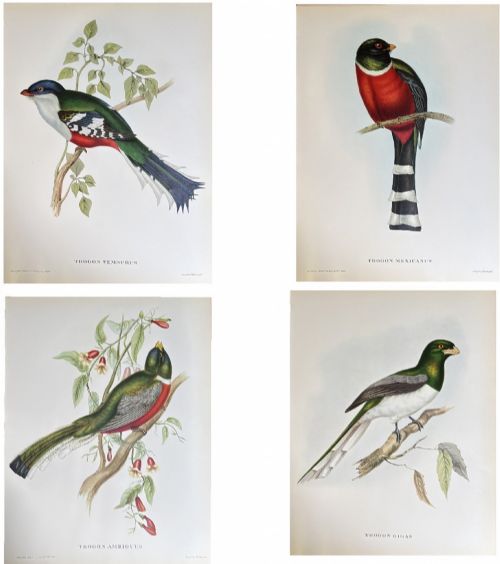


Hand Coloured Botanical Print
A hand coloured botanical print brings the precision of natural history illustration and the warmth of watercolour straight to the wall.
Hand Coloured Botanical Print
A hand coloured botanical print captures plant and bird species across the eighteenth and nineteenth centuries, moving from Georgian plates to Victorian framing. These works bridge scientific observation and decorative art, capturing specimens with meticulous detail.
The most common examples on this page are framed or unframed engravings and lithographs originating from British and European natural history publications. They appear as single sheets, pairs, or matched sets depicting flora, fauna, and ornithology.
The materials recorded in these works combine paper and ink with watercolour applications, often mounted behind glass within wood or gilt frames. Each sheet relies on monochrome printing plates finished by hand with washes of colour.
How they were made
The foundational line work begins as an engraving or lithograph printed onto paper using dark ink. This mechanical impression lays out the botanical or ornithological subject with exact anatomical precision.
Colour is subsequently applied by hand using watercolour washes over the printed lines. Skilled colourists layer pigment to render the natural hues of petals, leaves, and plumage directly onto the paper.
Finished plates are frequently preserved behind glass and set within wood frames, sometimes finished with gilt or gold leaf. The framing protects the paper surface from environmental exposure and handling.
Early colourists occasionally sneaked imaginative shades onto botanical petals, turning strict scientific records into miniature works of individual imagination.
What varies in quality
The precision of the original engraving and the finesse of the subsequent watercolour washes determine the distinction between average and exceptional plates. Master colourists achieve subtle tonal gradations that bring depth to plant structures and bird feathers.
The completeness and integrity of sets, alongside the presence of original publication margins and text, influence the standing of a piece. Well-preserved paper free from heavy discolouration retains the crispness intended by the publisher.
Oliver Goldsmith·Pancrace Bessa·George Edwards·John Curtis·Georg Wolfgang Knorr·William Swainson·George Dionysius Ehert
The Hand Coloured Botanical Print Glossary
- Engraving
- A printmaking technique where an artist cuts lines into a metal plate with a sharp tool to hold ink. This creates the sharp, fine lines seen in early natural history plates.
- Lithography
- A planographic printing process based on the repulsion of oil and water on a limestone or metal surface. It allows for softer tonal transitions than traditional metal plate engraving.
- Gilt wood
- Wood surfaces coated with a thin layer of gold leaf or metallic powder for decoration. This finish appears frequently on period frames housing botanical plates.
- Watercolour
- A paint medium consisting of water-soluble pigments used to tint monochrome prints by hand. Colourists applied these washes directly onto the printed paper.
Hand Coloured Botanical Print: Frequently Asked Questions
How do I care for these prints?
Keep prints away from direct sunlight to prevent the watercolour pigments from fading over time. Maintain stable indoor humidity levels to protect the paper and the wooden frames.
Ensure that the glass does not press directly against the paper surface inside the frame. Proper spacing prevents moisture accumulation and protects the delicate ink and wash layers.
Are these prints original period pieces?
The pieces listed span from the eighteenth century through the mid-twentieth century, originating from historical botanical and ornithological publications. Each entry reflects the production standards of its specific period.
Examining the paper stock, plate marks, and hand application of colour helps confirm the age of the item. Publishers often released these plates in serialised volumes over many years.
How are sets usually displayed?
Sets of prints look best arranged in balanced pairs or symmetrical grids along a hallway or study wall. Matching frames unify disparate subjects from the same publication series.
Spacing multiple prints evenly allows each botanical or ornithological specimen to be examined individually. Consistent framing materials tie different species together into a cohesive display.
What distinguishes an engraving from a lithograph?
Engravings display crisp, indented lines carved into a metal plate, resulting in sharp botanical contours. Lithographs rely on chemical processes that yield softer, more painterly edges.
Both methods provided the monochrome foundation before watercolour artists applied hand colouring. Close inspection under magnification reveals the characteristic marks left by the printing plate.