
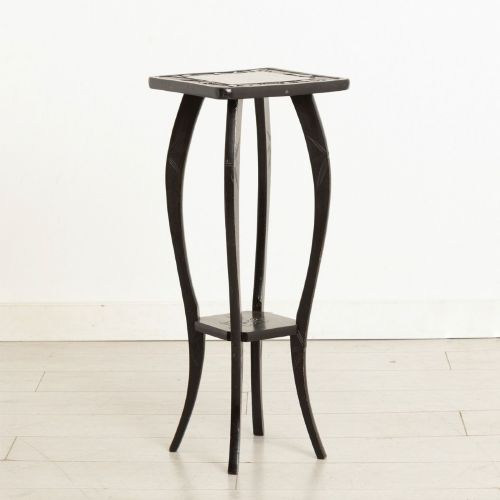
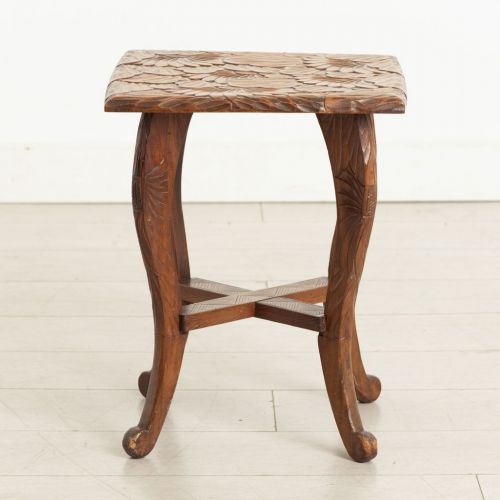
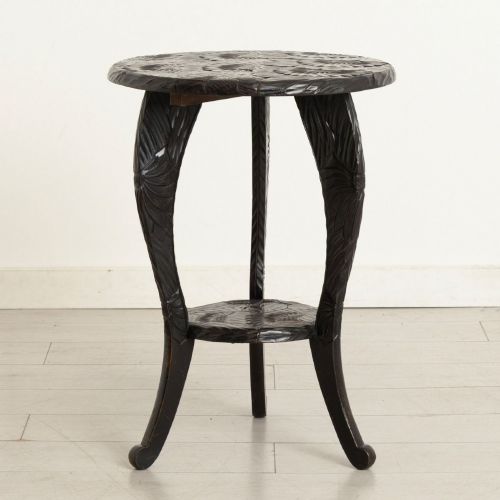
Hand Carved Wood Table
When you search for a hand carved wood table, you encounter diverse forms shaped across the nineteenth and twentieth centuries.
Hand Carved Wood Table
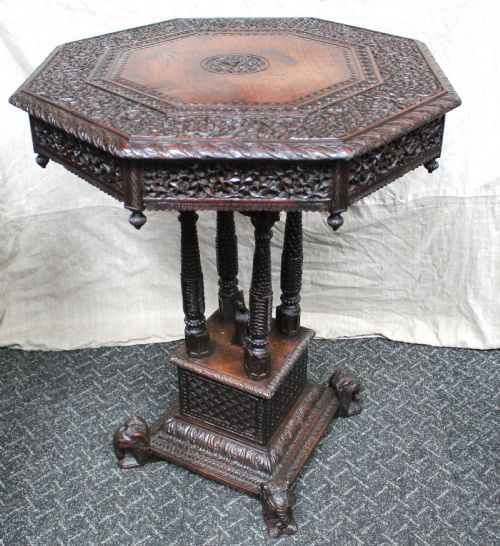
A hand carved wood table encompasses side tables, occasional tables, coffee tables, and console tables produced across various global regions. Buyers searching for a hand carved wood table frequently encounter items originating from British colonial trade, such as Anglo-Indian and Burmese pieces, alongside European styles.
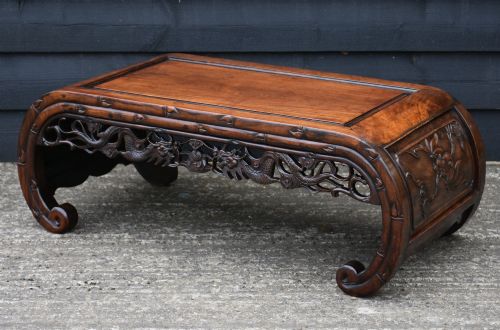
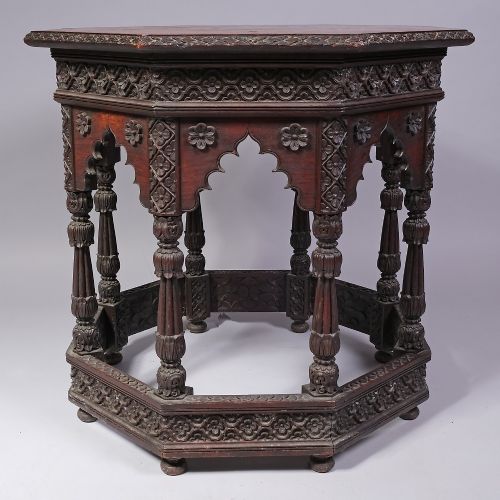
The selection ranges from circular occasional pieces and octagonal tables to low opium tables and larger centre tables. Materials span native hardwoods, teak, walnut, mahogany, and elm, often shaped into specific regional motifs like elephants or dragons.
Makers and workshops across different periods produced distinct functional forms, from rustic European items to intricate Asian furnishings. These domestic and occasional tables reflect the specific vernacular traditions and export trades of their respective eras.
Materials and Construction
Carpenters and carvers shaped these pieces from solid hardwoods, walnut, mahogany, teak, and elm using traditional hand tools. Artisans applied relief carving, pierced work, and turning techniques directly to the timber, creating deep surface ornamentation.
Secondary materials such as brass, bone, and lacquer appear on specific regional items to accent the carved wooden structures. Joinery methods varied by region and period, combining pegged joints, mortise and tenon frames, and turned supports.
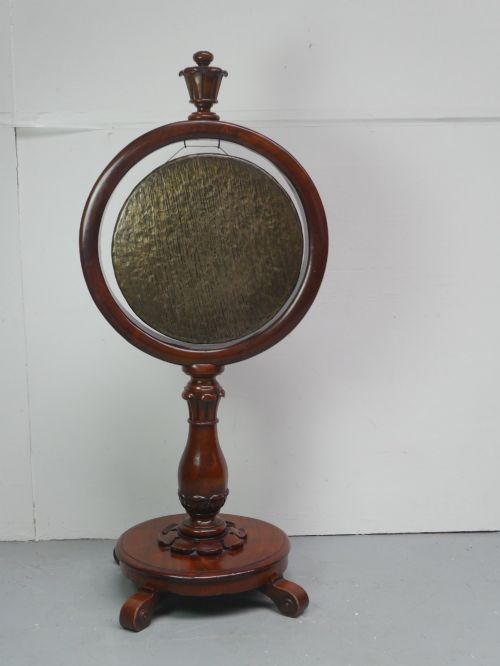
A Scottish country house dinner gong stands ready to summon hungry household residents.
Evaluating Execution
The depth, sharpness, and three-dimensional clarity of the chisel work define the execution standard of each piece. Superior examples display crisp undercut details and well-proportioned motifs, whereas lesser items show shallow, uniform stamping or mechanical smoothing.
The choice of dense, well-seasoned timber and the integrity of the original joints separate accomplished workshops from mass production. Surface finishes, whether polished hardwood, lacquer, or painted elements, also indicate the care applied during manufacture.
Liberty of London·Bergen and Co·Cesar Bagard
The Hand Carved Wood Table Glossary
- Anglo-Indian
- Descriptive of furniture made in India during the British period, frequently utilising local hardwoods and dense overall carving. These pieces often incorporate regional iconography such as elephants or floral scrollwork.
- Tramp Art
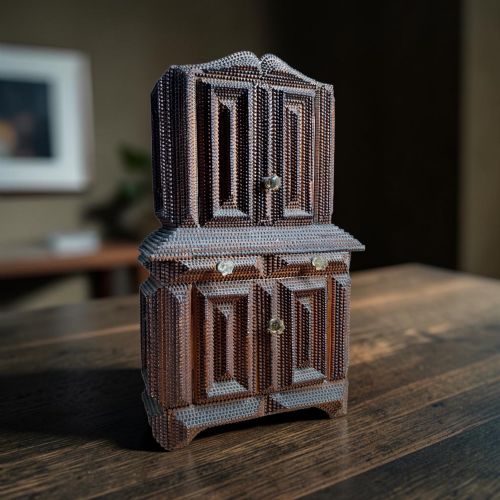
- A form of folk art where items are constructed from salvaged wooden boxes using notch-carving and layered geometric chips. This method relies on pocket knives and simple hand tools rather than standard joinery.
- Opium Table
- A low surface traditionally used in East Asia for serving tea or smoking, characterised by short legs and shaped aprons. They are frequently fashioned from rosewood or other fine hardwoods with detailed relief work.
- Tilt Top
- A table mechanism allowing the surface to pivot to a vertical position when not in use, secured by a catch. This form appeared frequently in nineteenth-century British and European rooms to save space.
Hand Carved Wood Table: Frequently Asked Questions
How do I identify an Anglo-Indian table?
These tables are identified by dense, intricate plant motifs and animal figures carved into native hardwoods like teak. They often feature folding or octagonal tops associated with the nineteenth-century export trade.
Examine the joints and the crispness of the chisel work to understand the origin and working methods of the regional workshop.
What is Black Forest wood carving?
Black Forest pieces are nineteenth-century European carvings, often from Switzerland, depicting natural subjects like bears, deer, and foliage. They are usually rendered in limewood or walnut with realistic textures.
These items range from small decorative figures to functional stands and clocks integrated into domestic spaces.
How were 19th-century occasional tables used?
Nineteenth-century occasional tables served movable functions in drawing rooms and parlours for holding lamps, books, or tea services. Their compact sizes allowed servants to reposition them easily as daily requirements shifted.
Different forms, from tilt-tops to low opium tables, suited specific social rituals across European and Asian households.
How do I care for antique carved wood?
Antique carved surfaces require stable indoor humidity and protection from direct sunlight to prevent the timber from splitting. Dusting gently with a dry, soft brush helps clear debris from deep recesses without harming the finish.
Avoid modern liquid polishes that can build up in the carved crevices and dull the original patina of the wood.