


Hand Carved Tea Table
These hand carved tea table pieces bring colonial craftsmanship and intricate Oriental reliefwork into everyday rooms.

Hand Carved Tea Table
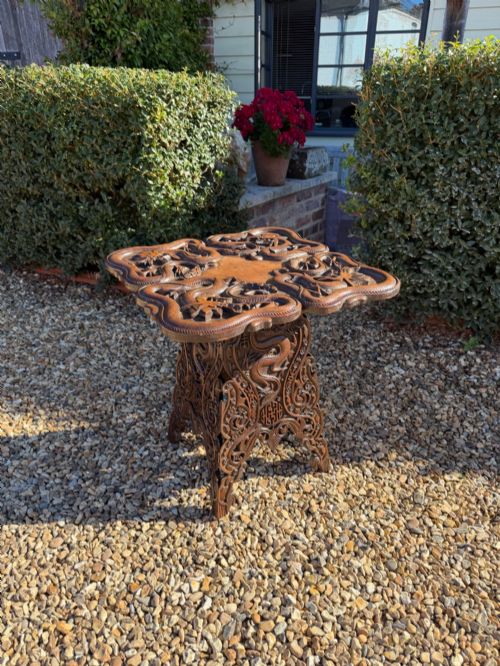
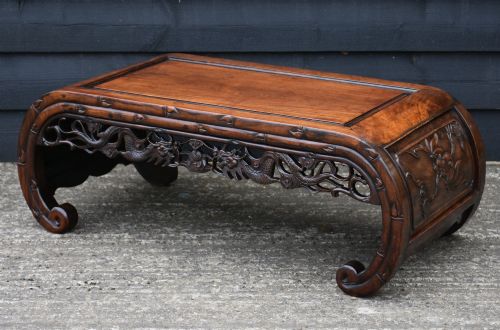
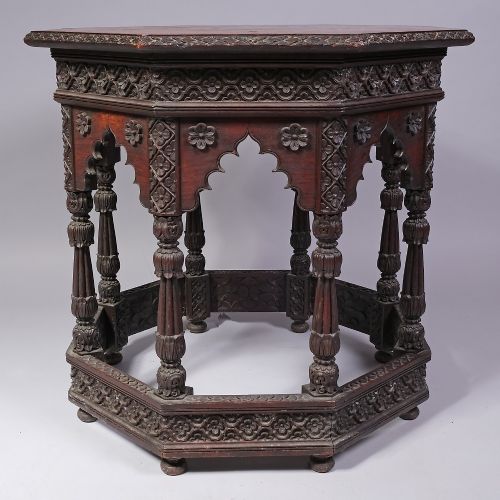
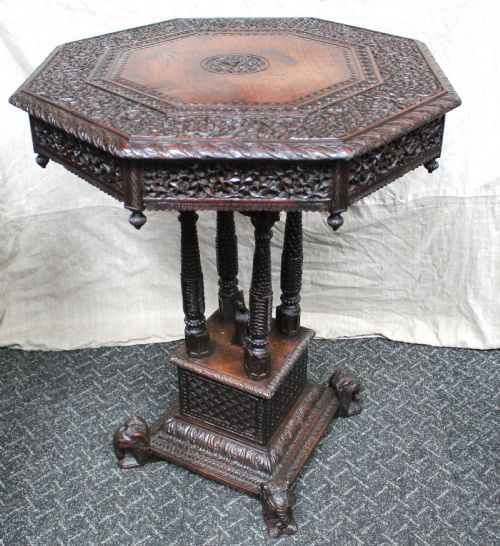
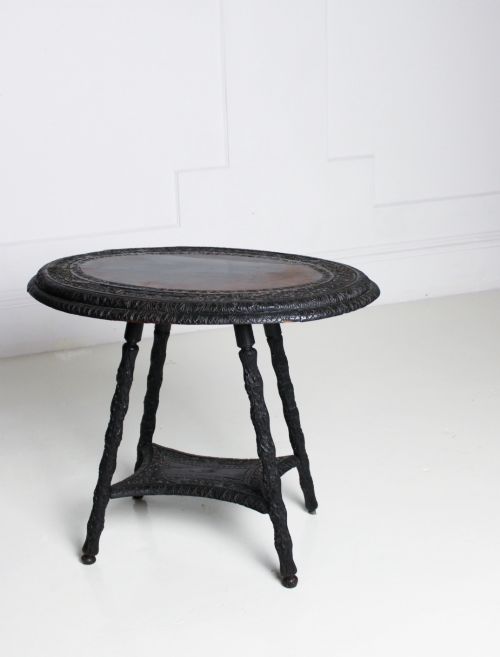
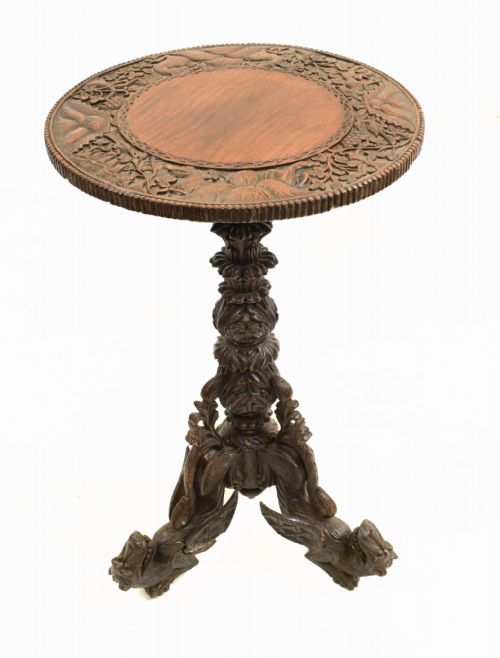
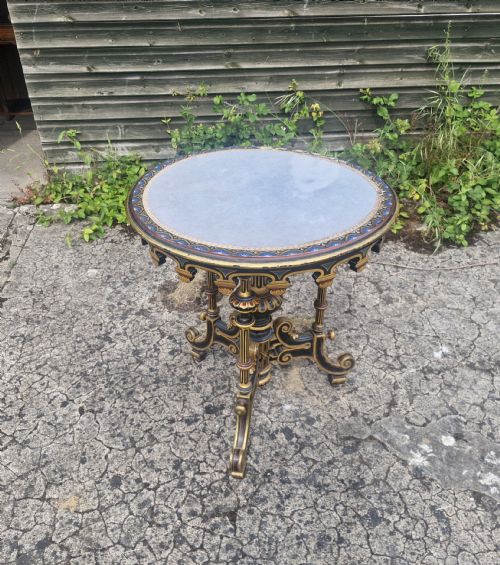
A hand carved tea table brings distinct regional traditions into the home, drawing from Anglo-Indian, Chinese Export, and Kashmiri workshops across the nineteenth and early twentieth centuries. When searching this phrase, buyers encounter diverse forms ranging from octagonal occasional tables and folding campaign pieces to low opium tables and nested sets.
The materials and decorative motifs reflect their origins, frequently pairing dense tropical timbers with deep relief carving depicting dragons, foliage, or figurative animal designs. Many examples serve flexible modern uses as lamp tables, coffee tables, or display surfaces while retaining their traditional silhouette.
Materials and construction methods
Carpenters utilised heavy tropical and temperate woods including teak, rosewood, walnut, and hardwood to build these pieces, ensuring a stable foundation for intricate hand channelling. Artisans applied deep chisel work directly into the timber, sometimes combining relief surfaces with painted details, lacquer finishes, or inlaid copper elements.
Tables designed for travel or specific domestic functions often featured folding mechanisms, removable trays, or clever nesting structures. The joinery relies on traditional hand-tool methods appropriate to regional cabinet-making practices of the Victorian and Edwardian eras.
Listings span from the early nineteenth century through the nineteen-thirties, featuring woods like teak, rosewood, and walnut.
Judging quality in hand carved pieces
The depth, crispness, and clarity of the chisel work dictate the visual strength of the carving, separating straightforward surface scoring from deeply undercut, highly detailed relief. Better examples maintain symmetrical proportions and secure structural joints even when heavily decorated with elaborate motifs.
The choice of timber significantly influences the overall character, with dense hardwoods like rosewood and teak offering superior durability compared to softer secondary woods. Original surface patination and intact structural elements without excessive later alteration preserve the historical integrity of the piece.
The Hand Carved Tea Table Glossary
- Anglo-Indian
- Descriptive of furniture made in India during the British period, often combining British furniture forms with local carving traditions. These pieces frequently utilise native teak or hardwoods.
- Opium table
- A low-standing surface traditionally used in East Asian settings for serving tea or social customs. They often feature short legs and substantial carved aprons.
- Marquetry
- The art of applying pieces of veneer to a structure to form decorative patterns. Victorian examples often incorporate contrasting woods on the table top.
- Campaign table
- Portable furniture constructed for military officers on the move, featuring folding bases or removable tops for easy transport. Teak was the preferred timber for durability.
- Kashmiri
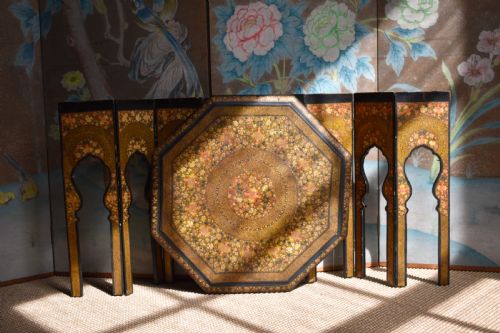
- Pertaining to decorative work originating from Kashmir, typically characterised by painted floral motifs on walnut or local timber. These items often include carved trays or folding stands.
Hand Carved Tea Table: Frequently Asked Questions
How do I clean a carved table?
Dust the intricate recesses regularly with a soft-bristled brush to prevent dirt accumulation in the carved details.
Avoid liquid polishes that build up in the grain, opting instead for a microfibre cloth and occasional professional wax.
What is an elephant table?
An elephant table is a regional form featuring carved figural elephant supports beneath the top surface.
Originating primarily in nineteenth-century Indian workshops, they combine structural bases shaped as animals with traditional floral relief borders.
How do I date these tables?
Dating relies on examining the timber species, tool marks left by the maker, and structural assembly methods.
Stylistic crossover between Victorian Gothic Revival, Anglo-Indian, and Chinese Export designs helps narrow down the period of manufacture.