




Vintage Burmese Carved Table
A vintage burmese carved table brings deep relief work and dense tropical timber directly into a room.
Vintage Burmese Carved Table
A vintage burmese carved table covers a distinct group of occasional, side, console, and coffee tables shaped by nineteenth and early twentieth century craftsmanship. Buyers searching for a vintage burmese carved table encounter forms ranging from compact side pieces to tiered buffets and table gongs.
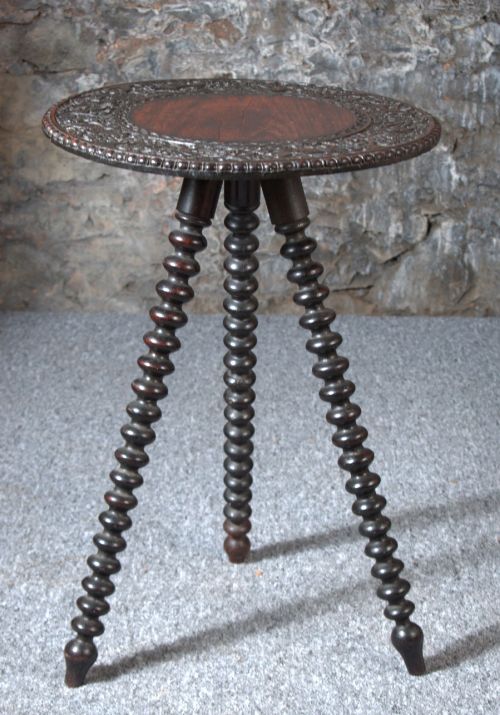
The selections span production dates from the mid-nineteenth century through the nineteen-thirties, reflecting regional export tastes and colonial influences. Common configurations include round or square tops supported by heavily carved figural legs or intricate pierced aprons.
Anglo-Burmese and Anglo-Indian stylistic crossovers frequently appear among these items, blending local carving traditions with British domestic forms. This category delivers heavy timber surfaces loaded with deep relief carving suited for period and eclectic interiors alike.
How they were made
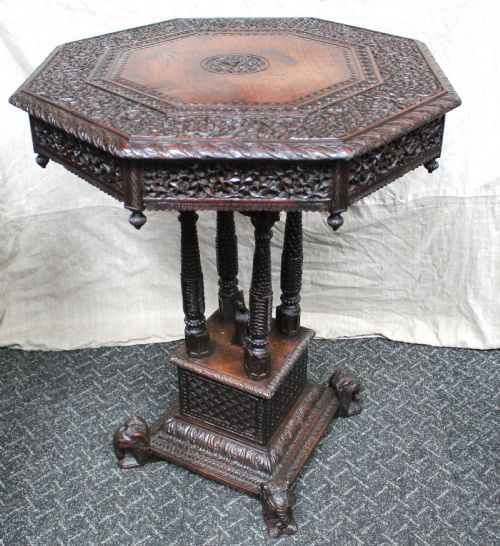
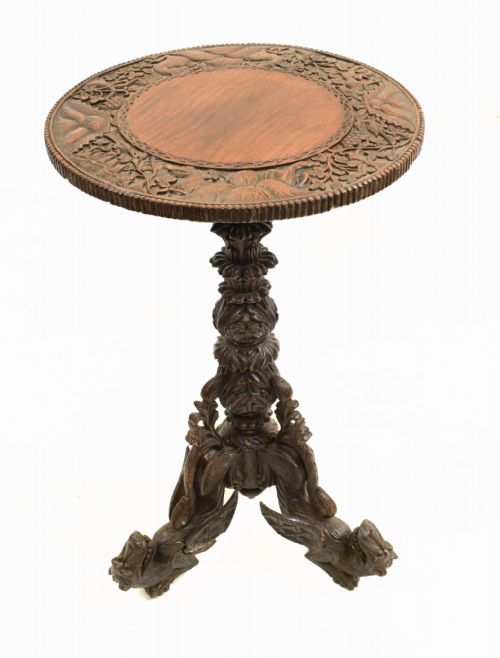
Makers shaped these surfaces from dense tropical hardwoods including padouk, teak, and general padauk wood, chosen for their ability to hold intricate chisel work without splitting. Artisans carved deep figural and floral reliefs directly into the timber, sometimes pairing the primary wood with bone elements or brass details.
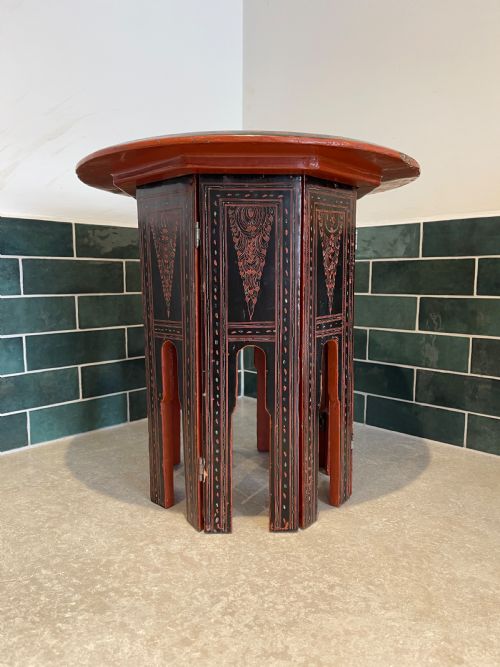
Lacquered finishes also surface on specific pieces, sealing the carved wood beneath traditional resin coats. Construction relies on traditional joinery suited to heavy hardwoods, allowing elaborate tiered structures like the three-tier buffet to support substantial weight.
Several tables stand firmly on carved elephant legs, bringing an unexpected menagerie straight into the Victorian parlour.
What varies in quality
The distinction between ordinary and exceptional examples rests entirely on the depth, crispness, and ambition of the carving. Tables featuring deeply undercut foliage, sharp facial expressions on figural legs, and well-proportioned tiered architecture stand far above plain surfaces with shallow, machine-influenced cuts.
Material selection further divides the range, as dense padouk with rich natural grain commands greater appreciation than softer or heavily painted generic hardwoods. Preserved original surfaces without intrusive modern alterations maintain the integrity of the piece.
The Vintage Burmese Carved Table Glossary
- Padouk
- A heavy, durable tropical hardwood with a reddish-brown tone frequently utilised for high-end nineteenth-century Burmese furniture. It takes a fine finish and supports extremely detailed relief carving.
- Anglo-Burmese
- A design style produced during the colonial period that combined traditional Burmese carving motifs with British furniture forms like side tables and buffets. These pieces catered to European households living abroad and export markets.
- Relief carving
- A sculptural technique where figures and patterns project from a flat background timber surface. In these tables, the carving is often deeply undercut to create strong shadow lines and three-dimensional depth.
- Lacquer
- A durable natural resin finish applied to wooden objects in successive coats to protect the surface and provide a smooth, lustrous sheen. It appears on specific twentieth-century examples in this category.
Vintage Burmese Carved Table: Frequently Asked Questions
How do I date a carved Burmese table?
Dating relies on examining the timber species, joinery methods, and stylistic indicators recorded across nineteenth and early twentieth-century examples. Earlier pieces from the mid-nineteenth century often employ heavy padouk with deep, hand-chiseled relief work.
Later iterations stretching into the nineteen-thirties show shifts in finish types and simpler structural proportions. Comparing the specific form against documented production eras helps narrow down the decade of manufacture.
Where were these carved tables used?
These tables served primarily as occasional, side, or console furnishings within nineteenth-century colonial homes and British drawing rooms influenced by export trade. Their dense timber construction and decorative surfaces made them prominent display pieces.
Tiered buffets and smaller occasional stands held decorative objects, lamps, or writing materials. Today, they function similarly in modern interiors as statement coffee tables or accent pieces.
What is the difference between side tables and occasional tables here?
Side tables typically feature a fixed architectural role placed against walls or beside seating, often displaying more substantial structural framing. Occasional tables encompass lighter, moveable stands designed to be shifted around a room as needed.
Both forms utilise the same dense tropical hardwoods and heavy carving styles characteristic of Burmese workshops. The distinction lies mostly in their intended placement within a period interior.