

Colonial Carved Accent Table
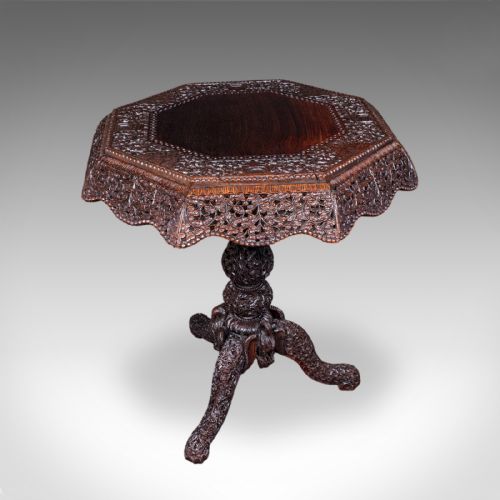
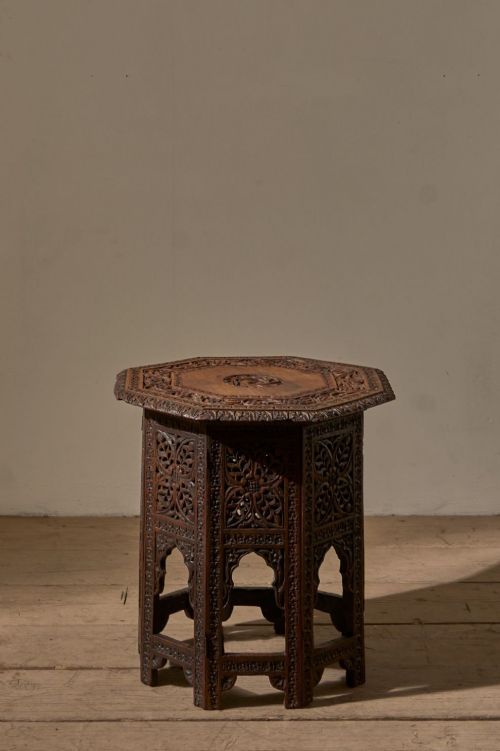
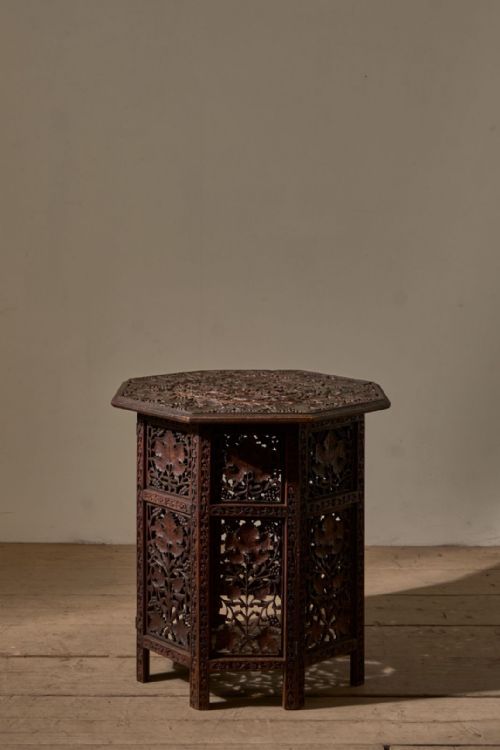
A colonial carved accent table brings dense foliage, animal motifs, and rich timber into a room, offering a functional surface steeped in nineteenth-century craftsmanship.
Colonial Carved Accent Table
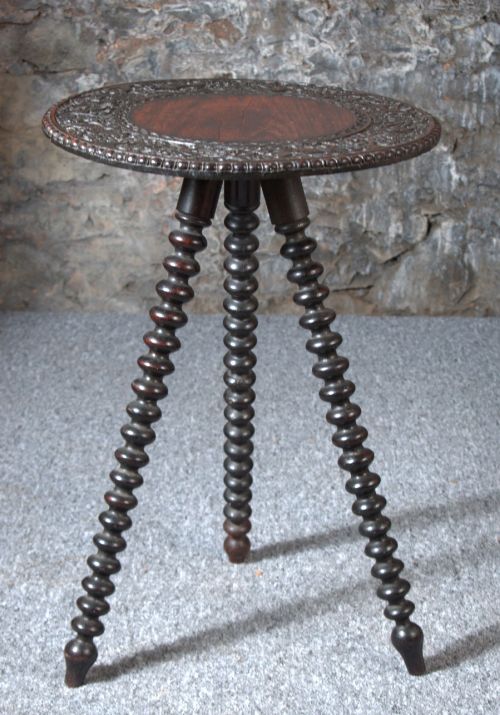
A colonial carved accent table encompasses side tables, occasional tables, coffee tables, and plant stands produced across various global regions during the nineteenth and early twentieth centuries. These pieces typically display intricate ornamentation reflecting Anglo-Indian, Burmese, and Spanish Baroque traditions.
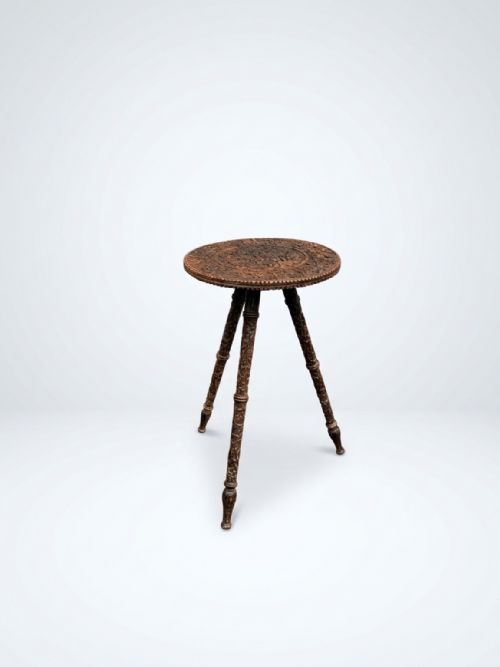
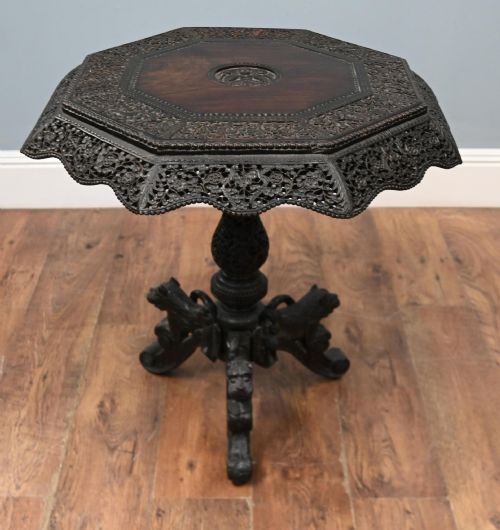
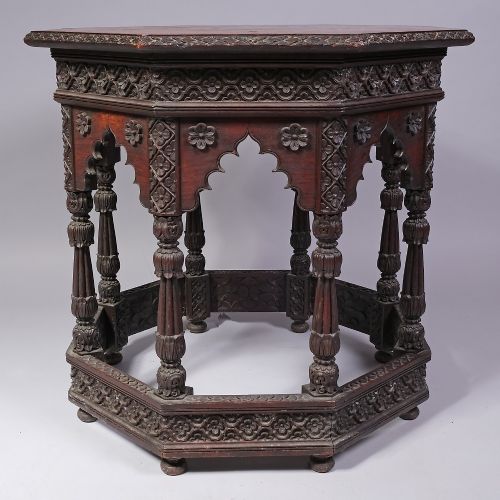
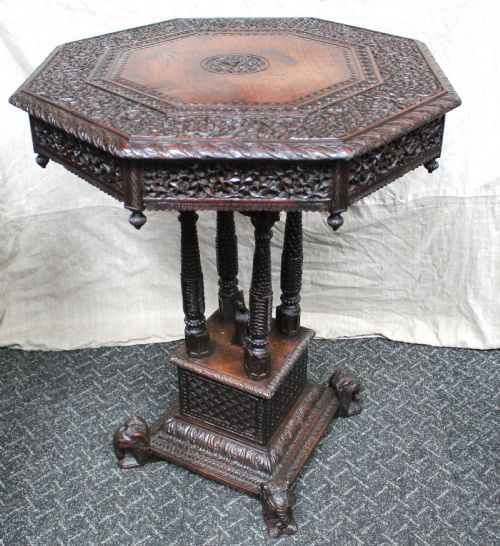
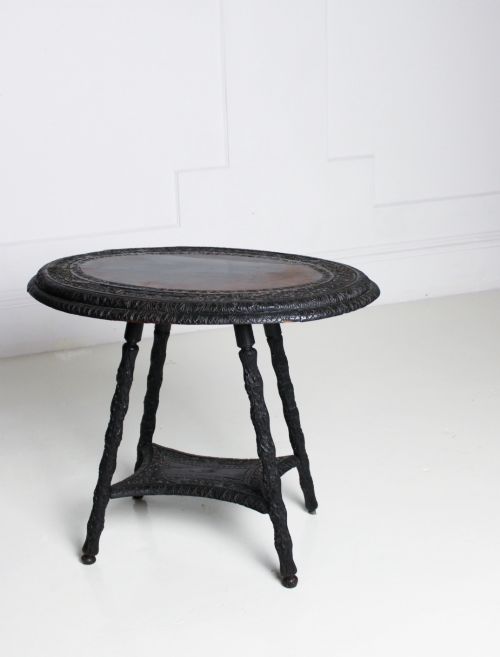
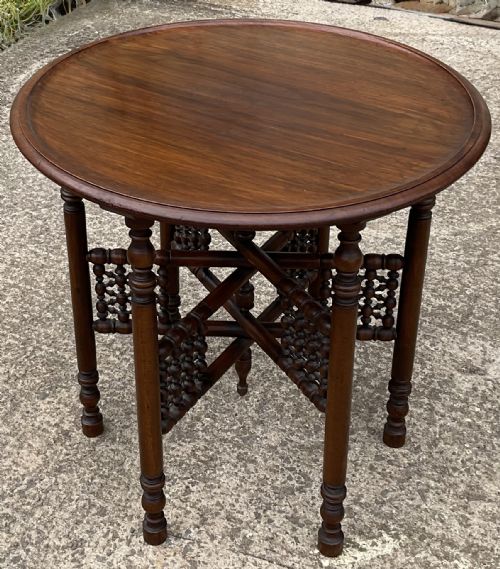
Visitors browsing this selection will most frequently encounter nineteenth-century pieces fashioned in the Anglo-Indian or Burmese style. Forms range from octagonal pedestal surfaces to folding lamp tables and low occasional tables.
Makers utilised native timbers and distinctive decorative schemes, creating compact surfaces designed to serve practical domestic functions while displaying elaborate regional carving.
How they were made
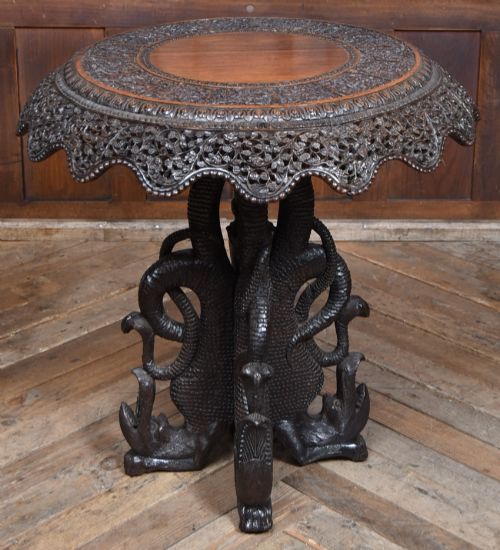
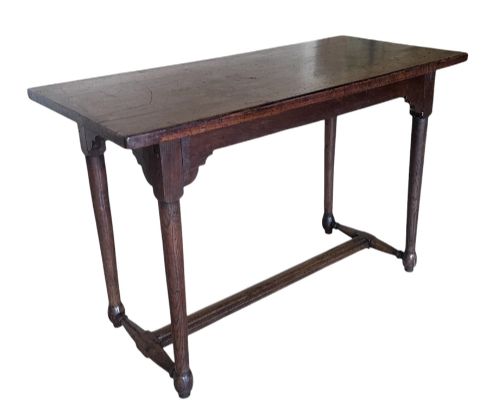
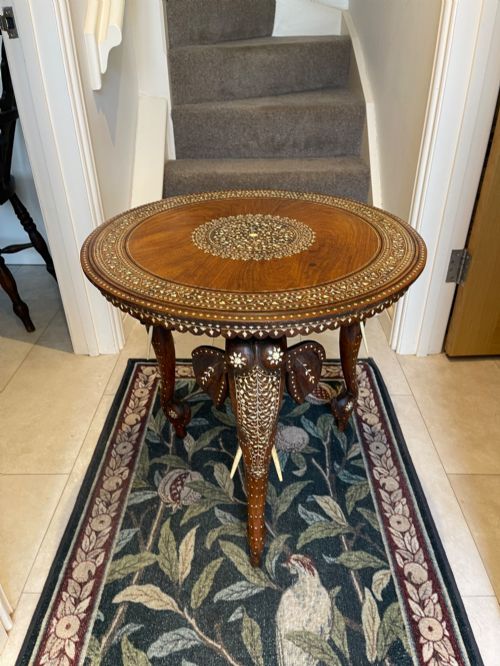
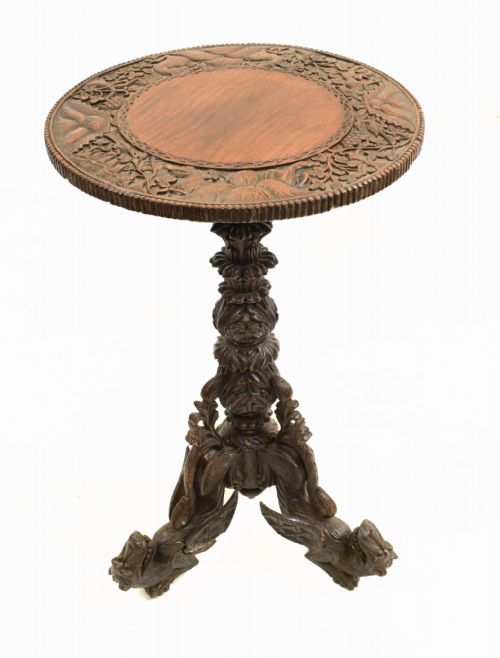
Artisans constructed these tables using dense tropical hardwoods such as teak, padauk, rosewood, and ebony, selected for their stability and dark grain. These timbers were carved deeply with foliage, scrolls, and animal figures including elephants and dragons.
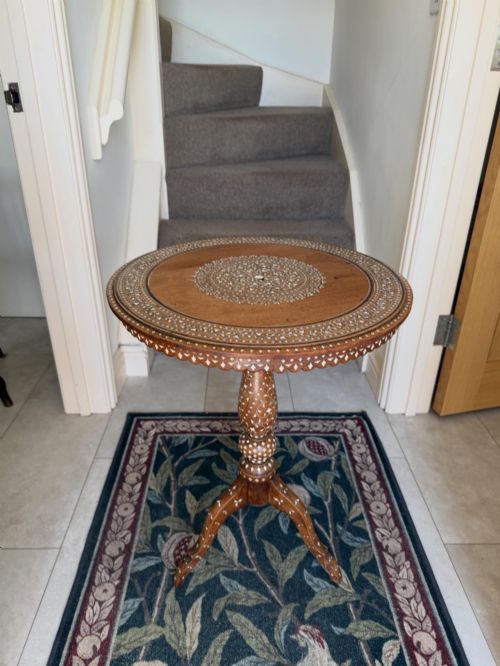
Many examples incorporate contrasting materials embedded directly into the wood surface, including bone inlay, mother-of-pearl, and sheet brass. Folding mechanisms and multi-tiered structures also appear among the construction techniques.
Object forms include octagonal side tables, coffee tables, plant stands, and occasional tables with animal motifs.
What varies in quality
Depth and precision of the chisel work separate standard production from superior examples, with finer pieces showing crisp undercutting and well-defined animal motifs. The choice of timber also dictates quality, as heavy solid rosewood or padauk commands greater regard than simpler mixed woods.
Complexity of embellishment, such as the inclusion of intricate bone or mother-of-pearl inlay alongside intricate carving, distinguishes the more ambitious commissions from plain utility tables.
The Colonial Carved Accent Table Glossary
- Anglo-Indian
- Describing furniture made in India during the British colonial period, often combining European forms with traditional local carving techniques.
- Padauk
- A heavy, durable reddish-brown tropical hardwood frequently utilised by nineteenth-century cabinetmakers in Burma and India.
- Hoshiarpur
- A North Indian centre known for intricate wood furniture featuring geometric bone and shisham inlay work.
- Occasional table
- A small, portable small table designed for flexible placement around a principal living space.
- Pedestal table
- A standalone surface supported by a central pillar resting on feet or a tripod base.
Colonial Carved Accent Table: Frequently Asked Questions
Where should I place an accent table?
These compact tables suit living rooms as side surfaces next to armchairs or sofas, where their carved details can be appreciated up close.
They also function effectively in hallways as lamp stands or display surfaces for decorative objects.
How do I clean carved wood?
Dust the intricate carvings regularly with a soft, dry brush to prevent dirt accumulation within the recesses of the pattern.
Avoid liquid polishes and damp cloths, which can damage aged timber and loosen delicate inlay work.
What periods do these tables represent?
The pieces span the nineteenth and early twentieth centuries, capturing Victorian tastes alongside colonial production.
Most examples date from the mid-nineteenth century through the Edwardian era.
Are these tables sturdy enough for daily use?
Solid hardwood construction provides substantial durability for holding lamps, books, and cups during everyday domestic routines.
However, folding versions require careful handling to preserve their hinges and structural stability.