

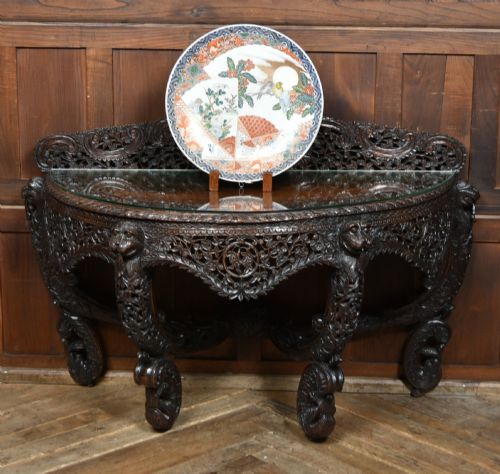
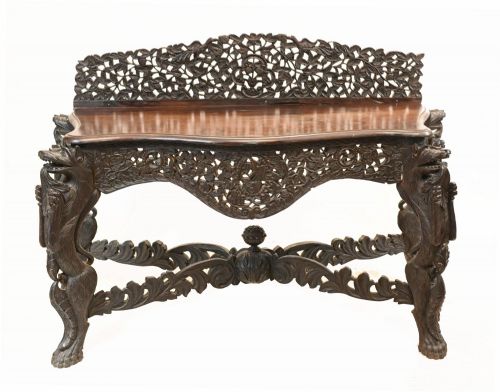

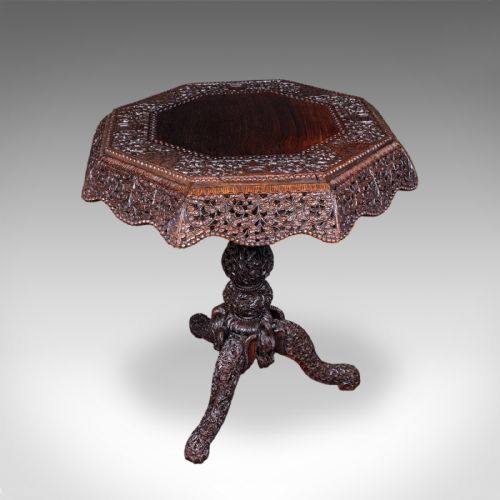
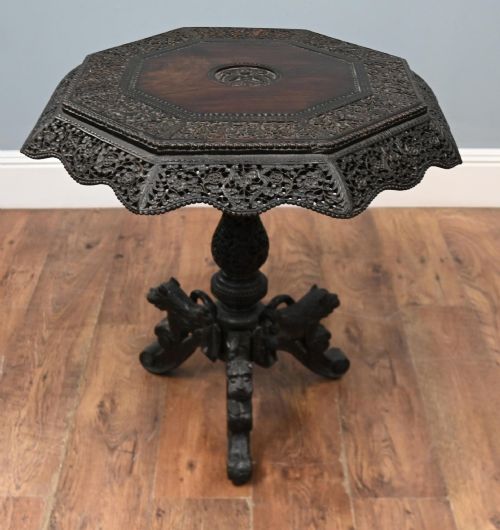
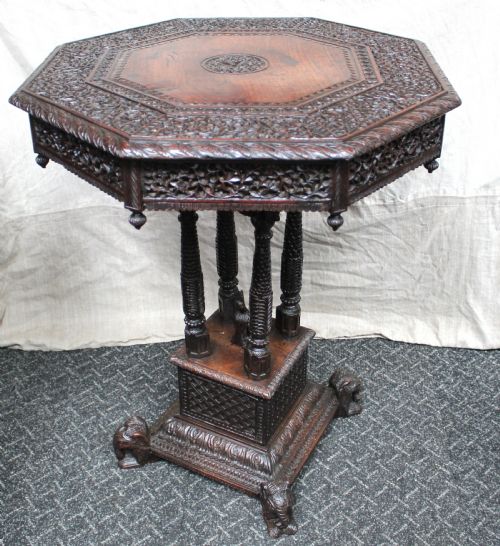


Antique Burmese Side Table
An antique burmese side table brings dense tropical hardwoods and intricate regional carving straight into a room.
Antique Burmese Side Table
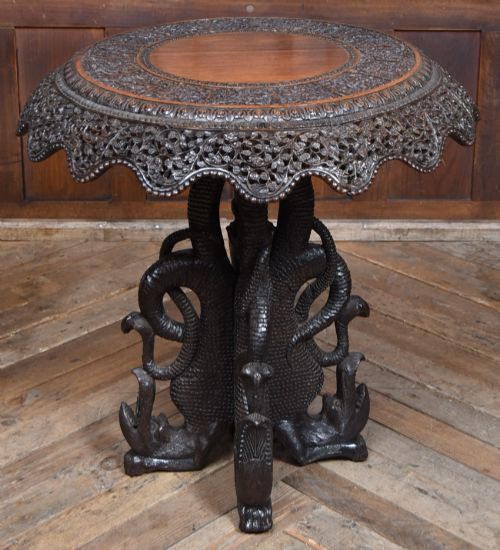
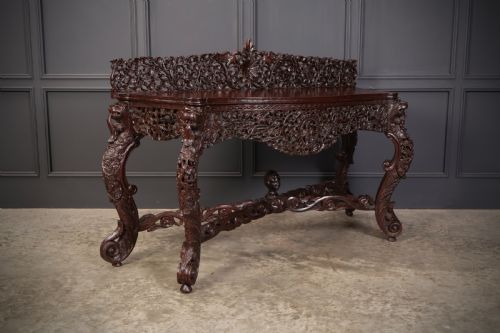
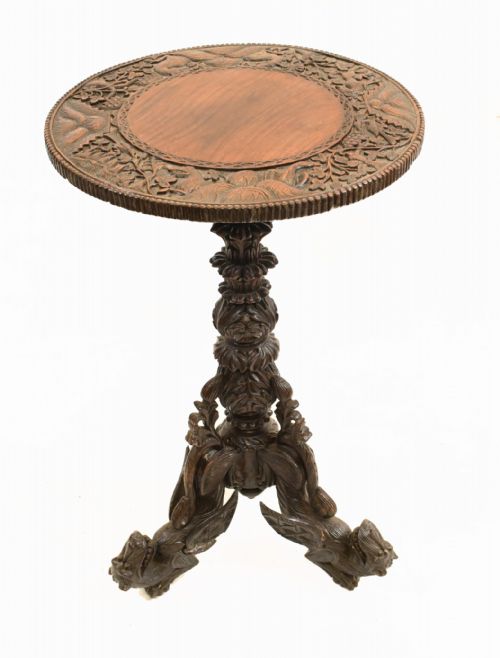
An antique burmese side table encompasses low occasional pieces, tilt-top designs, and console tables fashioned in diverse regional styles. Buyers encounter forms ranging from simple vernacular village tables to heavily carved examples with distinctive elephant leg supports.
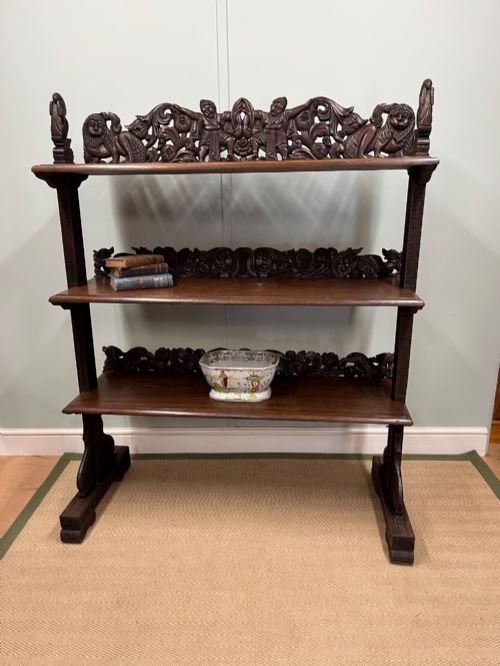
The selection here draws primarily upon nineteenth-century craftsmanship, alongside early twentieth-century interpretations. Pieces emerge in formats such as two-tier stands, three-tier buffets, and round occasional tables originating from Burma and Myanmar.
Makers utilised various traditional aesthetics, spanning Anglo-Burmese colonial pieces created for expatriate households to purely indigenous vernacular designs. These tables served practical domestic functions while displaying dense surface decoration typical of the region.
Materials and Construction
Wood selection focuses heavily on durable tropical timbers, specifically teak, padauk, and rosewood, chosen for their structural strength and rich grain. Artisans also employed general hardwoods and lighter framing woods depending on the intended function of the furniture.
Surface finish often involves traditional lacquering techniques using natural resins, sometimes enhanced with applied pigment. Many pieces rely entirely on deep hand-carving directly into the solid timber rather than applied veneers.
Structural complexity varies from straightforward pegged joinery on village tables to multi-tiered buffet frameworks and hinged mechanisms on tilt-top occasional tables. Construction reflects traditional workshop methods suited to dense native timbers.
Antique Burmese Side Table Retail Price Guide 2026
Typical asking prices for burmese side table among the pieces listed under this phrase on Sellingantiques today, from the lower quarter to the upper quarter. They describe what is for sale here now, not the wider market.
Several tables feature carved elephant legs that patiently bear the weight of your afternoon tea.
Distinctions in Quality
Quality rests significantly on the depth and crispness of the hand-carving across the top and legs, where sharp detailing distinguishes finer execution from softer, worn work. The handling of figural elements, such as elephant supports, requires careful proportion and anatomical definition.
The choice of primary timber dictates the baseline quality, with dense padauk and teak offering superior durability and rich natural colour compared to simpler utility woods. Lacquered surfaces depend on the preservation of the original pigment and the evenness of the finish.
Proportion and structural integrity separate standard utility items from more ambitious colonial or vernacular commissions. Tables retaining their original tilt-top mechanisms or multi-tiered tier supports demonstrate greater original ambition.
The Antique Burmese Side Table Glossary
- Padauk
- A dense, heavy tropical hardwood native to Southeast Asia, prized for its reddish-brown colour and durability. Artisans frequently used this timber for intricately carved console and side tables.
- Anglo-Burmese
- A style combining traditional Burmese carving techniques with European furniture forms popular during the colonial period. These pieces were often made for British residents living in Burma.
- Tilt-top
- A table design featuring a hinged top that folds vertically when not in use for convenient storage. This mechanism appears on select occasional tables in the selection.
- Buffet
- A multi-tiered shelving unit or side table used for display and serving. Listings include substantial three-tier examples constructed from teak.
- Lacquer
- A durable resin finish applied to wooden surfaces to provide protection and a smooth sheen. Lacquered tables frequently incorporate pigmented decoration.
Antique Burmese Side Table: Frequently Asked Questions
What woods were used for these tables?
Makers relied heavily on native tropical timbers, with teak and padauk appearing most frequently across the listings. Rosewood and general lacquered wood were also utilised for specific occasional and tilt-top formats.
These dense materials supported deep hand-carving and endured humid climates, resulting in heavy furniture built for longevity.
How do I identify a colonial piece?
Colonial items often fall under the Anglo-Burmese style category, merging traditional Burmese motifs with European furniture shapes. They reflect the tastes of households operating during the nineteenth century.
These pieces sit alongside purely vernacular village tables, showing a distinct blend of regional craftsmanship and Western domestic utility.
Were these tables used for dining?
While the primary forms are side tables, occasional tables, and console tables, larger formats include three-tier buffets and dining tables. Smaller pieces functioned as stands for display or tea.
Their varied heights and multi-tiered structures allowed them to adapt to diverse domestic tasks within the home.
How should I care for lacquered wood?
Lacquered surfaces require gentle dusting with a dry or slightly damp cloth, avoiding harsh chemical polishes that can degrade the finish. Keeping the furniture away from direct sunlight preserves the original pigment.
Maintaining stable indoor humidity prevents the underlying timber from shifting and protects the integrity of the lacquer.