






Hand Carved Saint Statue
These hand carved saint statue pieces bring centuries of devotion into the home, offering profound historical depth and exceptional sculptural presence.
Hand Carved Saint Statue
A hand carved saint statue represents a sacred figure shaped from timber, intended originally for private contemplation or church devotion. These sculptures span multiple centuries, ranging from late medieval church figures to nineteenth century folk art interpretations.
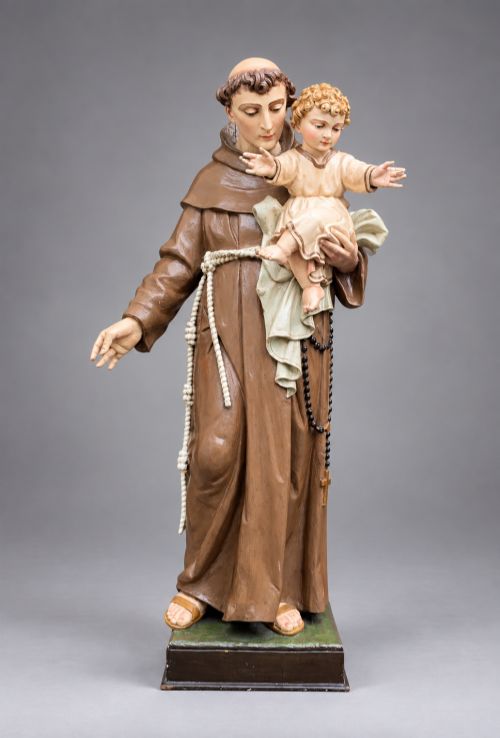
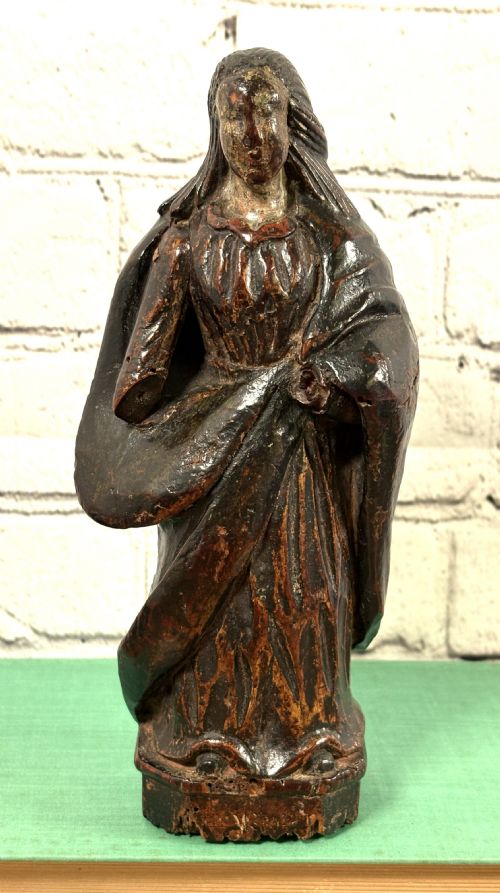
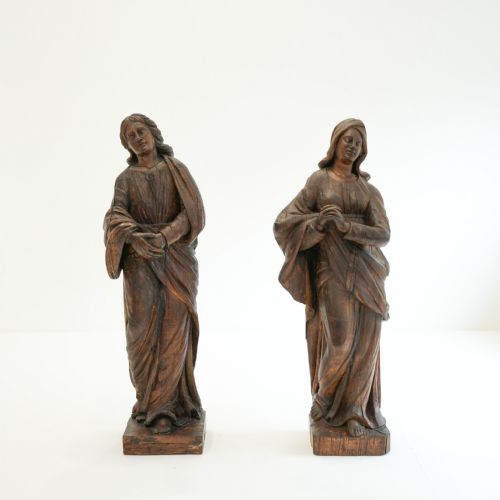
The pieces on this page appear in various timber forms, including robust oak studies and intricate limewood figures. Buyers encounter depictions of notable religious figures such as Saint Jerome, Saint Anthony of Padua, and the Virgin Mary with Child.
Regional diversity shapes the selection, with items originating from diverse European traditions including Italian folk art and German ecclesiastical workshops. Each piece carries the distinct marks of the artisan who shaped the timber by hand.
How they were made
Artisans shaped these sculptures primarily from dense hardwoods like oak and limewood, which allowed for deep undercutting and sustained durability. Workers utilised traditional gouges and chisels to reveal the form from solid timber blocks.
Listings feature oak, limewood, and carved wood pieces spanning from the pre sixteenth century period through to the twentieth century.
What varies in quality
The survival of original surface treatments, such as polychrome pigment and gold leaf, significantly influences the character of each piece. Patina accumulated through centuries of handling adds depth that inferior or overly restored surfaces lack.
Franz Keller
The Hand Carved Saint Statue Glossary
- Polychrome
- Decoration consisting of several colours applied to the surface of wood or gesso. This technique brought realism and vibrancy to religious sculptures.
- Limewood
- A fine-grained timber favoured by carvers for its lack of prominent grain and ease of cutting. It permitted intricate detail work without splitting.
- Gesso
- A plaster mixture applied to wood surfaces to provide a smooth base for painting or gilding. It sealed the timber and held pigments firmly.
- Santos
- A carved figure representing a saint or divine personage used in religious processions or home shrines. These figures often retain traditional fixtures for vestments.
Hand Carved Saint Statue: Frequently Asked Questions
Where were these statues originally displayed?
Many figures stood within rural churches, monastic chapels, or roadside shrines across Europe. Others served as central foci for private devotion within domestic household shrines.
Processional figures participated in outdoor religious festivals, which accounts for the specialised mounting holes or handling wear found on certain pieces.
How should I care for a antique wooden statue?
Keep the sculpture away from direct sunlight and sudden temperature fluctuations to prevent the timber from splitting. Maintain a stable indoor humidity level to preserve both the wood and any historic gesso.
Dust the surface gently with a dry, soft brush rather than using wet cloths or polishes. Protecting the natural patina ensures the historic finish remains undisturbed.
What does polychrome mean on these sculptures?
Polychrome refers to the historic application of multiple coloured paints directly onto the wood or gesso ground. Artisans used this method to render lifelike flesh tones and vibrant garments.
Surviving traces of original pigment indicate how the piece looked in its original ecclesiastical setting. Collectors prize surfaces that retain honest remnants of these early decorative schemes.