

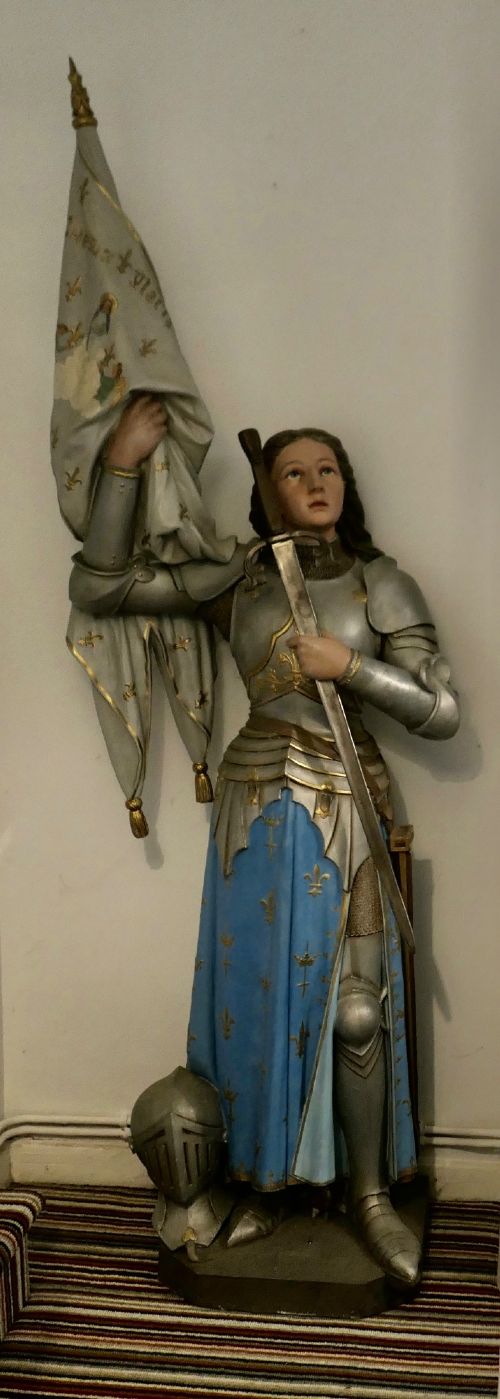

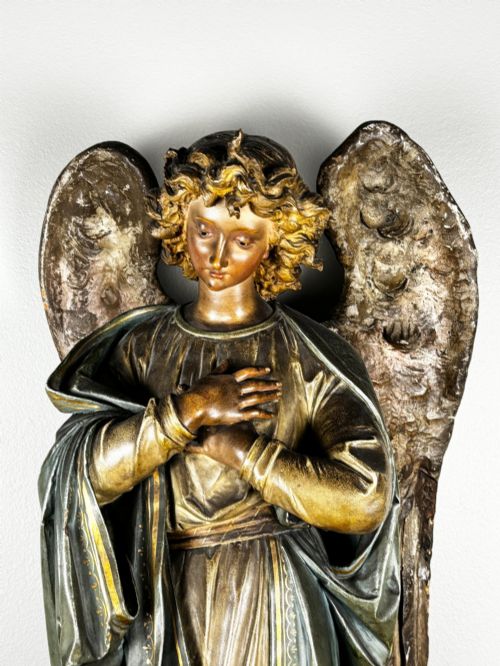
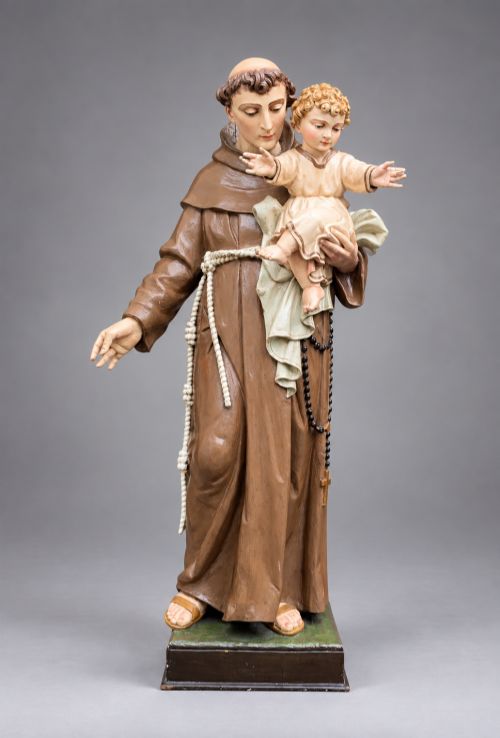
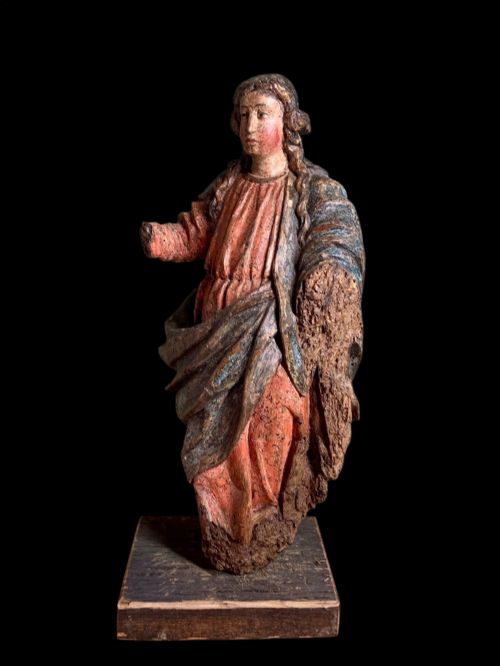


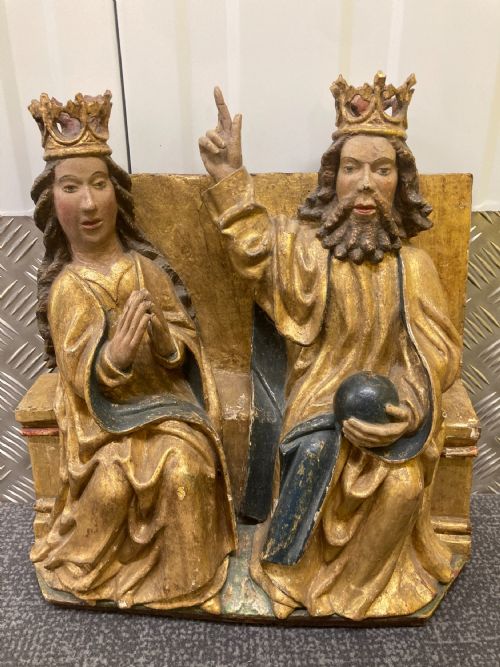

Antique Polychrome Church Statue
An antique polychrome church statue brings centuries of devotion into a room, offering rich layers of pigment over historic carved wood.
Antique Polychrome Church Statue
An antique polychrome church statue encompasses devotional figures and carved religious reliefs originating from various European traditions. Buyers seeking these works encounter representations of saints, angels, Madonna and child groups, and figures of Christ spanning several centuries.
The selections available here range from modest devotional objects to substantial life-size figures and processional pieces. Most examples emerge from continental workshops, displaying distinct regional carving traditions from Italy, Spain, France, and Germany.
Dating across these listings stretches from the sixteenth century through the Victorian era and into the early twentieth century. Pieces take the form of freestanding statues, paired altar angels, and relief carvings executed in timber.
Materials and construction methods
Carved wood serves as the primary substrate for these sculptures, utilising timbers such as oak and various softwoods chosen for stability and carving qualities. Artisans shaped the figures using traditional chisels and gouges to achieve expressive drapery and anatomical detail.
Surfaces were typically prepared with a layer of gesso before the application of polychrome paint and gilding. Painters used natural pigments combined with gold leaf to render vestments, flesh tones, and decorative borders with striking visual depth.
Antique Polychrome Church Statue Retail Price Guide 2026
Typical asking prices for polychrome church statue among the pieces listed under this phrase on Sellingantiques today, from the lower quarter to the upper quarter. They describe what is for sale here now, not the wider market.
Listings feature works spanning from the sixteenth century to the early twentieth century, utilising carved wood, gesso, paint, and gold leaf.
Distinguishing quality in polychrome sculpture
Quality resides in the sculptural fluency of the carving, particularly in the handling of facial expression and the fall of drapery. Superior pieces demonstrate confident anatomical understanding and rhythmic line that brings a static block of timber to life.
The preservation and handling of the original surface pigments also dictate the standing of a work. Skilful application of early paint layers, combined with natural patination over the gesso, distinguishes master workshop output from simpler vernacular production.
Rouillard Angers
The Antique Polychrome Church Statue Glossary
- Polychrome
- Decorated in several colours. This term describes sculpture and woodcarvings finished with painted surfaces rather than plain wood.
- Gesso
- A plaster mixture used as a smooth base for paint or gold leaf. It was applied to the timber substrate before decoration.
- Capipote
- A Spanish devotional figure with a detailed carved head and hands attached to a simplified armature dressed in real fabric. These statues were often used in processions.
- Giltwood
- Timber decorated with gold leaf or gold paint. It frequently appears alongside painted pigments on ecclesiastical carvings.
- Santos
- A term for a figure representing a saint, commonly used in reference to Spanish and Italian devotional art.
Antique Polychrome Church Statue: Frequently Asked Questions
How were these statues used?
These figures served primarily as focal points for prayer, devotion, and liturgical display within churches, private chapels, and domestic shrines. Many larger examples were incorporated into altarpieces or carried through streets during religious processions.
Over time, surviving pieces transitioned from active ecclesiastical settings into collections and interior displays, retaining their atmospheric presence and historic function.
Where did these statues originate?
The pieces originate from workshops across continental Europe, with strong representation from Italy, Spain, France, and Germany. Each region developed distinct stylistic traits, such as the dramatic intensity associated with Spanish Baroque carving or the refined detail of Italian workshop output.
Local timber availability and regional religious traditions heavily influenced the design and execution of each sculpture.
How do I live with antique church figures?
Placing these sculptures in a room requires stable environmental conditions away from direct heat sources and strong sunlight, which can destabilise old wood and pigments. They work well mounted securely on walls or displayed on sturdy surfaces where their detailed carving can be appreciated.
Maintenance involves gentle dusting with a soft brush, avoiding chemical cleaners that might disturb the historic paint layers and gesso.