





European Religious Wood Carving
These european religious wood carving pieces carry centuries of devotion in oak and gesso, offering a tangible link to old ritual practice.
European Religious Wood Carving
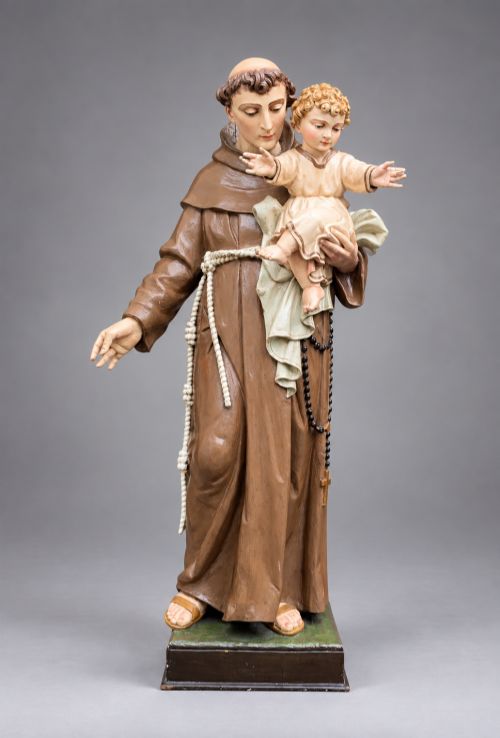
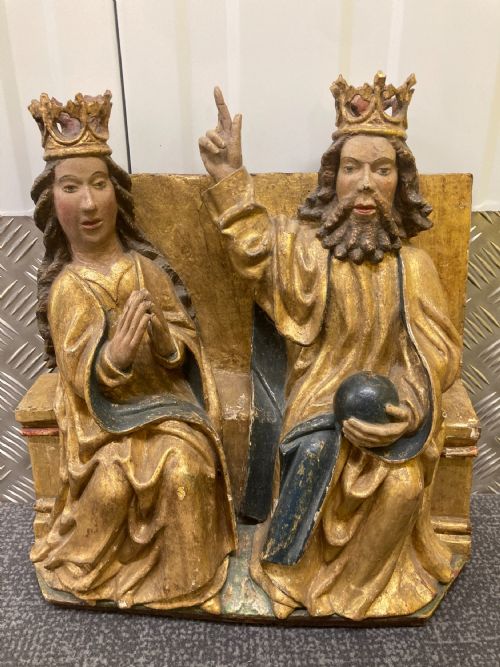
When searching for european religious wood carving, collectors encounter devotional sculptures, statues, and architectural fragments ranging from pre-sixteenth century works to the early twentieth century. The selection spans figures of saints, cherubs, and biblical groups originating from regions such as the Upper Rhine, Croatia, and the Czech lands.
Statues of figures like Saint Jerome, Saint John, and Christ dominate the selection, appearing either as single free-standing sculptures or as paired saints. Forms vary from monumental life-size figures to intimate busts and group carvings designed for altars and domestic shrines.
The style shifts across the periods represented, moving from mediaeval and late gothic austerity to the dramatic flourishes of the renaissance and baroque. Buyers will also find nineteenth-century folk art interpretations alongside older ecclesiastical works.
Materials and construction
Carved wood forms the core of every piece, with oak serving as a primary timber for many figures due to its durability and grain. Craftsmen shaped these timbers using chisels and gouges to create drapery, facial expressions, and anatomical details.
Surface decoration frequently involves layers of gesso applied to the timber to provide a smooth ground for subsequent painting and gilding. Polychrome paint and gold leaf bring colour and luminosity to the garments and flesh tones of the saints.
Surviving polychrome and gilt finishes often show the natural wear of centuries, revealing the underlying preparation layers and wood grain beneath the pigment.
European Religious Wood Carving Retail Price Guide 2026
Typical asking prices for european religious wood carving among the pieces listed under this phrase on Sellingantiques today, from the lower quarter to the upper quarter. They describe what is for sale here now, not the wider market.
A lone cherub from the late eighteenth century watches over the collection, reminding us that carvers occasionally enjoyed carving chubby celestial infants.
Distinctions in quality
The sophistication of the carver's hand dictates the hierarchy of quality, separating stiff, rudimentary forms from expressive drapery and naturalistic anatomy. Superior sculptures capture movement and emotion in the folds of cloth and the treatment of hair and hands.
The preservation of original surface treatments marks another distinction, as untouched gesso, gold leaf, and polychrome paint hold greater historical integrity than later overpainting or stripped timber. The depth of relief and the complexity of multi-figure groups also separate standard devotional items from masterworks.
The European Religious Wood Carving Glossary
- Polychrome
- Painted in several colours. This surface treatment was applied over wood or gesso to give lifelike hues to religious statues.
- Gesso
- A plaster mixture used as a smooth base for paint or gold leaf. It fills tool marks and prepares the wooden surface for decoration.
- Giltwood
- Wood that has been decorated with thin sheets of gold leaf. This technique illuminated sacred figures in dim ecclesiastical interiors.
- Donor figure
- A portrait of the person who commissioned a work of art, included in the carving. These figures often appear in a posture of prayer beside saints.
- Ecclesiastical
- Relating to the Christian Church or its clergy. Pieces described this way were originally made for use in churches, monasteries, or chapels.
European Religious Wood Carving: Frequently Asked Questions
How old are these wood carvings?
The pieces span from pre-sixteenth century mediaeval works up to nineteen-ten, covering several centuries of European craftsmanship.
Most items sit within specific historical brackets such as the sixteenth, seventeenth, and eighteenth centuries, reflecting changing aesthetic movements like gothic and baroque.
Where did these statues originate?
The sculptures hail from various European regions including the Upper Rhine, Croatia, and the Czech lands. Each area brought local timber choices and regional sculptural traditions to the finished work.
Local workshops adapted broader continental styles like the renaissance and baroque to suit their own ecclesiastical markets.
Were these pieces used in churches?
Many of these statues and group carvings served an ecclesiastical function in religious institutions, decorating altars, walls, and shrines. Others were created for private devotion in domestic settings.
Figures like Saint John or Christ in the tomb were central to ritual practice and contemplation during the mediaeval and later periods.
How should I clean polychrome wood?
Painted and gilded wooden surfaces require gentle dusting with a soft, dry brush to remove loose particles. Moisture and chemical cleaners should be avoided entirely to protect fragile gesso and old pigment.
Stabilising the environment against extreme humidity changes helps preserve both the timber substrate and the delicate historic paint layers.