
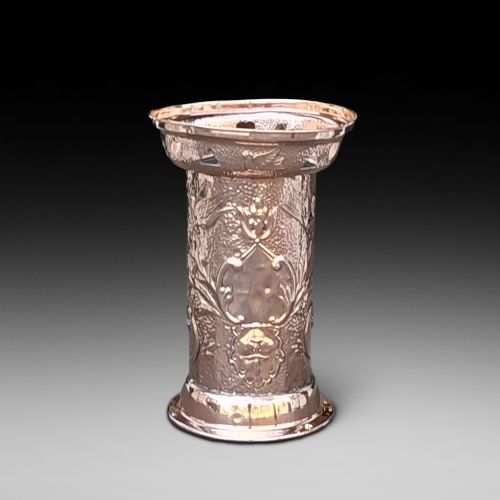


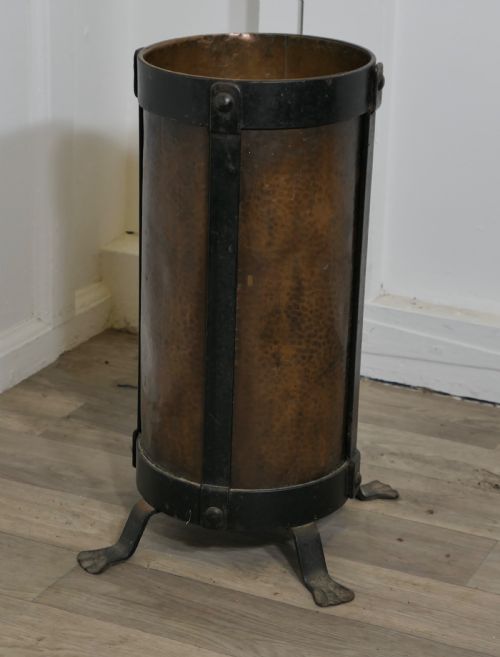


Hammered Copper Stand
A hammered copper stand brings tactile warmth and distinctive metalwork to an interior, channelling the industrious spirit of the Arts and Crafts movement.
Hammered Copper Stand
When you search for a hammered copper stand, you encounter functional household objects primarily built for utilitarian roles in hallways and hearths. The most common forms on this page are umbrella and stick stands, alongside substantial pairs of pricket candlesticks and companion vessels.
These items originate predominantly from the late nineteenth century through to the early decades of the twentieth century. They span periods such as the Victorian era, the 1890s, and 1900, carrying the hallmarks of Arts and Crafts, Art Nouveau, and Amsterdam School design.
Beyond hallway furniture, the selection includes related domestic pieces such as firescreens, hanging kettles, and planters on stands. Each object marries domestic utility with expressive metalworking traditions from Britain, France, and the Netherlands.
How they were made
Makers shaped sheet copper by hand, raising the metal through repetitive hammering to create undulating surfaces that catch the light. Rivets fastened the seams and structural plates, ensuring both mechanical strength and visual industrial charm.
Iron and brass frequently supplemented the copper framework, providing sturdy structural supports, bases, and handles. Oak frames and turquoise cabochons occasionally appeared as decorative accents, grounding the metallic forms in mixed-media compositions.
Some umbrella stands double as garden planters, proving that nineteenth-century rain gear and ferns shared identical domestic ambitions.
What varies in quality
Quality reveals itself in the depth and deliberate rhythm of the hand-hammered texturing across the copper surface. Superior examples display confident tool marks that demonstrate genuine craftsmanship rather than mechanical imitation.
The integration of supporting materials dictates the overall calibre of the piece. Robust iron binding, solid brass fittings, and secure riveting elevate utilitarian items into enduring works of decorative art.
The Hammered Copper Stand Glossary
- Arts and Crafts
- A design movement valuing handcraftsmanship, simple forms, and traditional guild methods over mass production. It emerged in Britain in the late nineteenth century.
- Pricket candlestick
- A candleholder featuring a sharp metal spike upon which a wax candle is impaled. This form frequently appears in large ecclesiastical or floor-standing variants.
- Amsterdam School
- An architectural and design style originating in the Netherlands, known for expressive brickwork, organic forms, and dynamic metalwork. It flourished in the early twentieth century.
- Firescreen
- A decorative panel placed before a domestic fireplace when not in use. They often incorporated hammered copper panels set within wooden or metal frames.
Hammered Copper Stand: Frequently Asked Questions
What rooms suit a copper stand?
These stands naturally gravitate towards entrance halls and boot rooms where their original utility as umbrella holders remains practical. Their warm metallic tones also complement studies and living spaces near fireplaces.
Because copper resists moisture well, they function reliably in high-traffic areas without losing their structural integrity over decades of daily domestic use.
How do I care for antique copper?
Maintaining antique copper requires gentle dusting with a soft, dry cloth to preserve the natural oxidation and patina accumulated over centuries. Avoid aggressive commercial metal polishes that strip away historical character.
Keeping the metal away from damp environments prevents active corrosion while allowing the rich surface tones to age gracefully in your home.
How do I spot an Arts and Crafts piece?
Look for visible construction details such as hand-hammered texturing, exposed rivet heads, and honest joins between dissimilar materials. These characteristics reflect the philosophy of movement makers who celebrated human labour.
Stylistic cues often include organic motifs, geometric restraint, and robust framing using oak or wrought iron alongside the central copper body.
What is an Amsterdam School piece?
Amsterdam School objects exhibit bold, sculptural forms with expressive, fluid contours that push traditional metalworking boundaries. They often feature dramatic proportions and heavy gauge copper.
These Dutch works contrast with restrained British Arts and Crafts items through their avant-garde silhouettes and theatrical scale.