




Copper Cane Holder
These copper cane holder pieces are sturdy hall furnishings designed to hold walking sticks and umbrellas, built to last a lifetime.

Copper Cane Holder
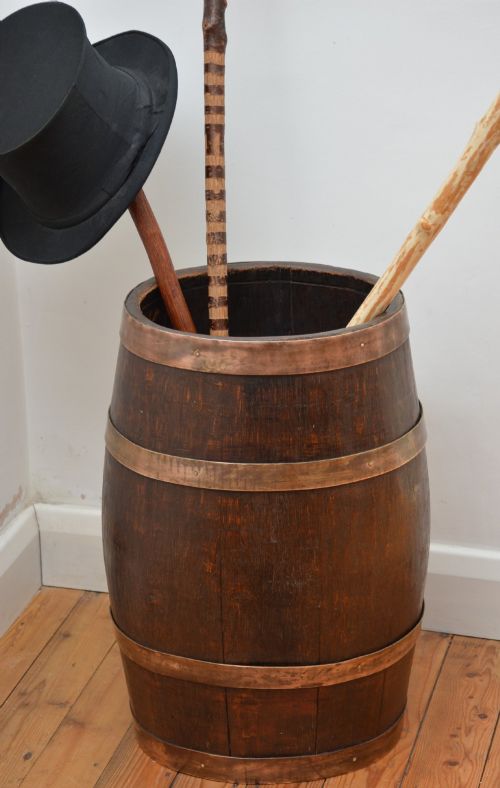
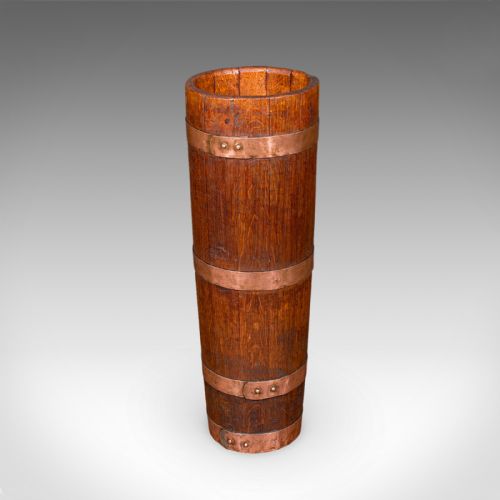
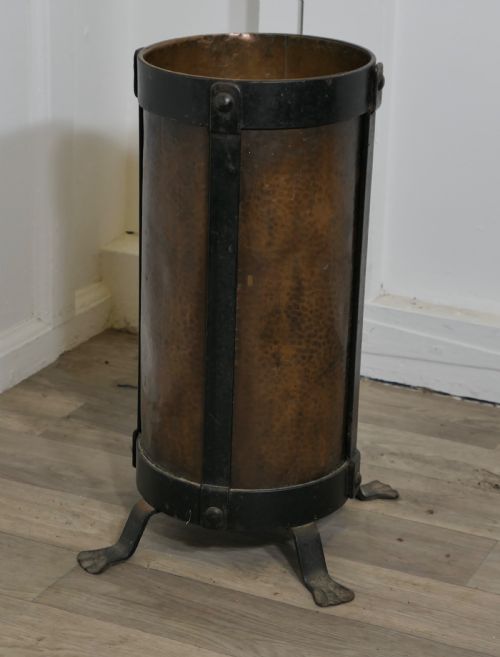
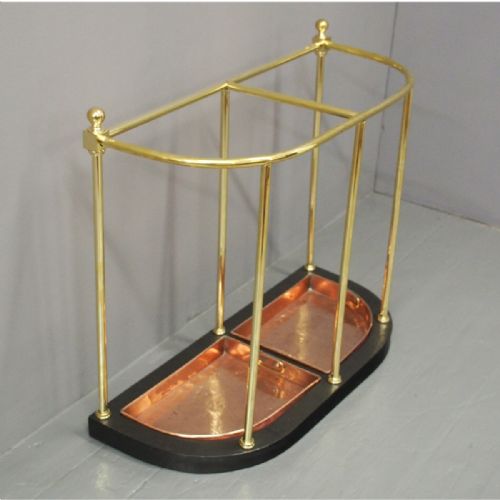
A copper cane holder serves as a practical vessel for walking sticks and umbrellas in a hallway, often taking the form of a cylindrical bucket or stand. When searching for a copper cane holder, you meet utilitarian hallway items that combine sheet metal work with iron bindings or wooden staves.
The pieces listed span the nineteenth century and the Victorian era, showing origins in English country houses and golf clubs. Most examples lean towards Arts and Crafts design sensibilities or robust coopered construction, serving daily domestic life.
How they were made
Maker workshops built these objects using heavy sheet copper combined with iron bindings, wrought iron elements, or cast iron bases to provide stability. Coopered wooden barrels utilise oak staves bound with metal hoops, marrying traditional coopering techniques with metallic finishes.
Artisans hammered and riveted the copper bodies, attaching iron loop handles or reinforcing rims to withstand the heavy daily use of wet umbrellas and heavy walking canes.
What varies in quality
Quality rests in the weight of the metal gauge and the integrity of the structural joints, distinguishing sturdy daily containers from lighter decorative items. Thicker copper sheet and robust iron or oak framework demonstrate superior craftsmanship that survives generations of hallway use.
The crispness of the hand-beating on the copper surface and the tightness of the coopered joints mark the distinction between standard utilitarian items and finer Arts and Crafts workshop production.
The Copper Cane Holder Glossary
- Coopered
- Constructed from wooden staves fitted together side by side and bound with metal hoops, much like a traditional barrel. This technique provides structural strength for tall cylindrical vessels.
- Arts and Crafts
- A design movement emphasising handcraftsmanship, simple forms, and visible construction methods rather than mass production. Objects from this tradition celebrate the honest qualities of copper and iron.
- Wrought iron
- Iron that has been heated and shaped with hand tools by a blacksmith, producing fibrous textures and strong structural components. It frequently appears in the handles and frames of these stands.
- Stick stand
- A domestic furnishing designed specifically to store walking sticks, canes, and umbrellas upright in an entrance hall. They keep floors dry and belongings organised.
Copper Cane Holder: Frequently Asked Questions
What is a copper cane holder?
A copper cane holder is a sturdy hallway receptacle designed to keep walking sticks, canes, and umbrellas neat and upright.
These pieces use durable metals and woods to withstand the moisture from wet umbrellas and the weight of heavy walking gear.
How do I date a Victorian stick stand?
Dating relies on examining the construction methods, materials, and stylistic details such as Arts and Crafts hand-beating or coopered oak staves.
Nineteenth-century examples often display specific assembly techniques like hand-cut rivets and forged iron bands that differ from later reproductions.
Where were these umbrella stands used?
These items originally stood in the grand hallways and boot rooms of nineteenth-century country houses and sporting clubhouses.
Guests and residents deposited their wet umbrellas and walking sticks upon entering the house to protect interior wooden floors.
How do I clean antique copper?
Cleaning antique copper requires gentle dusting and occasional wiping with a soft cloth to preserve the natural aged patina.
Aggressive metal polishes strip away the historical surface character that collectors value on nineteenth-century hallway items.