




Copper Umbrella Stand
These copper umbrella stand examples are sturdy hall vessels that keep hallways dry and hold walking sticks with rugged tactile metalwork.

Identifying your copper umbrella stand
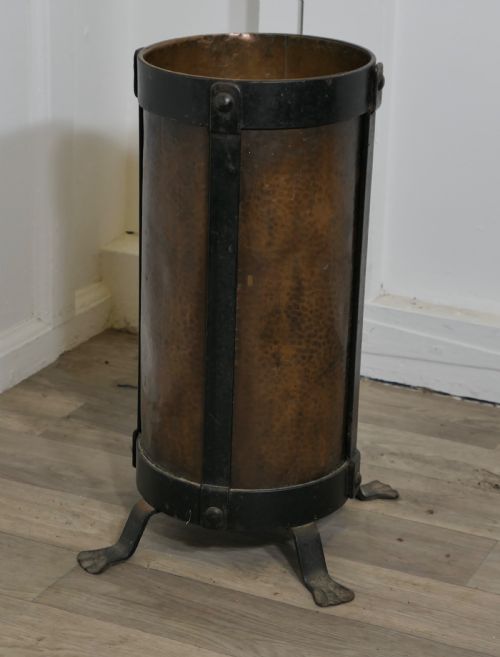
A copper umbrella stand is a practical hall vessel designed to store wet walking sticks and umbrellas neatly away from floors. You will frequently encounter Arts and Crafts examples alongside Victorian iterations and nineteenth century country water barrels repurposed for daily use.
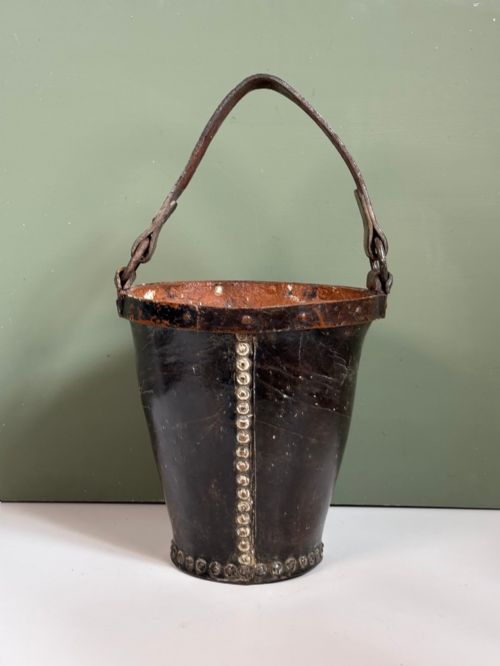
Forms span from straightforward cylindrical buckets to tapered milk churns and iron-bound barrels. Many incorporate brass handles or cast iron frames to provide stability when holding heavy wooden walking sticks.
Origins stretch across English workshops, French studios and Scandinavian country homes. These pieces often blur the line between utilitarian water containers and decorative hall furniture.
Materials and construction methods
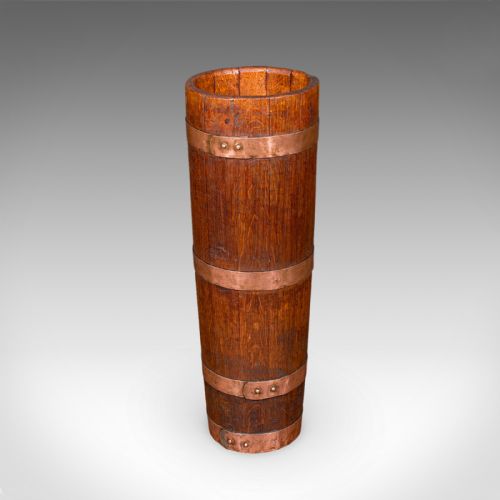
Makers shaped sheet copper around sturdy internal structures or riveted the seams to create watertight cylinders. Iron banding and cast iron bases were frequently added to secure the metal bodies and prevent tipping.
Brass trims, handles and feet appear alongside the primary copper sheets, introducing tonal contrast to the surface. Oak panels and frames occasionally support the metal inserts in larger hall stand configurations.
Retail Price Guide 2026
Typical UK retail prices for copper umbrella stand, calculated from the Sellingantiques database of over a million retail prices indexed since 2003. This retail price guide relies exclusively on Sellingantiques data; no external sources or auction records are used, so the figures do not describe the wider market.
At least one sturdy milk churn spent its early life on a farm before being promoted to polite hallway umbrella duty.
Assessing quality and character
Quality rests in the weight of the metal and the integrity of the construction rather than pristine surfaces. Heavier gauge copper and robust iron bindings denote superior utility and longevity in a busy hall.
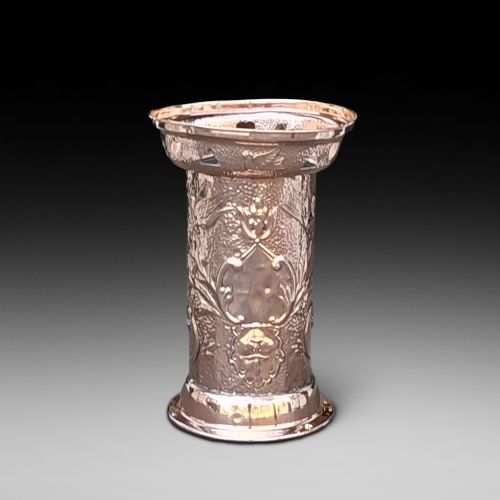
Hand-hammered detailing and embossed ornamentation elevate simple vessels into considered Arts and Crafts statements. Patina and honest signs of past dampness reveal the authentic age and working life of each piece.
Shapland and Petter Of Barnstaple·Liberty and Co
The Copper Umbrella Stand Glossary
- Water Barrel
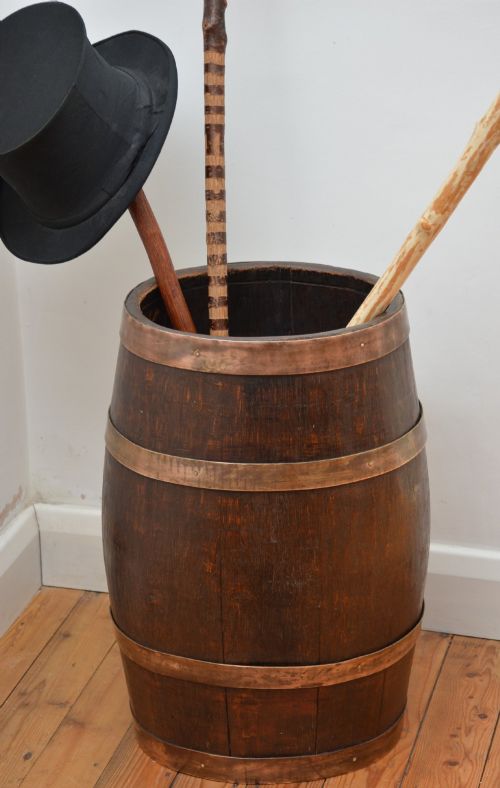
- A deep cylindrical vessel originally intended for holding household water supplies. Several examples on this page were originally manufactured as water barrels before serving as umbrella stands.
- Cast Iron
- A heavy, durable iron alloy used for structural bases and internal framing. It provides the necessary weight to keep tall stick stands upright when loaded.
- Patina
- The natural surface oxidation and darkening developed on copper over decades of exposure to air and handling. Collectors value a rich, undisturbed patina for its historical depth.
- Embossed
- Raised ornamentation hammered or pressed into the surface of the sheet metal from behind. This technique appears on decorative French and English stands.
Frequently Asked Questions
Will wet umbrellas damage the copper inside?
Copper naturally resists corrosion from moisture, making these vessels well suited for holding damp umbrellas over long periods.
Over time, regular contact with water deepens the internal patina without compromising the structural integrity of the metal.
How do I clean a copper umbrella stand?
Wipe the exterior gently with a soft, dry cloth to remove dust while leaving the historical surface oxidation undisturbed.
Avoid abrasive metal polishes that strip away the aged character and variable tones collected over a century.
Are these stands heavy enough for big walking sticks?
Most pieces incorporate iron bands or heavy cast iron bases designed specifically to anchor the taller vessels against tipping.
Water barrels and milk churn conversions offer particularly wide bases that easily accommodate heavy wooden walking canes.
How can I tell an Arts and Crafts stand apart?
Arts and Crafts examples typically feature visible hand-hammered marks, exposed rivets and structural brass or copper strapping.
These details reflect a deliberate rejection of industrial uniformity in favour of visible craftsmanship.