


Art Nouveau Copper Vessel
These art nouveau copper vessel examples bring fluid plant forms and hammered metal into domestic spaces, offering both practical utility and distinct decorative appeal.
Art Nouveau Copper Vessel
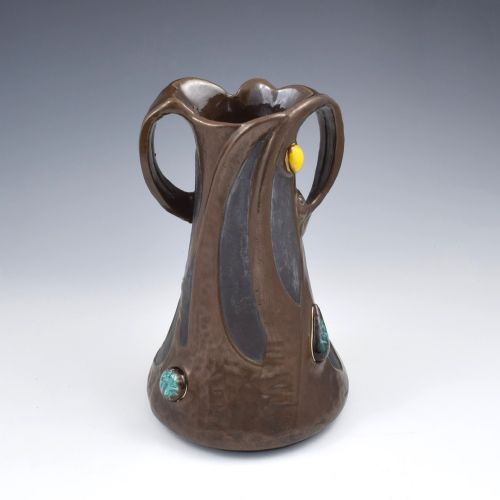
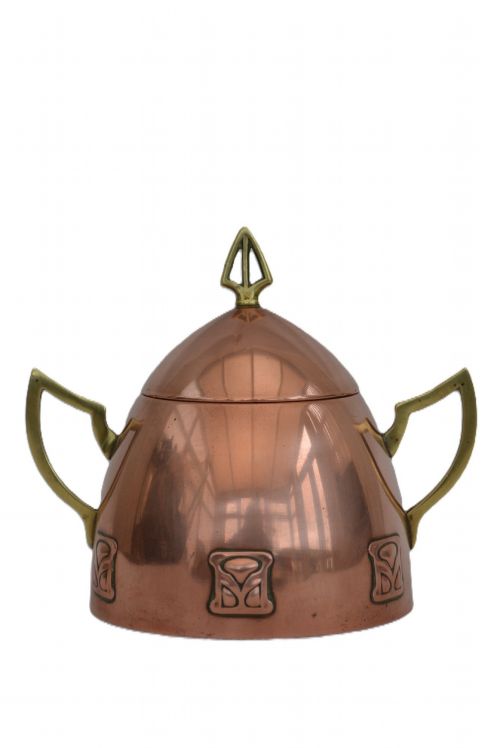
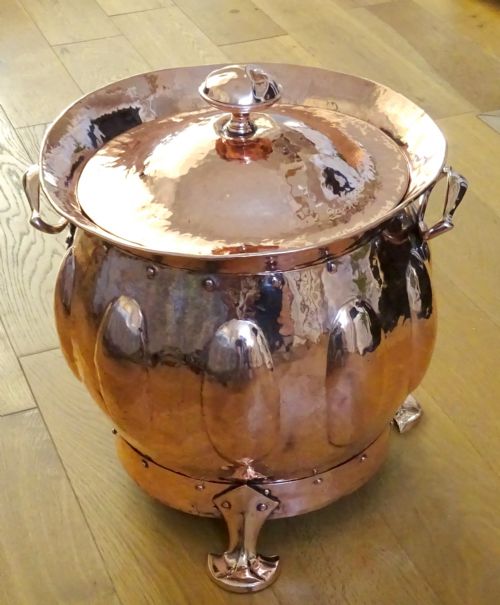
An art nouveau copper vessel embodies the characteristic organic lines, whiplash curves, and floral or botanical motifs of the movement, spanning utilitarian and decorative household items. When you search for an art nouveau copper vessel, you encounter domestic objects intended for both display and daily service.
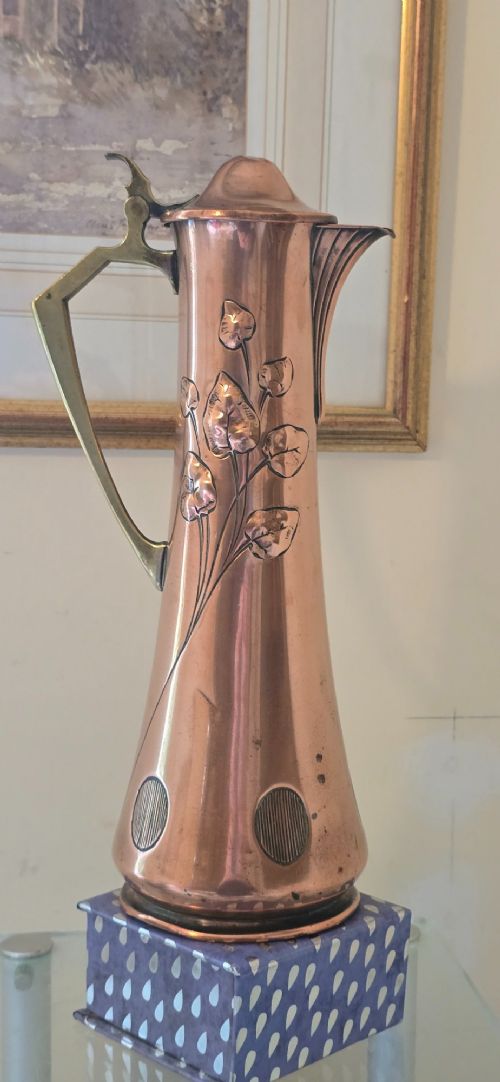
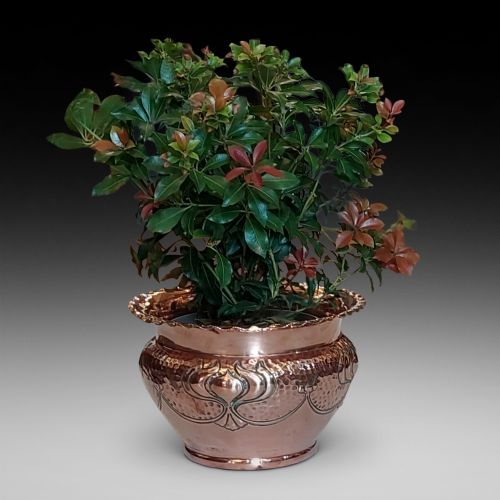
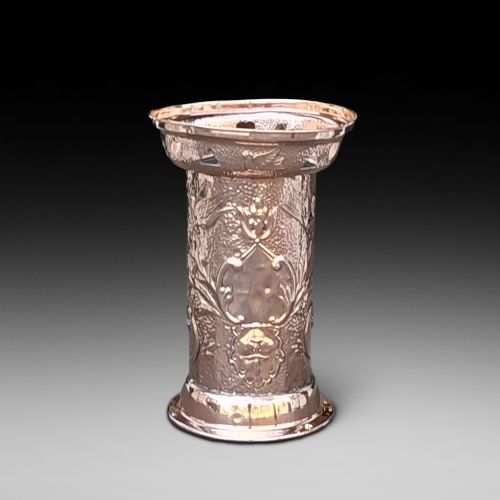
The pieces appearing on this page take various functional forms, ranging from tall ewers and jugs to planters, jardinieres, stick and umbrella stands, sugar bowls, and larger fireplace containers like coal scuttles and log bins. Ewers, jugs, and planters dominate the selection, showcasing how metalwork served both decorative and utilitarian roles in period interiors.
Originating predominantly from the late nineteenth and early twentieth centuries, these items bridge Victorian production and Edwardian design sensibilities. Makers utilise copper extensively, occasionally combining it with brass, earthenware, glazed ceramic, or tin to achieve contrasting colour and texture.
Materials and construction methods
Makers construct these items primarily from sheet copper, shaping the metal through spinning, hammering, or pressing techniques. Surface treatments often include chased or embossed floral relief designs, bringing vegetative patterns into relief against the warm metallic ground.
Certain examples incorporate mixed media, such as glazed ceramic bodies treated with a copper effect finish, or applied jewelled cabochons that add spots of colour. Handles and mounts in brass or tin frequently complement the main copper body, secured with visible rivets or soldering.
Makers such as WMF and Joseph Sankey applied specific plating and patination methods to achieve particular tonal qualities on the metal surface. These production choices define the tactile character of each piece, balancing industrial manufacturing techniques with hand-finished detail.
Assessing quality in period metalwork
Quality rests upon the crispness of the relief work and the structural integrity of the metal body. Finer pieces display deeply struck or hand-chased botanical motifs with clean edges, whereas lesser examples show shallow stamping that loses definition.
The weight and gauge of the copper also distinguish better production from ordinary utility wares. Substantial metal resists denting and supports the form securely, particularly in large objects like umbrella stands, log bins, and coal scuttles.
Integration of secondary materials, such as firmly mounted brass handles, intact ceramic inserts, or secure cabochons, indicates superior craftsmanship. Original patination and minimal surface intervention preserve the intended visual character set down by the maker.
WMF·Bretby Pottery·Joseph Sankey
The Art Nouveau Copper Vessel Glossary
- Ewer
- A large jug with a wide spout and a curved handle, traditionally used for holding water or wine. In this period, they serve primarily as decorative display items.
- Planter
- A decorative container designed to hold potted plants or flowers. They often feature protective metal liners to catch excess water.
- Cabochon
- A polished, convex gem or glass stone without facets, frequently used to embellish metalwork in this style. They add points of colour and texture to the surface.
- Jardinere
- An ornamental stand or large container for growing or displaying flowers indoors. These items frequently take pride of place on tables or hearths.
- Secession
- A modern art movement in Central Europe that rejected academic traditions in favour of simplified, geometric forms alongside organic decoration. WMF and other makers adopted these progressive styling cues.
- Patina
- The natural surface sheen developed on copper over time through oxidation and handling. Collectors value original patination for recording the age and history of the object.
Art Nouveau Copper Vessel: Frequently Asked Questions
What are art nouveau copper vessels?
These pieces are decorative and functional metal items produced around the turn of the twentieth century, featuring organic motifs, whiplash lines, and floral relief work.
They encompass a range of domestic forms, including jugs, planters, coal scuttles, and umbrella stands, reflecting the aesthetic priorities of the Arts and Crafts and Art Nouveau movements.
How do I clean an antique copper vessel?
Cleaning requires a cautious approach to preserve the natural patination and any original surface treatments. Aggressive polishing can strip away the historical character built up over a century.
Dust the piece gently with a soft cloth and avoid abrasive commercial cleaners that might damage embossed details or applied cabochons.
Were these items used daily?
Many of these objects served practical household functions in period homes, from carrying coal to the hearth to holding umbrellas by the hallway entrance.
At the same time, smaller items like sugar bowls and decorative vases acted as ornamental centrepieces in drawing rooms and dining spaces.
How do I distinguish Edwardian pieces from Victorian ones?
Differentiating these periods relies on subtle shifts in proportion and decorative restraint, as Edwardian design often favoured slightly lighter, more streamlined forms compared to heavier Victorian counterparts.
Makers' marks and registration numbers stamped into the base frequently provide definitive clues to the exact era of production.