
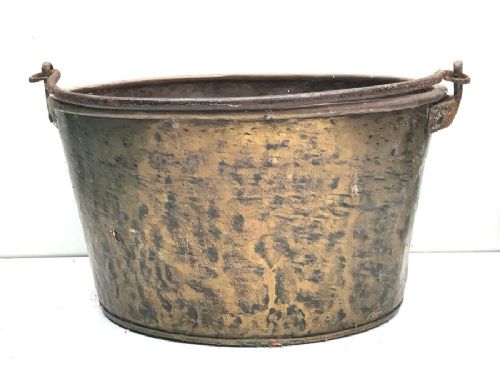
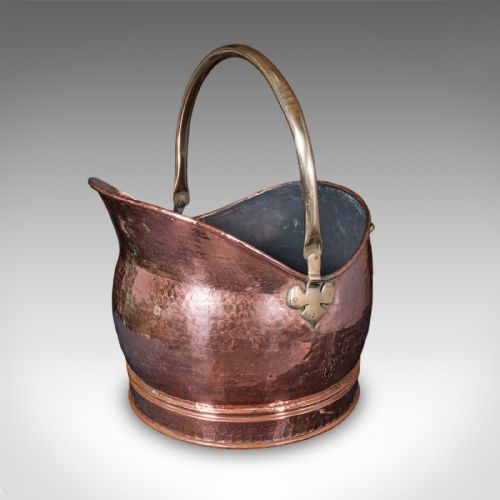
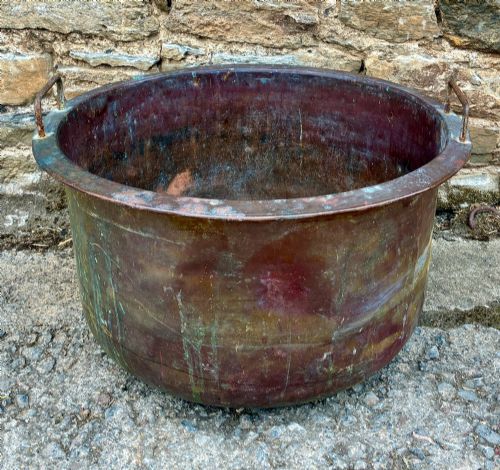
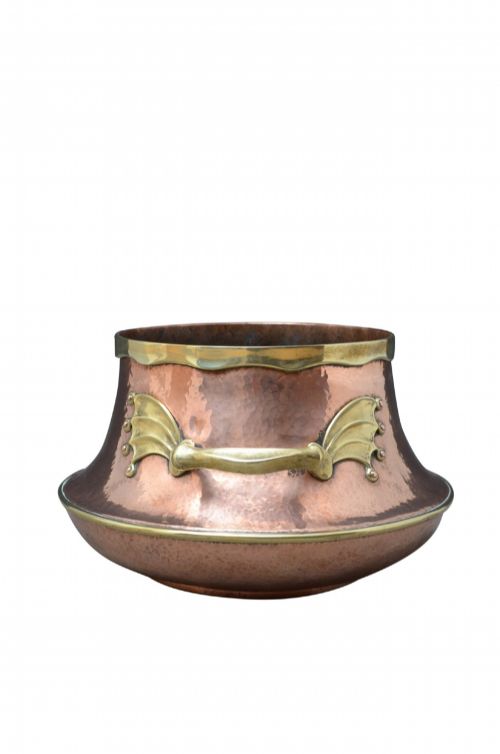
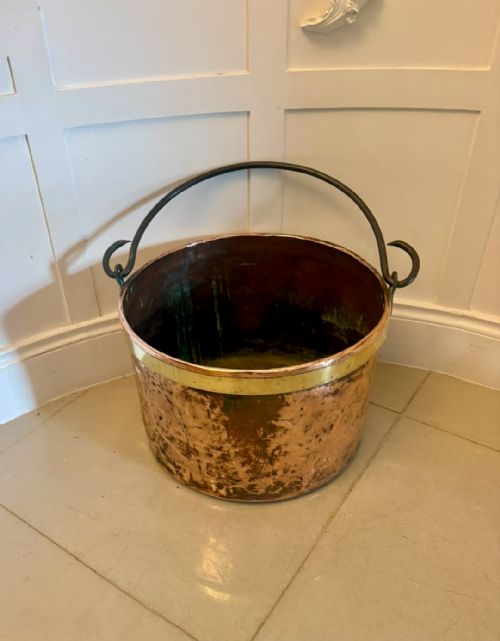
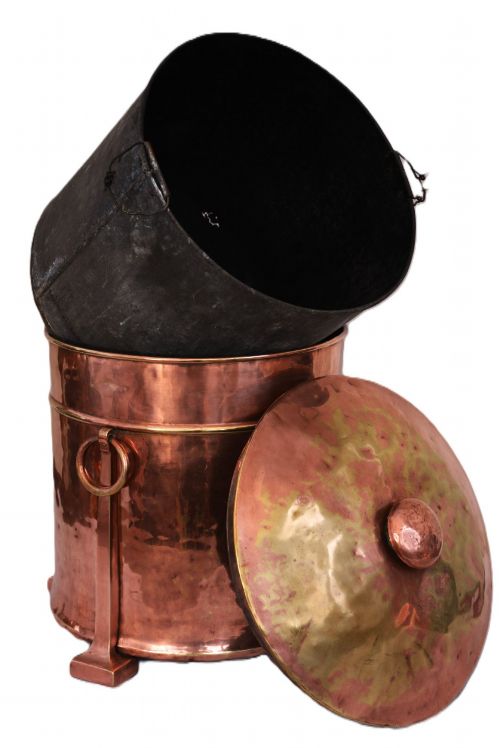


Hammered Copper Bucket
A hammered copper bucket brings warmth and texture to a hearth, offering a durable vessel for coal, logs, or household storage.
Hammered Copper Bucket
A hammered copper bucket is a utilitarian vessel repurposed for domestic firesides and decorative displays, appearing frequently in Victorian, Arts and Crafts, and Georgian forms. Buyers seeking these pieces encounter coal scuttles, log bins, and jardinières designed to hold fuel or plants near the fireplace.
The most common examples on this page date from the nineteenth century and the Arts and Crafts period, combining functional metalwork with decorative hand-beaten surfaces. These vessels range from helmet-shaped scuttles to cylindrical bins fitted with brass or iron handles.
Originating as practical items for kitchen, hearth, or farm use, these buckets now serve primarily as interior decor accessories. Their robust construction allows them to endure as storage containers while adding metallic depth to traditional and contemporary rooms alike.
How they were made
Makers shaped these vessels from sheet copper, joining seams with visible hand-driven rivets or soldering to ensure structural strength. Handles and accents in brass, wrought iron, or tin were then attached to complete the piece.
The characteristic surface texture comes from manual hammering or hand-beating, a technique that hardened the metal while leaving individual facets across the body. Artisans polished or left the copper with a natural finish depending on the prevailing style of the period.
Hammered Copper Bucket Retail Price Guide 2026
Typical asking prices for hammered copper bucket among the pieces listed under this phrase on Sellingantiques today, from the lower quarter to the upper quarter. They describe what is for sale here now, not the wider market.
Listings feature pieces spanning the eighteenth, nineteenth, and early twentieth centuries, incorporating Victorian, Georgian, and Arts and Crafts styles.
What varies in quality
Quality in these vessels depends upon the weight of the metal and the precision of the hand-beaten work. Thicker gauge copper provides greater rigidity and resistance to denting, distinguishing sturdier utilitarian pieces from lighter decorative items.
The treatment of structural joints, such as the neatness of the riveted seams and the integrity of the swing handles or footed bases, separates standard production items from finer examples. Integrated brass fittings and balanced proportions indicate greater care in original manufacture.
The Hammered Copper Bucket Glossary
- Helmet scuttle
- A coal container featuring an elevated back and a spout at the front, shaped similarly to a classical helmet for easy pouring of fuel.
- Jardiniere
- An ornamental pot or stand designed to hold plants and flowers, frequently fashioned from hammered copper or brass.
- Ferrat
- A traditional metal vessel or bucket used in agricultural or domestic settings, often constructed with riveted copper sheets and iron mounts.
- Dinanderie
- A term for objects made of beaten brass, copper, or bronze, named after the Belgian town of Dinant historically famous for brassware.
- Grain measure
- A cylindrical metal container originally utilised for dry goods and grain before being repurposed as a fireside log bin.
Hammered Copper Bucket: Frequently Asked Questions
What were hammered copper buckets used for?
These vessels served practical domestic roles carrying coal, storing logs, or holding water and grain around the house and hearth.
Over time, many transitioned into decorative items, used as planters, umbrella stands, or fireside waste bins.
How do I clean a copper bucket?
Dust the surface regularly with a soft cloth to prevent the accumulation of grime within the hammered facets of the metal.
Avoid harsh abrasives unless a bright finish is desired, as most collectors prefer to preserve the natural patina developed over decades.
Are these buckets safe for holding logs?
Most antique copper buckets feature robust metal construction and riveted bases capable of supporting the weight of firewood.
Placing logs gently inside protects the internal base from unnecessary dents and keeps the vintage structure intact.
How do I date an antique copper bucket?
Examine the construction methods, such as the style of the riveted seams, handle attachments, and overall form relative to known design periods.
Arts and Crafts pieces often display distinct hand-beaten textures, whereas Georgian and Victorian examples typically follow more formal utilitarian shapes.