


Hallway Trestle Bench
A hallway trestle bench provides sturdy, characterful seating for an entrance hall, bringing centuries of practical craftsmanship and regional timber directly into your home.
Hallway Trestle Bench
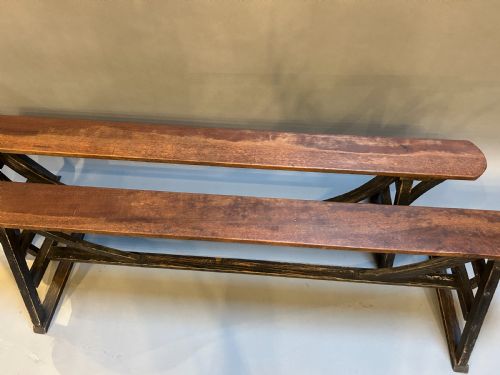
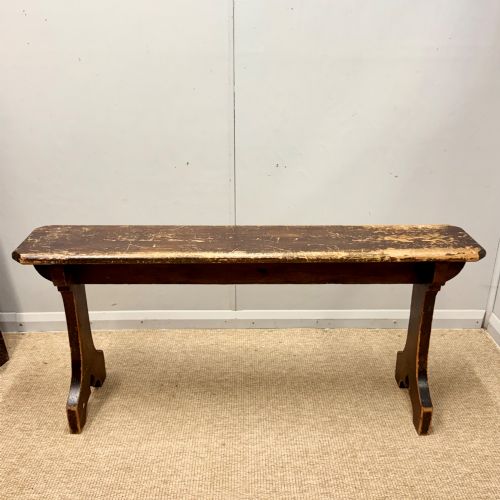
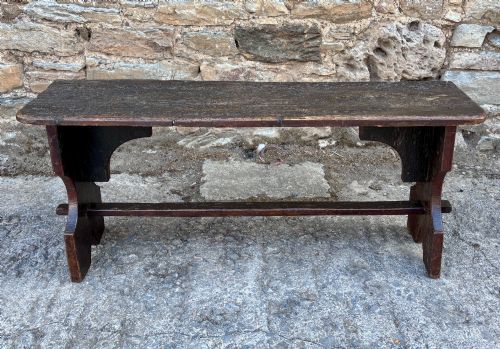
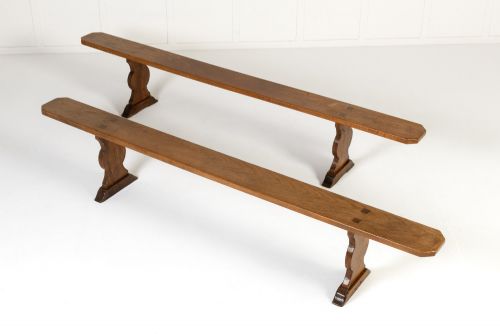
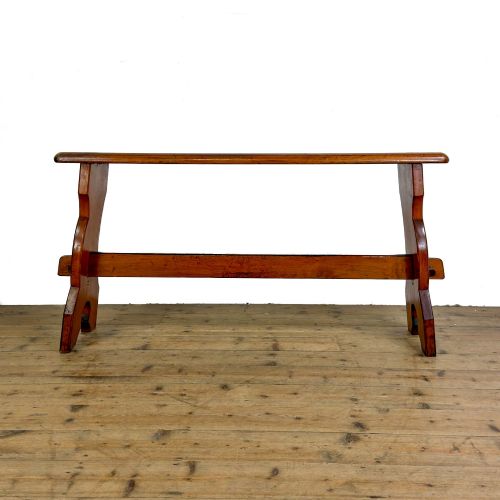
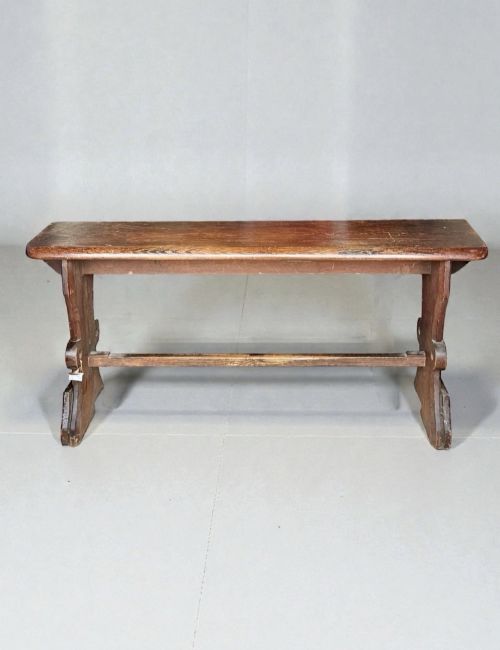
A hallway trestle bench is a long, linear seat designed for utilitarian or domestic spaces, appearing in forms ranging from simple church organist seats and pig benches to grand oak refectory tavern seating and painted Swedish pine.
The pieces you encounter span from the eighteenth century through the nineteenth and into the early twentieth century, taking stylistic cues from rustic country, French provincial, Victorian, and Scandinavian traditions.
Makers utilised native timbers to construct these benches, creating substantial seating that often served dual purposes in halls, churches, and country kitchens before finding a permanent place in modern corridors.
How they were made
Carpenters relied on solid regional timbers such as pine, oak, elm, cherry, and sycamore, selecting each wood for its density and local availability.
Construction methods focused on sturdy joinery, utilising trestle supports and thick wooden planks to withstand heavy daily use in domestic and ecclesiastical settings.
Surface finishes range from natural waxed patinas and exposed grain to historic painted coatings, particularly seen on Swedish pine examples.
Regional styles span French provincial and rustic country to Victorian Gothic and Scandinavian painted traditions.
What varies in quality
The distinction between ordinary utility seating and finer examples lies in the quality of the timber selection, such as the rich grain of old growth oak or the warmth of cherrywood.
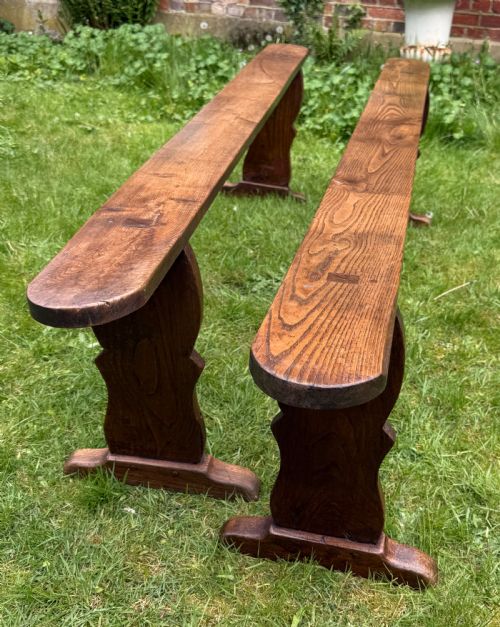
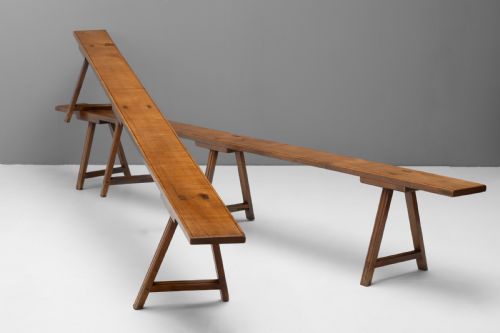
Proportions and scale create variation, with exceptionally long proportions or paired sets carrying distinct architectural presence compared to standard single seats.
The integrity of the original surface, whether a deep patinated pine or historic paintwork, dictates the visual depth of the piece.
The Hallway Trestle Bench Glossary
- Trestle
- A structural support consisting of a horizontal beam fixed to two splayed legs. This method provides stability for long, narrow seating and refectory tables.
- Refectory
- A term describing long, substantial furniture traditionally used in communal dining halls. These pieces often feature extended lengths suitable for large gatherings.
- Ecclesiastical
- Pertaining to the church, describing furniture originally built for chapels, vestries, or cathedrals. Examples include organ benches and specialised pews.
- Patina
- The deep sheen and surface alteration developed through age, handling, and waxing. It signifies long-term use and exposure to light and air.
Hallway Trestle Bench: Frequently Asked Questions
Where should I place a trestle bench?
A hallway trestle bench suits narrow entryways, long corridors, or large boot rooms where linear seating is practical.
Because many examples are quite deep or long, measure your available floor space carefully to ensure comfortable passage.
How do I care for antique pine furniture?
Maintain antique timber surfaces by dusting regularly with a dry cloth and applying natural beeswax sparingly to nourish the wood.
Keep these benches away from direct heat sources and extreme humidity fluctuations to protect the antique joinery.
Are these benches comfortable for daily use?
Most historic benches feature solid wooden seats designed for utility rather than cushioned lounging.
You can add loose textile cushions or sheepskins to soften the seat for everyday seating in a busy home.
How can I tell the age of a bench?
Dating relies on observing tool marks, timber shrinkage, construction joints, and the overall wear patterns across the wood.
Comparing the style against regional traditions, such as French provincial or Swedish painted work, also helps narrow the period.