
Vintage Timber Bench
A vintage timber bench brings functional utility and honest character into a room or garden, shaped by decades of weathering and practical use.
Vintage Timber Bench
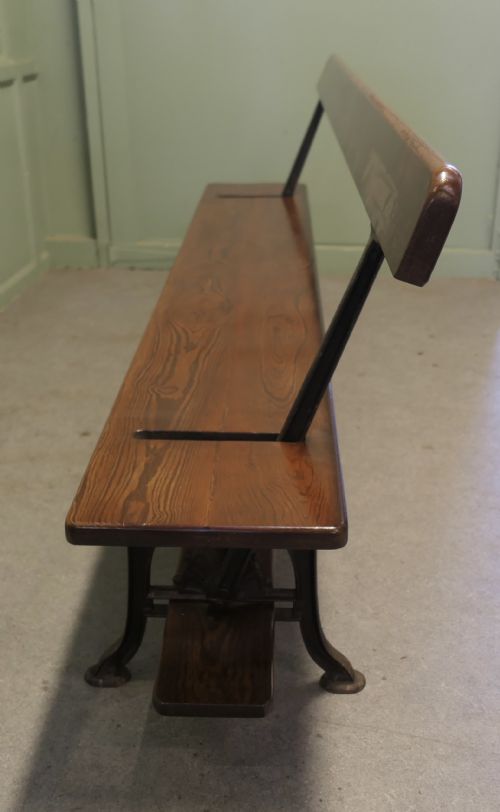
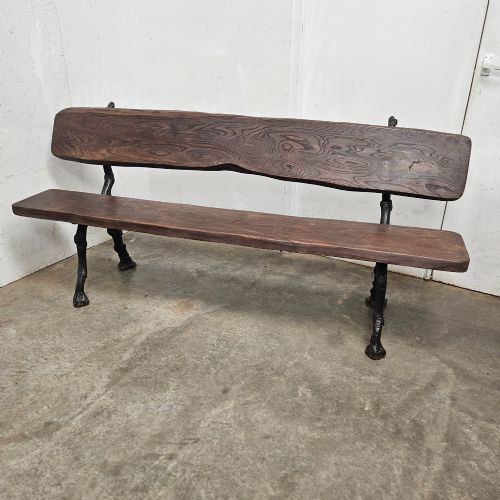
When you search for a vintage timber bench, you encounter a diverse range of utilitarian forms spanning garden furniture, hallway seating and trade workbenches. The selections here include rustic elm and pine pieces, teak garden seats, and oak hall benches originating from the nineteenth and early twentieth centuries.
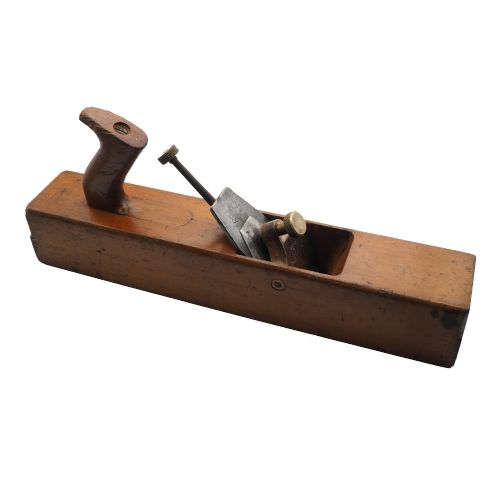
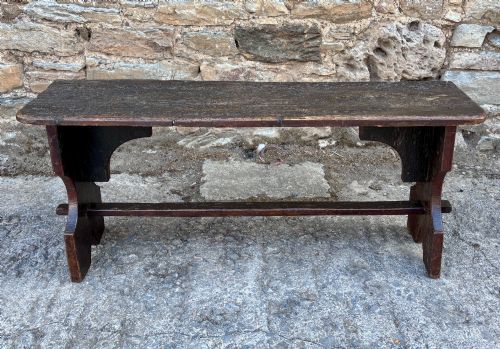
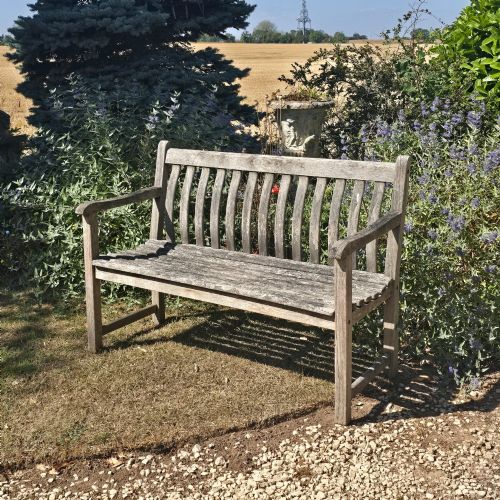
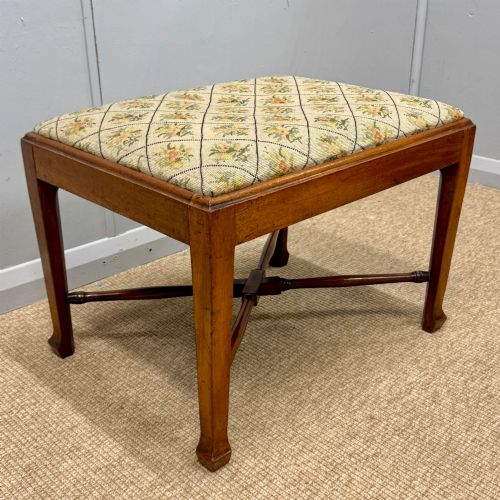
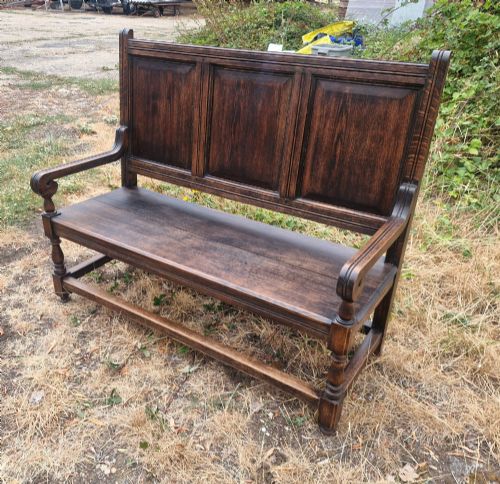
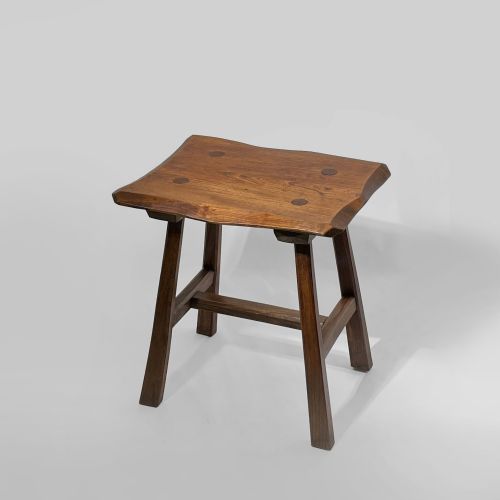
The most frequent examples found on this page are weathered teak garden benches, nineteenth century pine settles, and oak hall seats with shaped trestle ends. Alongside these standard seating forms, the category extends to specialised craftsman workbenches, cherrywood benches, and primitive stools.
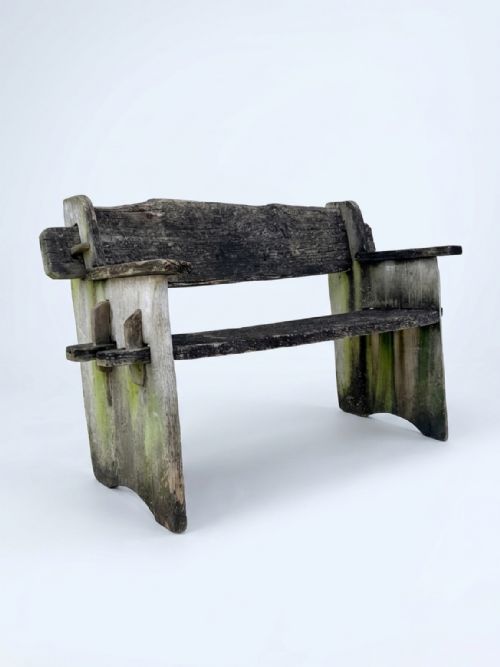
Originating across English, French, and Eastern European traditions, these pieces reflect regional vernacular designs intended for daily labour or domestic life. Their shared quality is a reliance on solid wood construction, whether executed in heavy oak, flexible elm, or durable pine.
Materials and construction methods
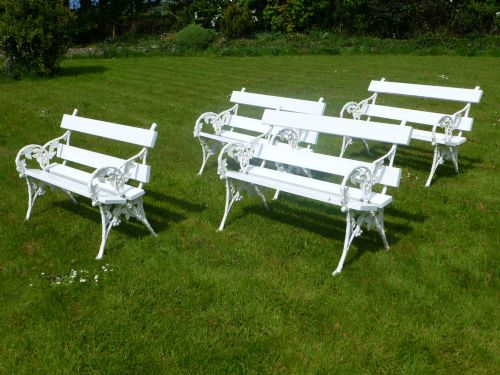
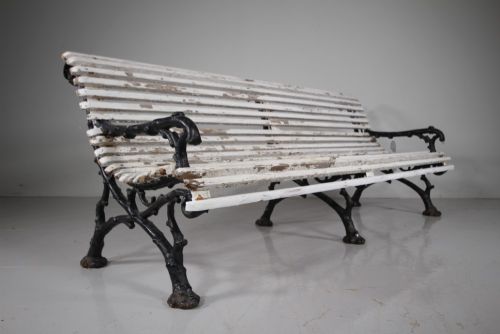
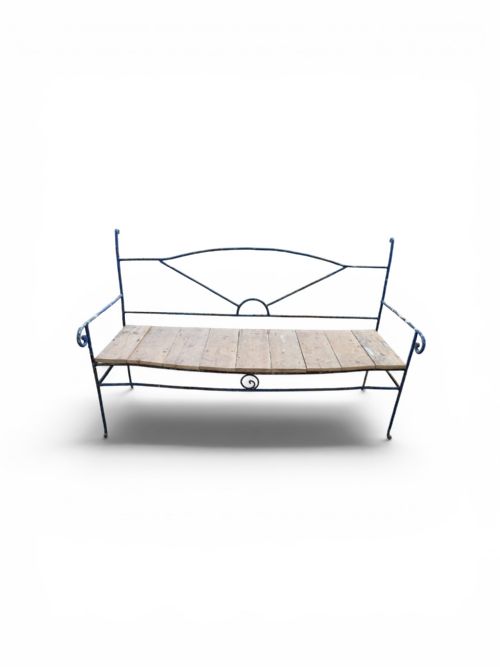
The construction relies heavily on native hardwoods and softwoods such as oak, elm, teak, pine, and cherry, selected for their structural strength and reaction to the environment. Garden variations frequently utilise teak or cast iron frames that withstand outdoor exposure, developing distinct silvered patinas over time.
Joinery methods range from traditional pegged mortise and tenon joints on heavy oak and elm seating to simpler panelled construction found in hall benches and settles. Workbenches incorporate functional mechanical elements like integrated wooden vices and clamping bars, built entirely for demanding physical tasks.
Listings span periods from the eighteenth century through the 1930s, featuring oak, elm, teak, pine, cherry, and cast iron materials.
Assessing quality and authenticity
Quality in these pieces rests upon the integrity of the original timber and the retention of honest surface patination, such as honey brown wax or original ochre and green paint finishes. Examples that retain their authentic structural hardware, unaltered proportions, and deep weathering show superior enduring character.
Lower tiers of quality involve unsympathetic timber replacements, stripped surfaces that remove historical depth, or structural instability from severe wood degradation. Pieces maintaining their original working vices, authentic foundry markings, or untouched grain structures occupy the upper end of the range.
Falkirk foundry·Norris London·Howard and Sons
The Vintage Timber Bench Glossary
- Settle
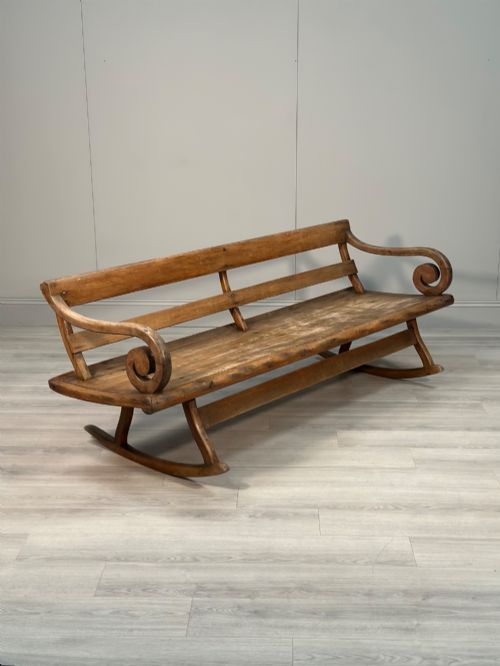
- A wooden bench featuring a high back to block draughts, solid arms, and often a storage compartment beneath the seat. This form served as a primary seat near the hearth in domestic interiors.
- Patina
- The surface sheen and colour acquired by wood through age, handling, and exposure to light. A desirable patina shows historical depth rather than modern chemical treatment.
- Workbench
- A sturdy table used by artisans and craftspeople to hold material while being worked. These feature thick timber tops and integrated vices or clamping bars.
- Trefoil
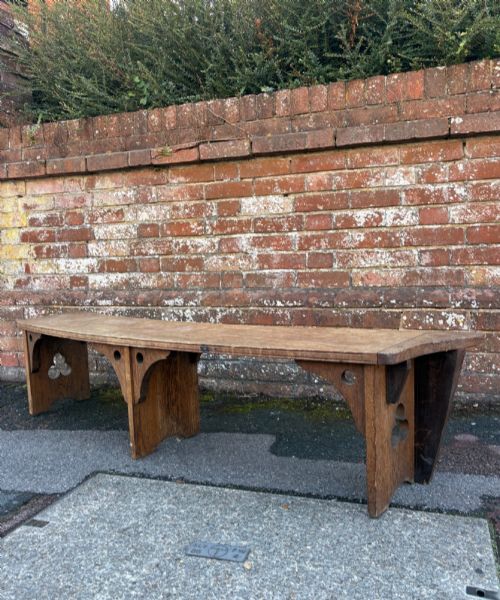
- A graphic ornamental cuspeding resembling a three-leaf clover, often found carved into Gothic revival woodwork. It appears on supports and panels of nineteenth-century decorative furniture.
- Trestle
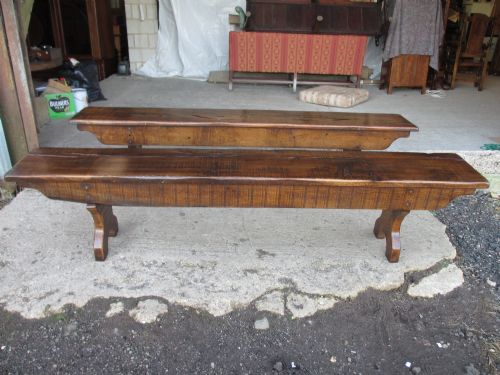
- A structural support consisting of a horizontal beam fixed to two splayed legs. This arrangement provides stable weight distribution for heavy oak benches.
Vintage Timber Bench: Frequently Asked Questions
How do I protect an outdoor teak bench?
Teak naturally resists moisture and decay due to its high oil content, allowing it to weather to an even silver grey without protective sealants.
Cleaning the surface periodically with soapy water removes accumulated dirt while preserving the structural health of the wood.
Can I use an antique workbench indoors?
A vintage timber bench with a built-in vice functions well as a kitchen island, console table, or distinctive desk in a modern interior.
Treating the raw wooden surface with a clear wax helps protect the timber from everyday spills while maintaining its original workshop character.
What is the difference between a settle and a bench?
A settle incorporates a solid high back and enclosed sides designed to shield the seated person from cold draughts in older homes.
A standard bench offers open seating without protective side panels or high backs, intended for general utility or garden use.
How do I date a rustic wooden bench?
Dating relies on observing tool marks, fastener types like handmade nails, and the natural wear patterns accumulated across the timber surfaces.
Stylistic indicators such as Arts and Crafts Gothic details or Edwardian trestle ends also help place the piece within a specific era.