
Hallmarked Sterling Cutlery
These hallmarked sterling cutlery pieces span centuries of British silver, offering functional elegance for the dining table.
Hallmarked Sterling Cutlery
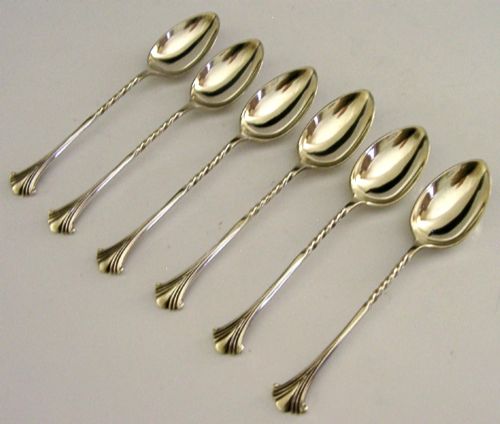
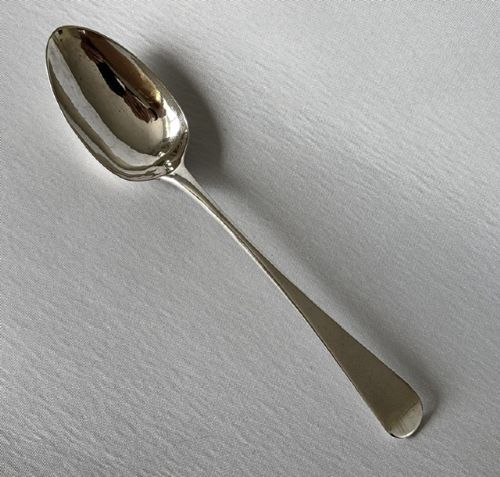
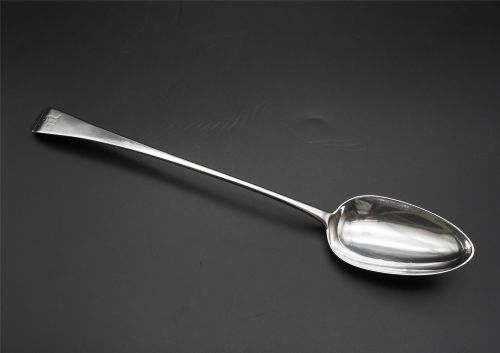
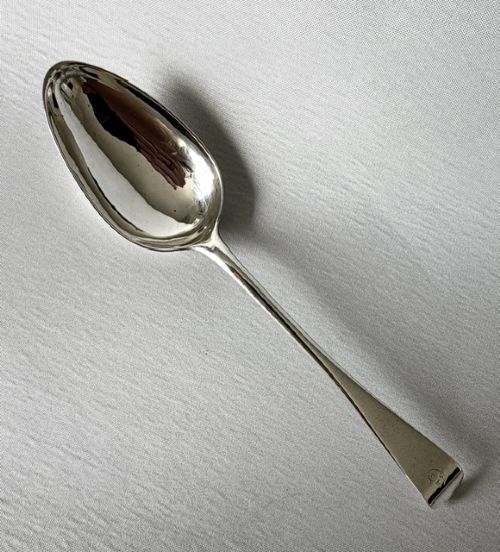
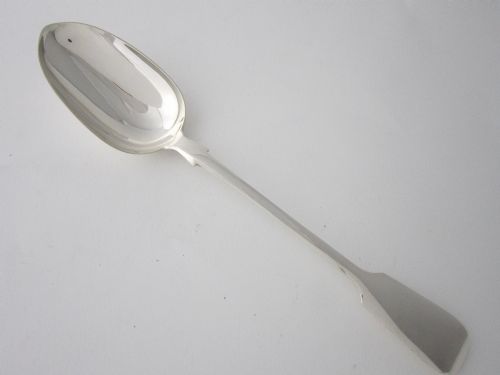
Hallmarked sterling cutlery encompasses functional dining implements spanning the 17th Century, Georgian era, Victorian period, and 20th Century up to 1946. Pieces range from single teaspoons and tablespoons to larger serving spoons, basting spoons, soup ladles, and complete canteens.
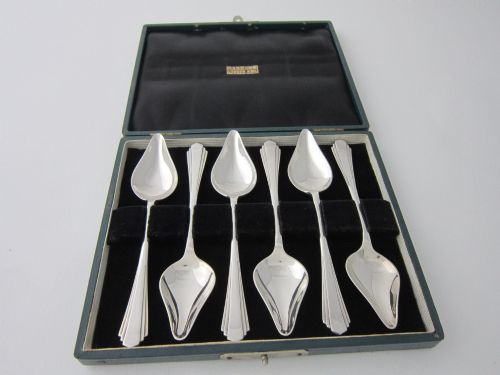
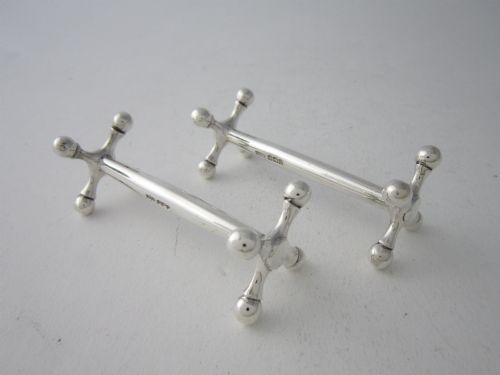
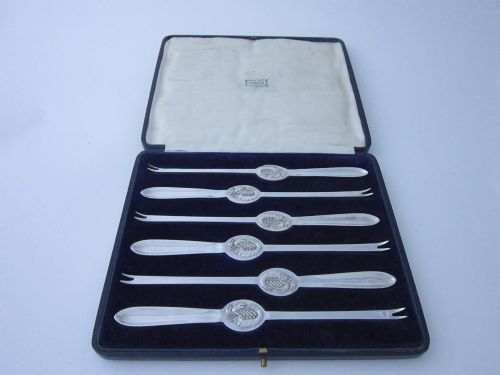
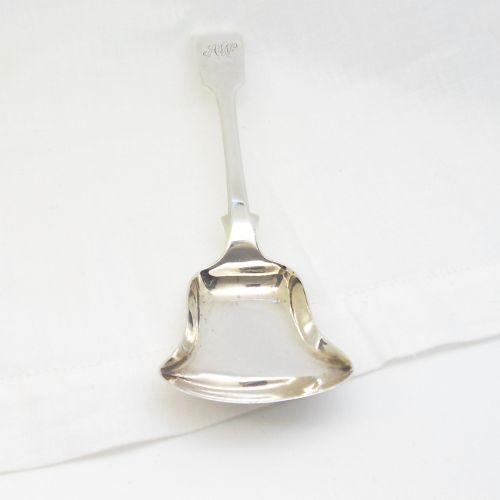
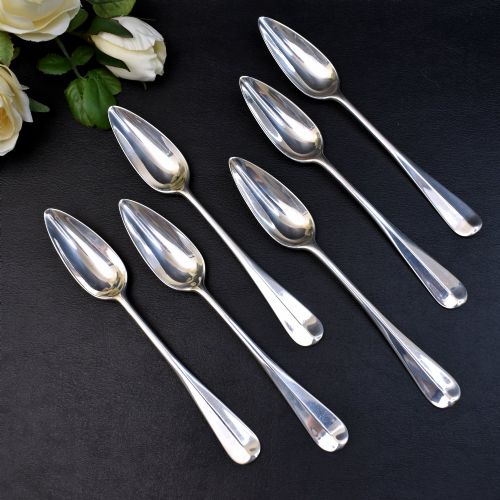
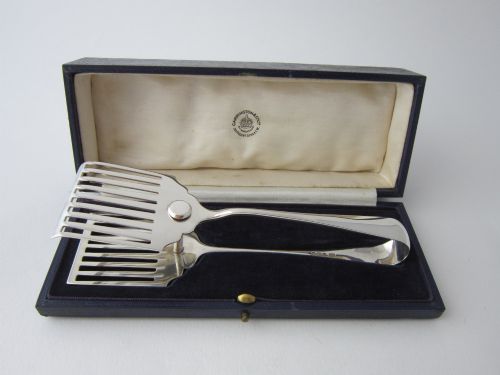
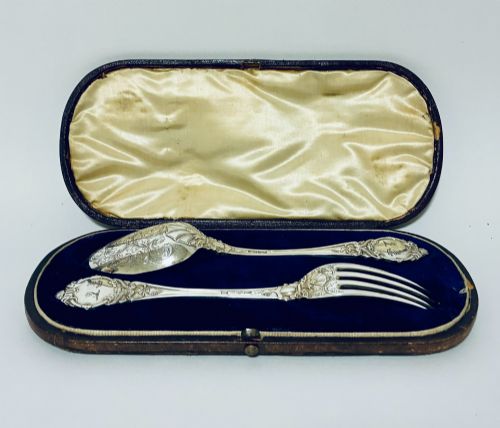
Specialised items also appear frequently, including marrow scoops, butter knives, grapefruit spoons, lobster picks, sugar shovels, asparagus tongs, cake forks, and grape shears. Many sets arrive in fitted cases lined with velvet, silk, leatherette, satin, or fabric.
Makers and assay offices span London, Edinburgh, Dublin, Newcastle, Exeter, and Sheffield, providing regional variety across British and Irish production.
Materials and construction
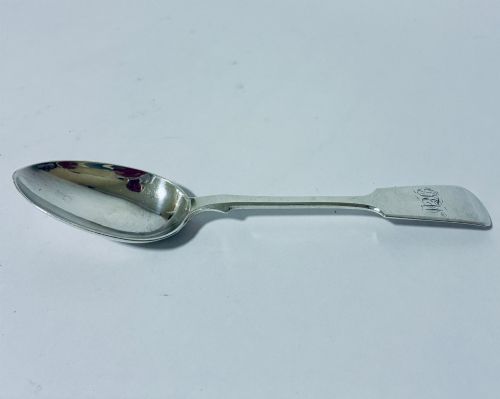
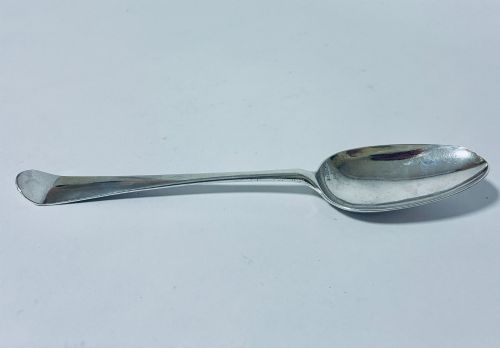
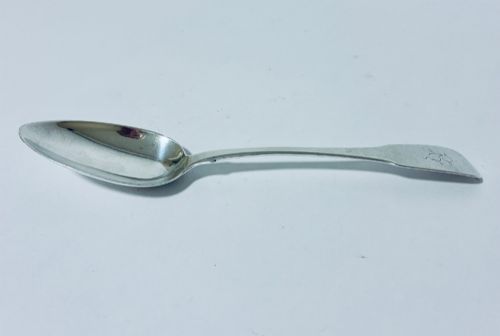
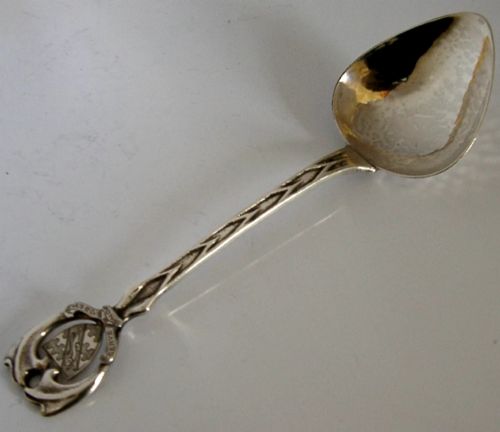
Objects are formed from sterling silver and silver, shaped into specific flatware and cutlery patterns such as Old English and Fiddle. Certain items feature cast silver blades or components, alongside hand-engraved bright-cut decoration.
Fitted presentation boxes incorporate structural framing covered in materials such as leatherette, leather, or fabric, lined internally with velvet, satin, or silk to protect the silver contents.
Geographic origins span regional assay offices including Newcastle, Exeter, Sheffield, Edinburgh, and Dublin.
Distinctions in quality
Quality rests upon the clarity and legibility of the official hallmarks stamped into the metal, which verify the silver standard, maker, and assay office year. Crispness of original hand-engraving, such as bright-cut detailing or crests, distinguishes finer examples from worn pieces.
The weight of the silver relative to the object type indicates substantial construction, particularly in large serving spoons, basting spoons, and soup ladles.
Peter & Jonathan Bateman·Hamilton & Inches·John Walton·Jonathan Hayne·William Penstone·James Tookey·P A W Bateman·Jerimiah Johnson·Connell
The Hallmarked Sterling Cutlery Glossary
- Hallmark
- Official stamps struck into precious metal indicating the silver standard, assay office, and year of manufacture. These marks provide precise dating for British silver.
- Sterling silver
- A silver alloy containing 92.5 percent pure silver by mass, with the remainder consisting of other metals. This standard has been legally regulated for centuries.
- Basting spoon
- A large spoon utilised in the kitchen or at the table for pouring juices over meat during roasting or serving large portions. They frequently date from the Georgian and Victorian periods.
- Marrow scoop
- A narrow, elongated silver implement featuring small concave bowls at each end. It was designed for extracting bone marrow from joints during dining.
- Trefid
- An early form of flatware popular in the 17th Century, characterised by a split, three-lobed terminal on the handle.
Hallmarked Sterling Cutlery: Frequently Asked Questions
What periods do these silver items cover?
The selection spans from the 17th Century through the Georgian, Victorian, Edwardian, and George V periods up to the 1940s.
Items reflect the specific styles and assay practices of their respective decades of manufacture.
How do I identify the date of a piece?
Dating relies upon the hallmarked letters and symbols struck directly onto the silver.
Assay office marks and date letters correspond to official records maintained across British and Irish assay offices.
What is a marrow scoop used for?
Marrow scoops are narrow silver utensils featuring small bowls at either end.
Dining practice in earlier centuries utilised them to extract marrow from animal bones.
Are complete canteens available?
Canteens of cutlery containing settings for multiple persons appear alongside smaller sets and individual serving pieces.
These larger collections often include fitted storage boxes.