
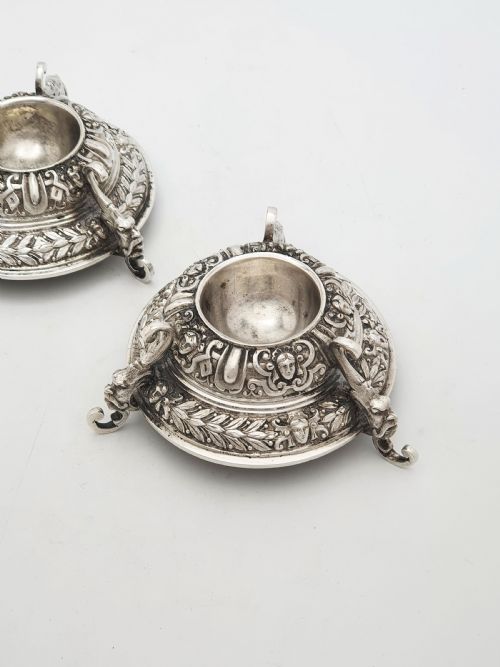


Hallmarked Silver Salt Cellars
Hallmarked silver salt cellars bring table tradition home, offering solid sterling vessels crafted across Victorian, Edwardian, and Georgian eras.
Hallmarked Silver Salt Cellars
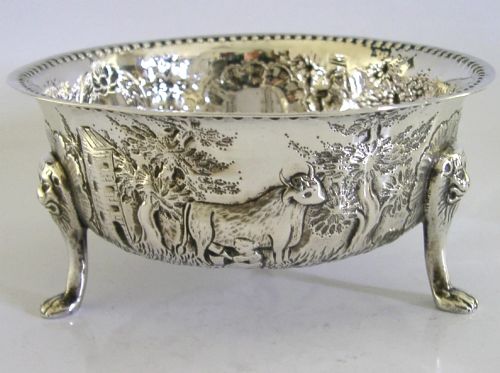
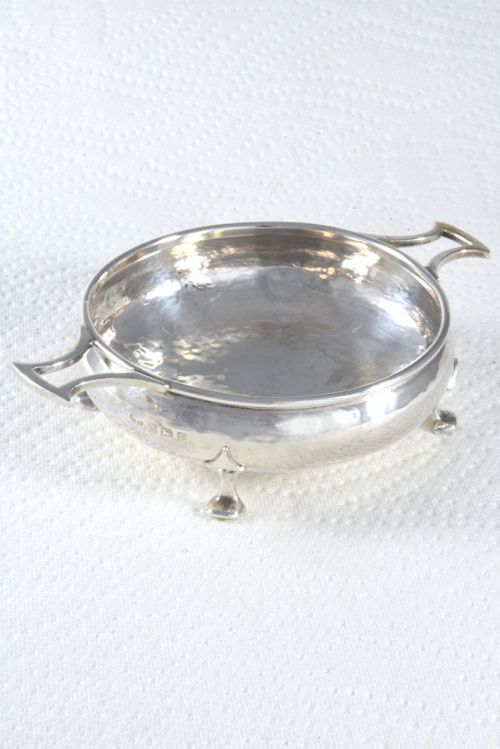
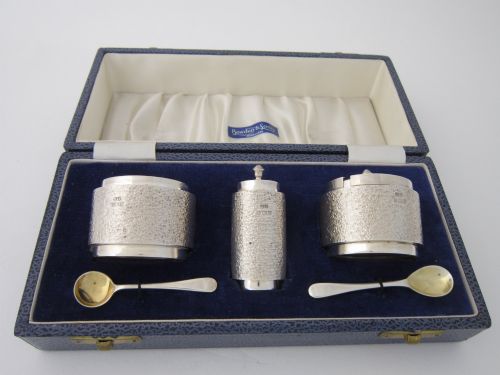
Hallmarked silver salt cellars comprise small open vessels and enclosed pots designed for dining tables across the Victorian, Edwardian, and Georgian periods. These pieces appear as individual salts, paired tubs, or components within larger condiment and cruet sets alongside mustard pots.
Makers shaped these tablewares into simple bowls, wirework tubs, and novelty forms such as baby shakers. The selection spans early nineteenth-century Georgian designs through to mid-century modern and Art Deco condiment sets.
Buyers meet sterling silver constructions frequently paired with contrasting interiors or fitted cases. The forms serve both functional dining roles and decorative table displays.
How they were made
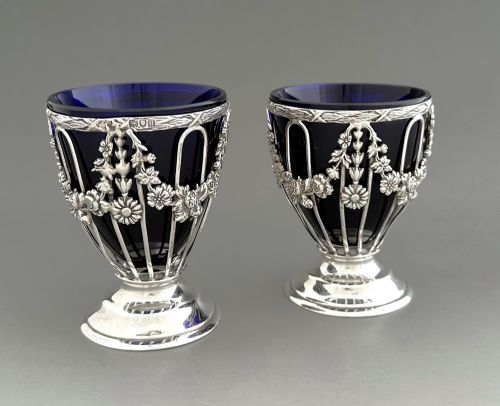
Silversmiths constructed these salt cellars primarily from sterling silver, employing techniques like wirework and solid casting. Workshops utilised internal liners made from cobalt glass to protect the metal from corrosive salt.
Many interiors received a layer of gilt, vermeil, or gold plate to prevent tarnishing from condiment contents. Artisans applied hallmarks to guarantee metal purity and trace the origin through specific assay offices and makers.
Victorian makers occasionally fashioned novelty salt and pepper shakers shaped like babies.
What varies in quality
Quality differentiates by the weight of the silver and the crispness of the chased or wirework detailing. Pieces bearing clear hallmarks from notable makers command greater interest among collectors.
The survival of original fitted cases, matching condiment sets, and intact cobalt glass liners influences the overall integrity of the piece.
Thomas Johnson·Wilmot Manufacturing Co·Viners·Heath and Middleton
The Hallmarked Silver Salt Cellars Glossary
- Hallmark
- Official stamps struck into precious metals to indicate purity, maker, and year of assay. These marks provide the primary documentation for dating British silver.
- Sterling silver
- An alloy consisting of pure silver and other metals to increase durability while maintaining standard fineness. This material forms the body of most antique salt cellars.
- Vermeil
- Gold plating applied over sterling silver. This technique protects the silver from the corrosive properties of salt.
- Cruet set
- A matched group of bottles or containers holding condiments like salt, pepper, and mustard for table service. These sets often share a fitted tray or stand.
- Wirework
- Openwork construction formed from soldered silver wires. This technique created lightweight, decorative frames for glass-lined salt cellars.
Hallmarked Silver Salt Cellars: Frequently Asked Questions
How do I clean antique silver salt cellars?
Wash the silver gently in warm soapy water using a soft cloth, avoiding harsh abrasive dips that strip aged patination. Dry thoroughly before storage.
Take extra care with removable cobalt glass liners, washing them separately to prevent moisture trapping against the metal interior.
Why do some salt cellars have blue glass liners?
Salt corrodes sterling silver over time, so makers inserted removable glass vessels to protect the metal body from direct contact. Cobalt glass provided a rich visual contrast against the polished silver exterior.
These liners lift out easily for cleaning after dining use.
What is the difference between a salt cellar and a cruet set?
A salt cellar is an individual open dish or enclosed pot holding salt for table service. A cruet set gathers multiple condiment containers together on a shared stand.
Many cruet sets include salt cellars alongside mustard pots and pepper shakers.
Can I still use antique silver salts for dining?
These pieces function well for modern dining provided you use glass liners to protect the sterling silver from direct salt exposure. Clean the vessels promptly after use.
Many collectors enjoy incorporating these historic items into contemporary table settings.
How can I tell the date of my salt cellar?
Look for the stamped hallmarks on the base or rim, which include a date letter corresponding to the assay office records. Maker marks and standard fineness symbols appear alongside this letter.
Stylistic cues such as Art Deco geometric lines or Victorian chased decoration also indicate the period.