

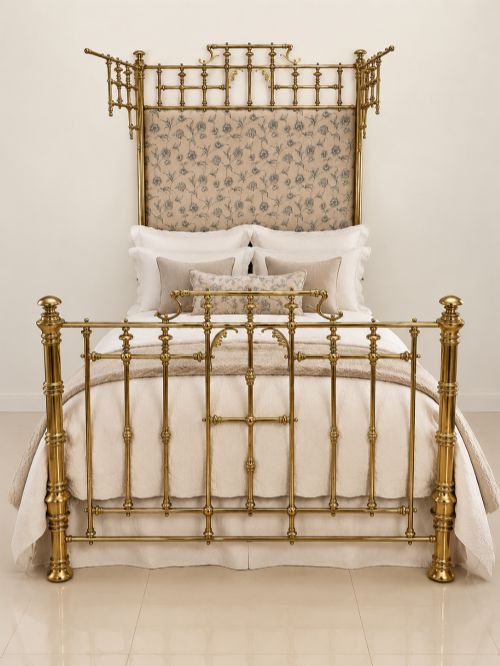
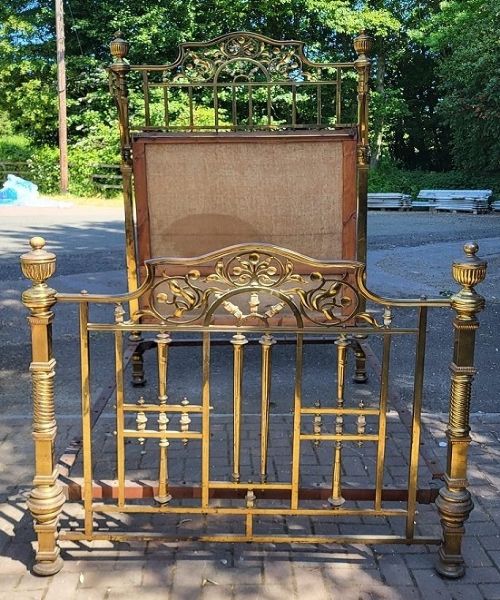
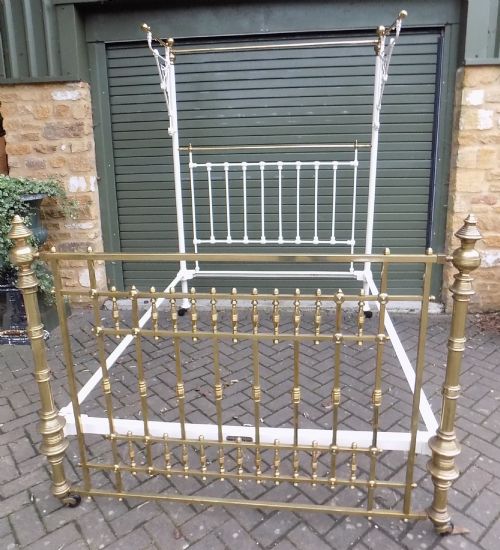
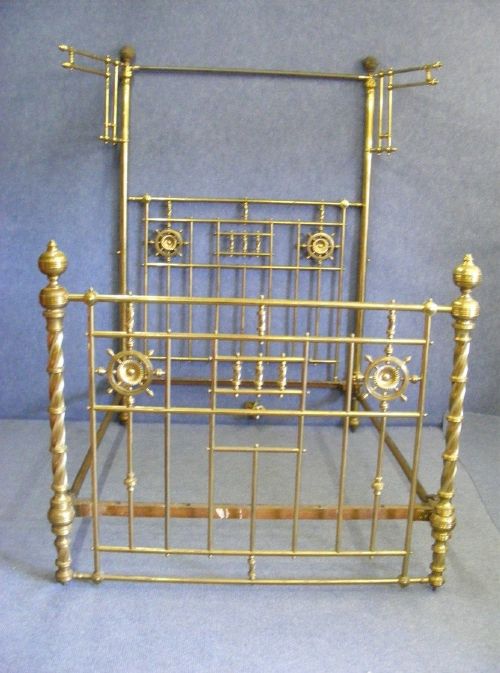
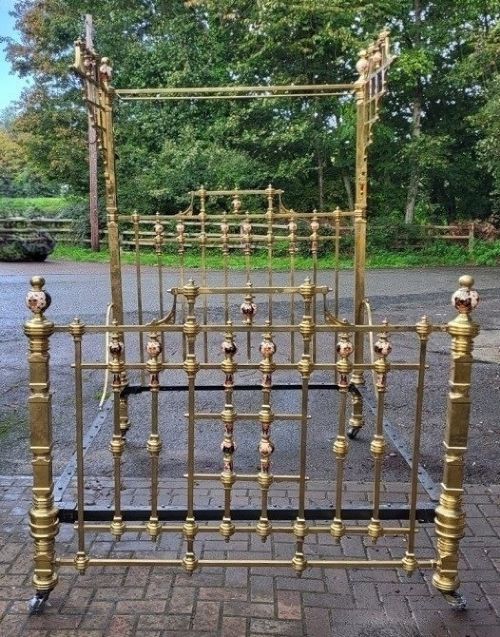
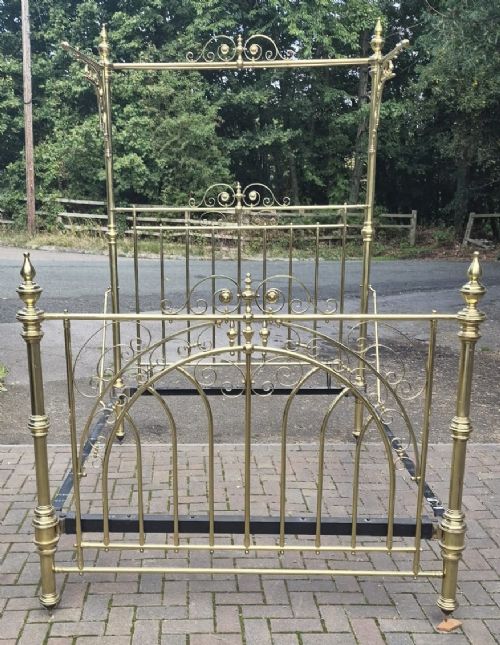


Half Tester Canopy Frame
A half tester canopy frame forms the architectural crown of a grand Victorian sleeping chamber, offering undeniable presence and draped elegance.
Half Tester Canopy Frame
A half tester canopy frame is the overhead structural element attached to a bedstead, projecting outwards to support drapery over the head of the mattress. These substantial architectural pieces originate entirely from the Victorian era, spanning decades such as eighteen sixty, eighteen seventy, eighteen eighty, and nineteen hundred.
The primary forms found here are complete double and king size brass and iron bedsteads equipped with their original canopy framework. These monumental beds combine structural ironwork with polished brass components and ceramic details.
Most examples adhere to the ornate Victorian style, often featuring exhibition quality craftsmanship that showcases the pinnacle of nineteenth century metalworking. Buyers seeking these beds encounter robust bedsteads designed to anchor a traditional bedroom scheme with historical authority.
Construction and materials
These frames and bedsteads rely on a combination of cast iron and wrought iron for their primary structural integrity and weight. Solid brass elements are then integrated to provide decorative contrast and structural enrichment.
Manufacturers utilised specialised foundry techniques to shape the heavy ironwork and decorative brass tubing characteristic of the period. Fabric and ceramic additions completed the construction, providing soft textural elements and mounting points for the hanging drapery.
Half Tester Canopy Frame Retail Price Guide 2026
Typical asking prices for half tester canopy frame among the pieces listed under this phrase on Sellingantiques today, from the lower quarter to the upper quarter. They describe what is for sale here now, not the wider market.
Listings span the Victorian era specifically, encompassing years from eighteen sixty through to nineteen hundred.
Evaluating quality in canopy frames
Quality in these Victorian bedsteads rests upon the richness of the metal casting and the proportion of solid brass versus iron. Exhibition quality pieces display superior chasing, refined detailing, and more ambitious structural complexity in the half tester canopy.
The integrity of the original joints and the weight of the metal components distinguish standard production pieces from exceptional workshop creations. A harmonious balance between the iron foundation and the polished brass ornamentation dictates the overall visual success of the frame.
RW Winfield
The Half Tester Canopy Frame Glossary
- Half tester
- A short canopy projecting from the wall or headboard over the upper portion of a bed, suspending curtains to trap warmth and block drafts. This architectural feature defines the entire aesthetic of the bedstead.
- Bedstead
- The complete structural framework of a bed, including the headboard, footboard, and side rails, excluding the mattress and bedding. In this context, it incorporates the integrated canopy support.
- Cast iron
- Iron shaped by pouring molten metal into a mould, allowing for intricate decorative patterns and rigid structural components. It forms the heavy foundational skeleton of many Victorian beds.
- Wrought iron
- Iron beaten and worked into shape while hot, valued for its tensile strength and fibrous texture. Makers utilised this material for components requiring high durability and resilience.
Half Tester Canopy Frame: Frequently Asked Questions
What is a half tester canopy frame?
A half tester canopy frame is a structural overhead extension attached to a bedstead that suspends fabric curtains over the head of the bed. It provides both a dramatic architectural silhouette and a traditional enclosure for the sleeper.
Originating in the Victorian era, these frames combine metalwork and textile suspension to recreate historical bedroom aesthetics. They serve as the defining focal point of antique bedsteads.
How were these frames used?
Historically, half tester canopies held heavy drapery fabrics that enclosed the upper portion of the bed to retain heat and block cold drafts from drafty rooms. They also offered privacy and muffled external sounds for the occupant.
Today, they are utilised primarily for decorative impact, allowing owners to drape luxurious textiles that frame the head of the bed. The structure remains purely ornamental in modern heated homes.
How do I live with a Victorian bed?
Living with a Victorian half tester bed requires appreciating its substantial scale and weight within a modern bedroom layout. Positioning the bed against a sturdy wall ensures proper clearance for the projecting canopy structure.
Routine maintenance involves gentle cleaning of the brass and iron surfaces without stripping the aged patina. Selecting appropriate drapery fabrics completes the historical presentation while suiting contemporary interior schemes.
How do I date these bedsteads?
Dating these pieces relies on examining the construction methods, material combinations, and stylistic markers recorded across the Victorian period. Specific decades like eighteen seventy or eighteen eighty often reveal distinct casting techniques and decorative motifs.
Makers' stamps and registration marks, when present on the iron or brass, provide definitive chronological evidence. Comparing the complexity of the brass ornamentation to documented workshop output further refines the timeline.