


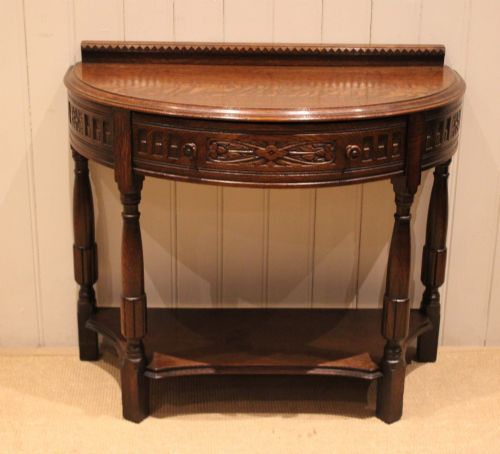
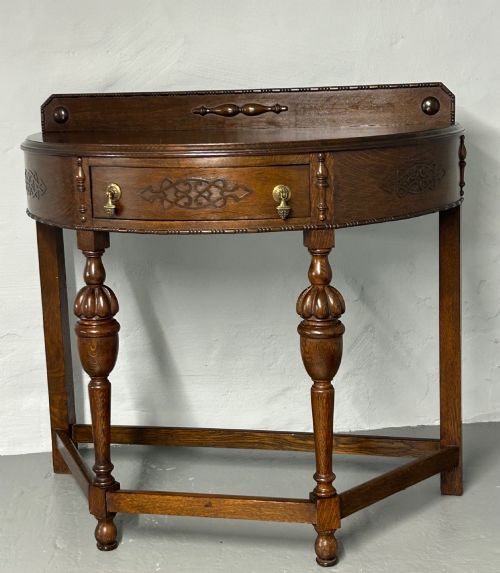
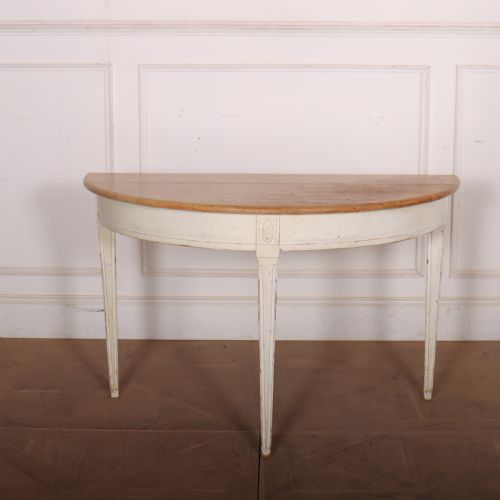


Half Moon Hallway Table
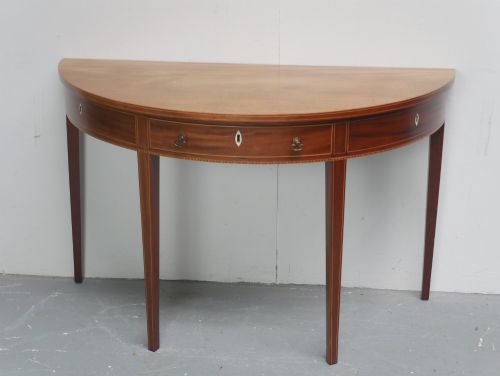
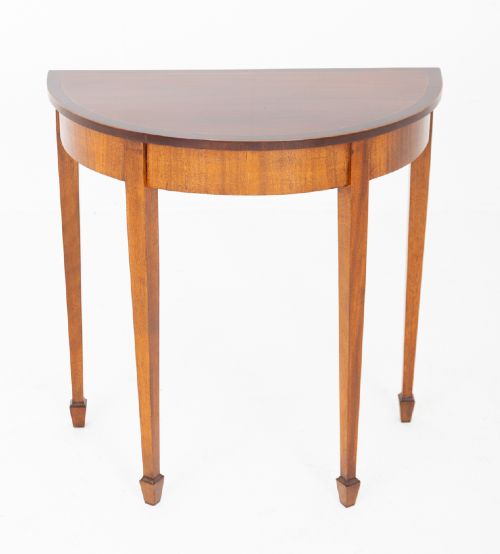
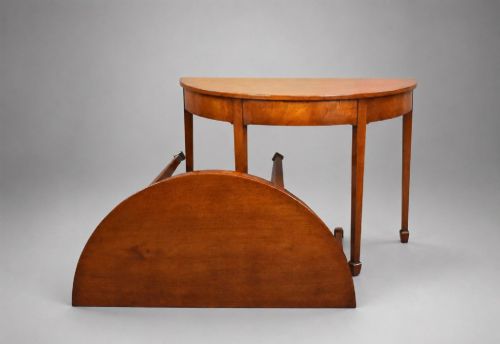
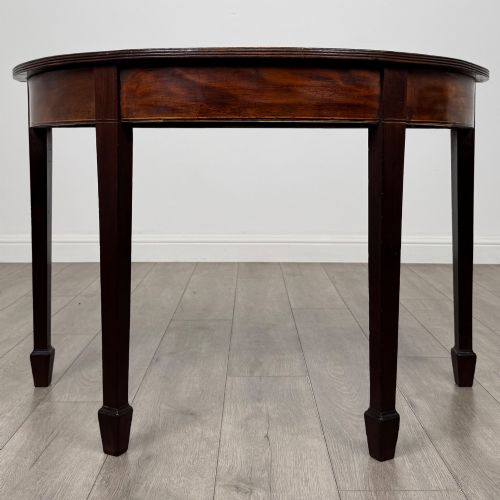
A half moon hallway table brings architectural grace to narrow spaces, offering a flat wall edge and a curved front that catches the eye.

Half Moon Hallway Table
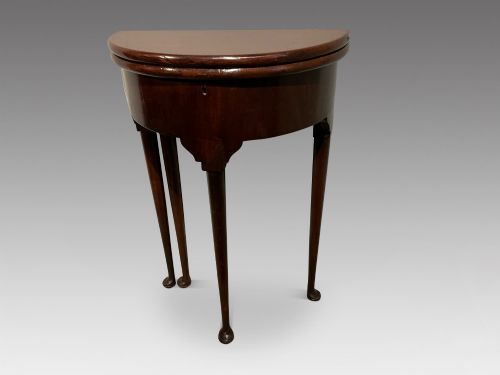
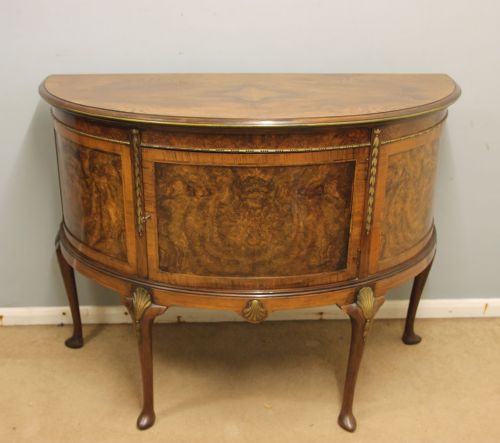
A half moon hallway table sits flush against the wall of an entrance or passage, taking up minimal depth while providing a useful surface for daily objects. These pieces appear frequently as console tables or side cabinets designed to fit tight areas.
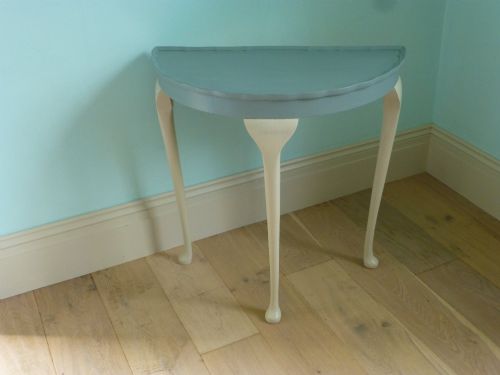
The selections span various periods including the eighteenth century, the nineteenth century, and the nineteen-twenties. Buyers encounter forms ranging from plain timber surfaces to painted finishes and items featuring intricate boxwood inlay.
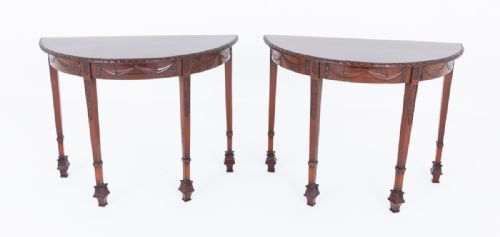
Origin variations include English, French, Swedish, and Dutch pieces reflecting regional tastes. Console tables and side cabinets dominate the available shapes, often appearing as matched pairs or single statement items.
How they were made
Cabinet makers utilised solid timbers such as mahogany and oak, building robust frames that withstand centuries of use. Timber panels and curved aprons require careful bending and shaping to achieve the distinctive semi-circular profile.
Surface decoration frequently involves satinwood and boxwood inlay, creating contrasting geometric or floral patterns across the top. Painted wood finishes in Swedish, French, or English traditions add colour and decorative detail to the grain.
Hardware details incorporate brass fittings and occasional marble tops, particularly on neoclassical and later revival pieces. Tambour fronts and carved sections reveal advanced woodworking techniques employed by period artisans.
Origin descriptions highlight English, French, Swedish, and Dutch craftsmanship within the console and side cabinet categories.
What varies in quality
Timber selection and grain matching determine the visual weight and elegance of the top surface. Superior examples display carefully chosen mahogany veneers or solid cuts where the grain flows naturally along the curve.
The crispness of inlay work and the execution of carved details separate standard utility furniture from finer artistic commissions. Delicately fitted boxwood lines and balanced proportions indicate skilled handwork rather than mass production.
Structural integrity relies on tight joinery at the wall edge and stable leg attachment. Pieces with original brass feet and intact wooden framing maintain their posture over generations of placement in busy halls.
The Half Moon Hallway Table Glossary
- Demi-lune
- A French term meaning half-moon, describing any furniture piece with a semicircular flat back and curved front. This shape defines the category and allows the piece to rest tightly against a wall.
- Console table
- A table supported against a wall by wall brackets or legs, historically designed for display rather than dining. These serve as the primary structural form for hallway placement.
- Inlay
- A technique where pieces of contrasting wood, such as boxwood or satinwood, are inserted into depressions within the base timber to form a decorative pattern. It adds visual texture to the flat surface.
- Tambour
- A flexible shutter or door made of narrow vertical strips of wood glued to canvas, allowing curved cabinets to open smoothly. This mechanism appears on select late eighteenth-century storage pieces.
- Neoclassical
- A style inspired by classical antiquity characterised by symmetry, straight lines, and restrained ornament. Pieces from this movement often feature painted panels and classical motifs.
Half Moon Hallway Table: Frequently Asked Questions
Where should I place a half moon hallway table?
These tables suit narrow entrance halls, landings, and reception areas where floor space is limited. Their flat back allows them to sit directly against the wall without obstructing walkways.
They also function effectively in living rooms or dining spaces as decorative side surfaces beneath mirrors or paintings.
How do I identify a Georgian piece?
Georgian pieces typically feature rich mahogany timbers, precise boxwood stringing, and restrained proportions characteristic of eighteenth-century design. Look for hand-cut joinery and aged patination on the wooden surfaces.
Later revival items often copy these stylistic cues but display machine milling or twentieth-century construction methods upon closer inspection.
Can these tables hold heavy items?
Most demi-lune tables function best as display surfaces for lamps, bowls, or decorative objects rather than heavy storage. Their slender legs and shallow depth prioritise elegance over load-bearing capacity.
Sturdier oak and mahogany versions from earlier periods handle everyday items securely when placed on level flooring.
What is the difference between a console and a side table?
Console tables traditionally rely on wall attachment or feature flat backs designed specifically to abut a vertical surface. Side tables often stand independently with finished backs suitable for open room placement.
In historical hallway contexts, the terms frequently overlap as makers adapted designs for compact spaces.