
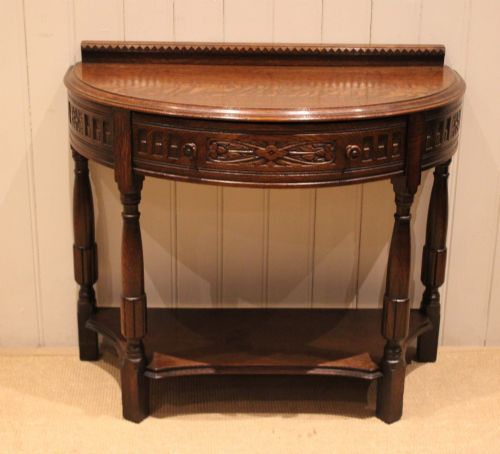
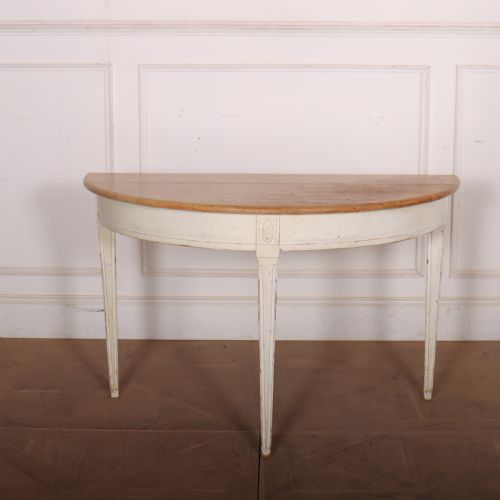

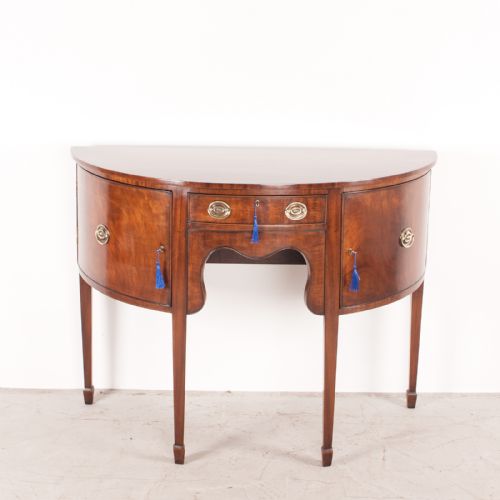


Vintage Demilune Console
A vintage demilune console is a half-moon table designed to stand flat against a wall, bringing curved elegance to narrow hallways and principal rooms.

Vintage Demilune Console
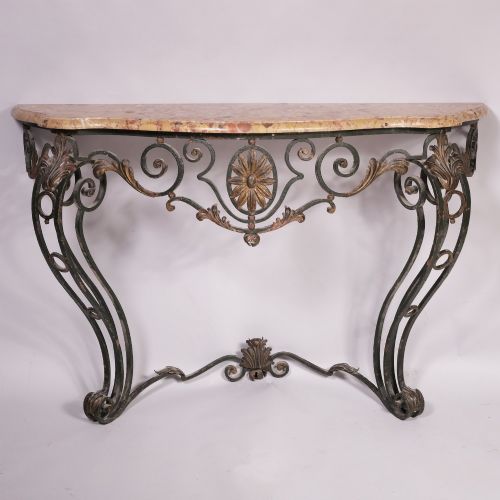
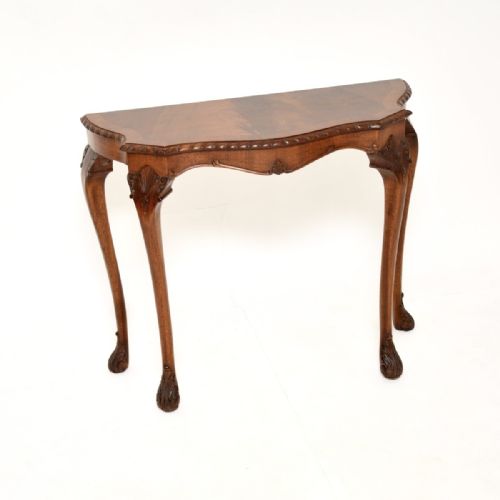
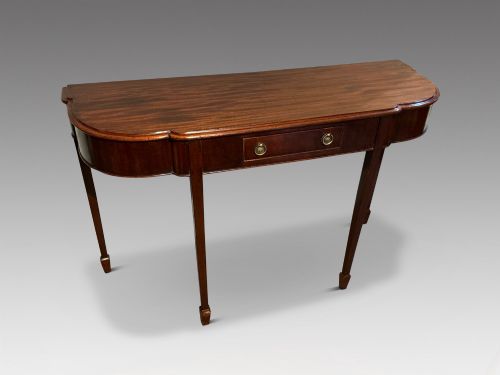
A vintage demilune console takes its name from its distinctive half-moon shape, which allows the piece to project minimally from a wall while offering a useful surface. These tables appear in various forms throughout this selection, encompassing dedicated hall tables, folding card and games tables, and occasional side furniture.
The pieces span multiple periods from the eighteenth century through to the interwar decades of the twentieth century. Examples draw upon historical design idioms such as Georgian, Louis XVI, Hepplewhite, and Queen Anne Revival, reflecting changing domestic tastes over two hundred years.
Origin and regional character differ across the selection, with English mahogany designs sitting alongside French carved oak and painted Swedish pieces. Buyers encounter both utilitarian washstands and refined inlaid card tables configured in this semicircular silhouette.
Materials and construction methods
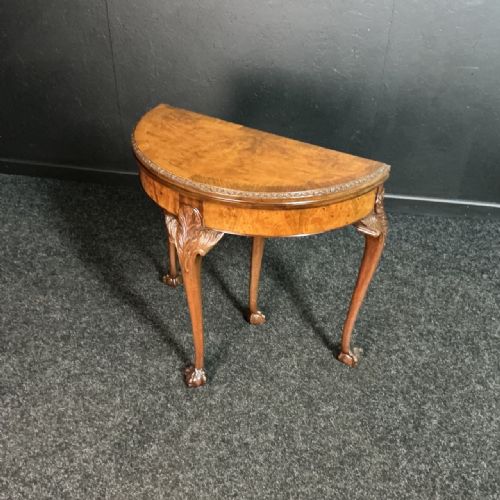
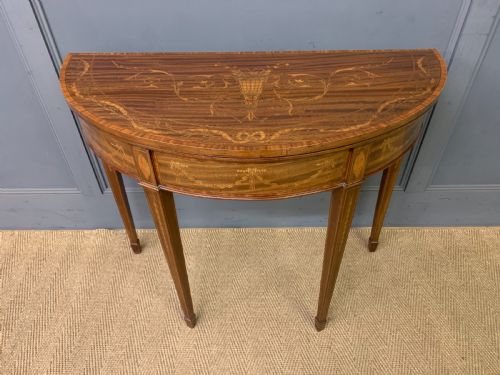
Cabinetmakers utilised timber carcasses faced with decorative veneers such as mahogany, walnut, burr walnut, and satinwood, frequently embellishing the surfaces with boxwood inlay and marquetry. Solid oak, rosewood, and kingwood also feature significantly in the construction of frames and tops.
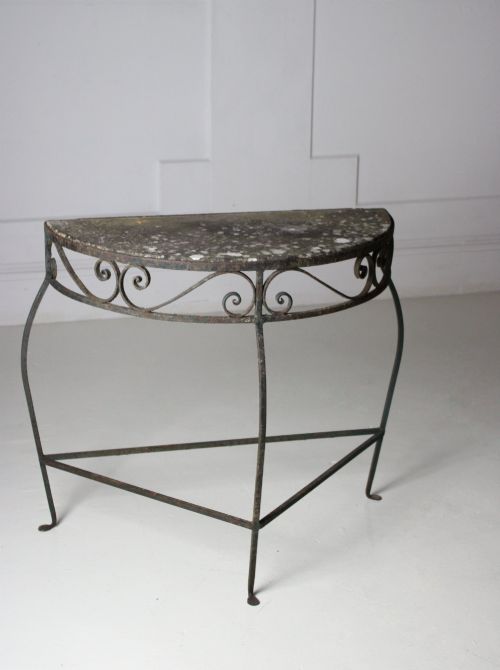
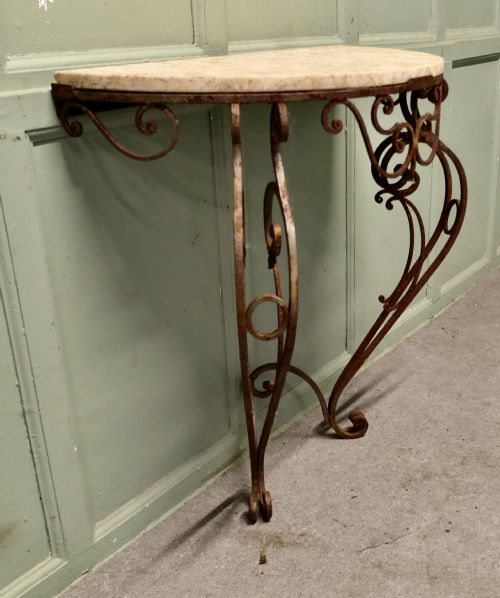
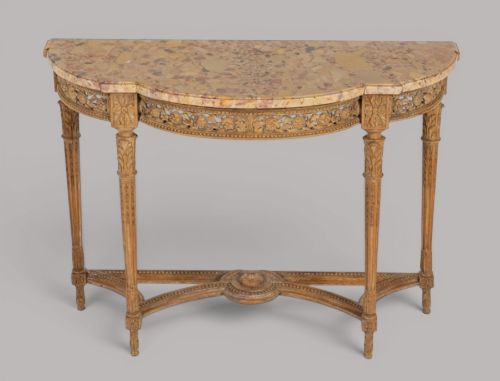
Stone and metal introduce contrasting textures, with heavy marble slabs fitted to wrought iron bases or wooden frames. Brass mounts, hinges, and folding mechanisms support the dual functionality of tables that open from half-moon consoles into full gaming surfaces.
Listings feature mahogany, walnut, and marble as dominant materials across multiple periods.
Distinctions in manufacture and design
The hierarchy of quality rests upon the selection of timber grains, the crispness of carved details, and the precision of inlaid woodwork. Tables featuring highly figured burr walnut or delicate satinwood marquetry represent a more ambitious standard of craftsmanship than plain painted or utility pieces.
Structural integrity and the retention of original surface finishes dictate the standing of individual examples. Refined proportions, harmonious revival styling, and the inclusion of coordinated elements such as matching wall mirrors distinguish the most accomplished work from simpler production.
Thonet
The Vintage Demilune Console Glossary
- Demilune
- A half-moon shape used to describe tables and consoles designed to fit flush against a wall. The semicircular format saves floor space in narrow circulation areas.
- Card table
- A folding or pivoting table engineered for card games, featuring a baize-lined interior surface when opened. Many examples utilise the demilune format when closed.
- Inlay
- A decorative technique where contrasting woods or other materials are inserted into recessed cavities on the surface. This method creates geometric patterns or floral motifs.
- Marquetry
- Elaborate veneer work arranged to form pictorial or decorative designs across furniture surfaces. Craftsmen assemble thin slices of various timbers to achieve tonal contrast.
- Burr walnut
- A prized wood grain obtained from walnut tree growths, characterised by swirling circular patterns. Cabinetmakers reserve this decorative veneer for prominent table tops.
Vintage Demilune Console: Frequently Asked Questions
What is a demilune console?
A demilune console is a semicircular table built to sit flat against a wall, functioning as a decorative surface or hallway furniture.
The half-moon shape provides a shallow depth, making these pieces suitable for placement in confined spaces where rectangular tables would obstruct movement.
How were folding card tables used?
Card tables served a social function in period homes, opening up from a wall console into a larger playing surface for evening entertainment.
Many examples feature double fold-over tops or rotating mechanisms supported by swinging rear legs to hold the expanded leaf.
Where should I place a console table?
These tables find a natural home in entrance halls, living rooms, and narrow corridors where surface space is required without a large footprint.
Pairs of consoles are often placed symmetrically beneath wall mirrors or windows to balance a formal interior layout.
How do I identify a Georgian style piece?
Georgian and revival pieces typically showcase timber qualities like rich mahogany, straight lines, and understated classical proportions.
Details such as boxwood stringing, tapered legs, and subtle bracket feet point toward the aesthetic conventions of the eighteenth century.