
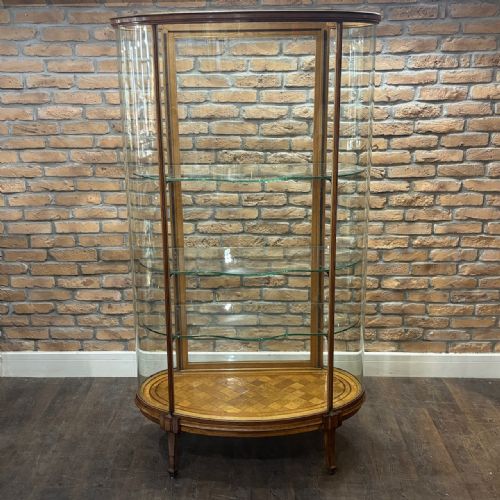
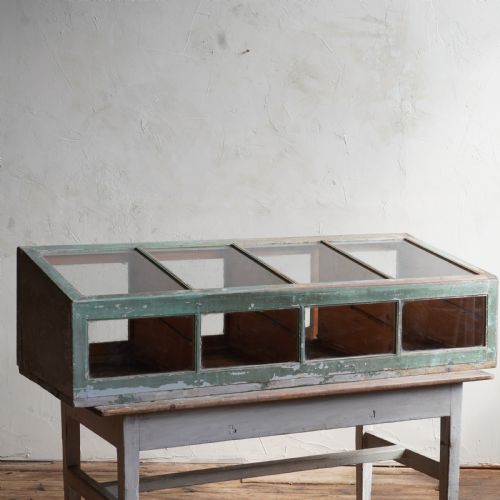
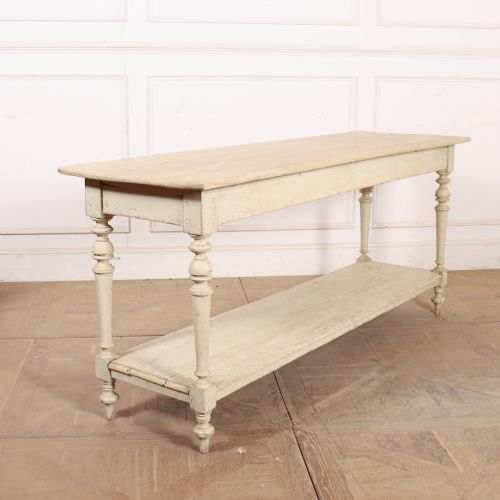
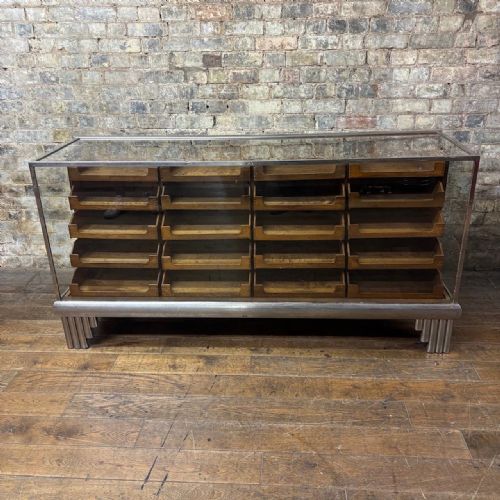



Haberdashery Display Counter
A haberdashery display counter turns the practical storage of threads, ribbons and textiles into an engaging shop centrepiece.
Haberdashery Display Counter
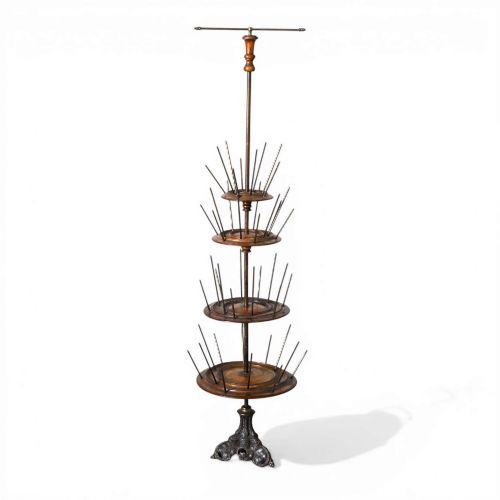
A haberdashery display counter serves as a shop fixture designed to showcase small dry goods, sewing notions and textiles to prospective buyers. These pieces originate primarily from the Victorian and Edwardian eras through to the interwar commercial period of the 1930s.
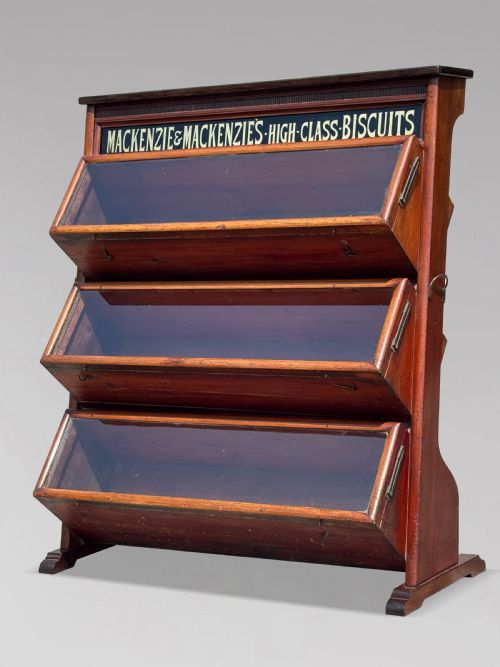
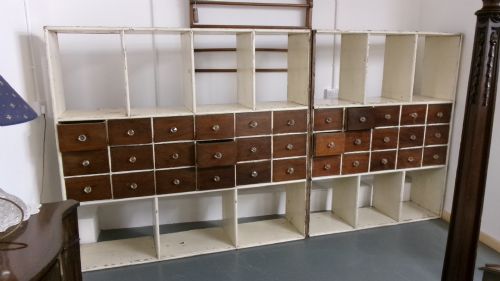
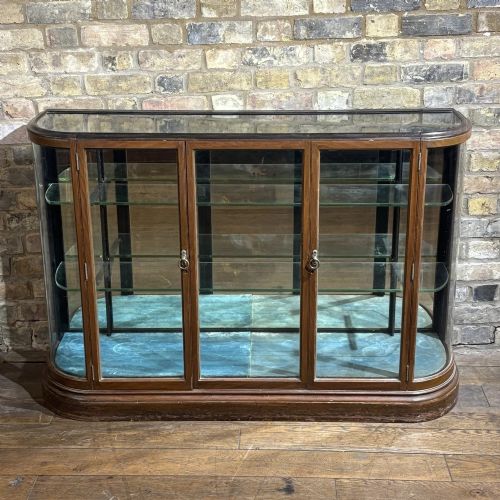
The versions most commonly met on this page range from long timber shop counters fitted with numerous drawers to glazed tabletop display cabinets and tall drapers tables. They combine utilitarian storage with generous glass viewing areas meant for public retail inspection.
Makers and outfitters such as F. Sage & Co and Dudley & Co constructed these pieces from robust timbers and metal frames to withstand heavy daily use in drapery and mercantile establishments.
How They Were Made
Makers built the structural carcases of these counters using dense hardwoods like mahogany and oak alongside more utilitarian pine and metal frames. Glass panels were integrated into tabletops and sides to protect small goods while keeping them visible to customers.
Metal components such as brass, aluminium and cast iron frequently formed framing, handles, and display stands to support frequent retail handling. Interiors often featured mirrored backs, velvet linings, or multiple tiered drawers tailored for cotton reels and buttons.
Several counters once tempted sweet-toothed shoppers by displaying Rowntree's chocolates.
What Varies in Quality
The distinction between standard commercial fittings and superior retail furniture lies in the refinement of the timber and the complexity of the cabinetry. Pieces housing dozens of purpose-built drawers or featuring curved bow ends demonstrate higher levels of specialised workshop production.
Maker attribution elevates certain pieces, with branded fittings from established commercial outfitters commanding particular attention for their robust construction and clever internal mechanisms.
F. Sage & Co·Dudley & Co·John Stow Ltd·Saml. Elliott & Sons·Ermen & Roby
The Haberdashery Display Counter Glossary
- Vitrine
- A glass display cabinet used for protecting and exhibiting delicate merchandise or collectables. These enclosures often feature glazed tops and sides for maximum visibility.
- Draper's table
- A large wooden table utilised in cloth and textile shops for measuring and cutting fabrics. They frequently incorporate lower shelves or banks of shallow drawers.
- Shop fitting
- Fixtures and furniture built specifically for commercial retail environments. These items prioritize durability and customer visibility.
- Bow end
- A curved cabinet or counter termination that softens rigid angles. This feature adds stylistic grace to commercial display furniture.
Haberdashery Display Counter: Frequently Asked Questions
What is a haberdashery display counter used for?
These counters were originally designed to store and display small sewing items, threads, buttons, and textiles in retail shops. The glass tops and multiple drawers allowed merchants to keep delicate stock organised while remaining visible to shoppers.
Today, collectors use them in domestic spaces as kitchen islands, sideboards, or display surfaces for collections. Their compartmentalized drawers provide practical storage for modern accessories and crafts.
How do I date a shop display counter?
Dating relies on observing the materials, construction methods, and stylistic cues present in the piece. Victorian examples often feature heavy mahogany and traditional dovetail joints, whereas 1930s pieces introduce aluminium frames and Art Deco styling.
Maker plaques and stamps from firms like F. Sage & Co also help establish a reliable timeframe. Commercial fittings generally span the late nineteenth century through the interwar period.
Are these counters suitable for modern kitchens?
Many buyers repurpose these long timber counters and drawer units as kitchen islands or prep tables. Their durable hardwood construction and generous surface area suit contemporary culinary spaces well.
The deep drawers and glazed compartments offer functional storage for kitchenware while introducing period character. Care should be taken to protect historic wood and glass finishes from excessive moisture.
What is the difference between a counter and a vitrine?
A shop counter is a heavy, waist-high structure designed for serving customers across a barrier, often incorporating storage drawers and glazed top display wells. A vitrine functions strictly as a glass-fronted display cabinet meant to stand against a wall or upon a table.
Both utilised glass to protect merchandise from handling, but counters served a dual purpose in the daily transaction of retail trade.