


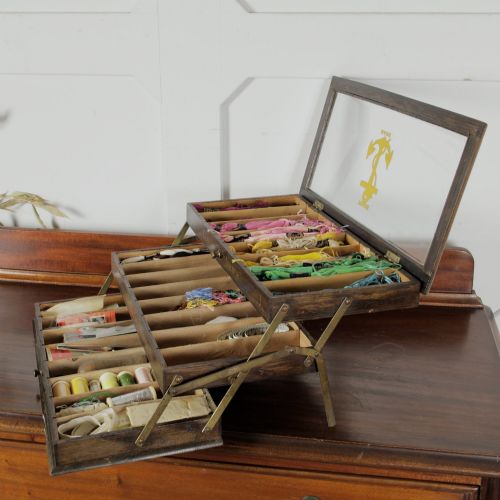

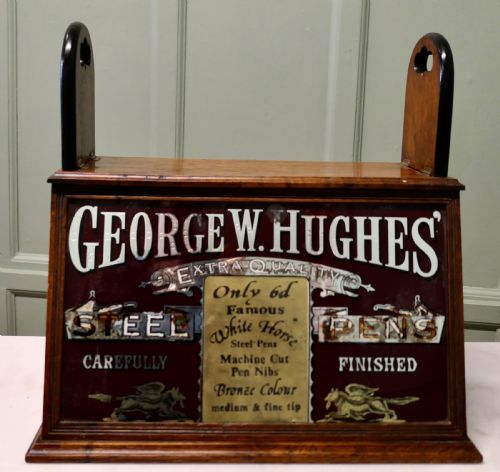





Haberdashery Counter Cabinet
A haberdashery counter cabinet organises retail goods behind glass and timber, offering sturdy display and storage for modern interiors.
Haberdashery Counter Cabinet
A haberdashery counter cabinet combines glazed display areas with banks of drawers designed for commercial shops, draperies, and merchants. Buyers encounter pieces originating from the Victorian and Edwardian eras, through to the 1920s and 1930s commercial periods.
Forms range from large floor-standing display counters and shop serving units to multi-drawer pine shop fittings and compact countertop glass cases. Many pieces reflect specialised trade uses, including sewing cotton displays, chemist fittings, and general mercantile storage.
Construction relies heavily on durable commercial timbers like oak, mahogany, and pine, frequently paired with glass viewing panels and metal hardware. Pieces often display distinct regional traits, from English manufacturer standards to painted Hungarian pine workshop units.
Materials and construction methods
Cabinet makers utilised dense hardwoods such as mahogany and oak alongside practical structural pine to build durable commercial furniture capable of withstanding daily retail trade. Glass panels were integrated into timber frames to protect stock while allowing clear visibility for customers.
Metal components including brass, chrome, and aluminium provided structural framing, handles, and branding plaques for specialised display counters. Surface finishes varied from polished natural grain and distressed paint to original cream, white, and green painted layers applied to pine drawer units.
Haberdashery Counter Cabinet Retail Price Guide 2026
Typical asking prices for haberdashery counter cabinet among the pieces listed under this phrase on Sellingantiques today, from the lower quarter to the upper quarter. They describe what is for sale here now, not the wider market.
Listings feature commercial display furniture spanning the nineteenth century through to the 1930s, utilising oak, mahogany, pine, and glass.
Differentiating construction and finish
Quality rests in the integrity of the timber framing, the smoothness of drawer operations within large banks, and the original condition of glass panels and hardware. Pieces retaining manufacturers' branding plaques or documented maker attributions demonstrate higher commercial provenance.
The sophistication of joinery, such as bow-end curves, pentagonal geometry, and mirrored interiors, separates standard utility counters from exceptional retail display pieces. Original painted surfaces and patinated brass or chrome framing contribute substantially to a piece's visual character.
F. Sage & Co.·Dudley & Co·John Stow Ltd·Saml. Elliott & Sons·Ermen & Roby
The Haberdashery Counter Cabinet Glossary
- Vitrine
- A glass display cabinet designed specifically for exhibiting objects or retail stock. These cases rely on clear glass panels held within timber or metal frames.
- Shop Fitting
- Furniture built specifically for commercial retail environments rather than domestic residential use. These items include serving counters, seed chests, and multi-drawer storage banks.
- Bank of Drawers
- A large assembly of numerous small drawers integrated into a single housing unit. They were utilised by merchants to sort small items like threads, buttons, and apothecary supplies.
- Countertop Display Cabinet
- A smaller glazed case positioned on top of a shop counter to draw customer attention to specific goods. They frequently feature hinged or sliding rear access doors for staff.
- Bow End
- A curved cabinet end shaped in a convex sweep rather than a sharp corner. This joinery technique softens the profile of large display counters and shop fittings.
Haberdashery Counter Cabinet: Frequently Asked Questions
What is a haberdashery counter cabinet?
A haberdashery counter cabinet is a piece of commercial shop furniture combining glazed display compartments with multiple storage drawers.
Originally designed for merchants and drapers to organise small dry goods, these units now function as practical storage and display furniture in domestic settings.
How do I date an antique shop counter?
Dating involves examining the timber species, construction techniques, hardware materials, and overall commercial style. Victorian and Edwardian pieces typically feature solid mahogany or oak with hand-dovetailed drawers, while 1920s and 1930s examples introduce chrome frames and Art Deco lines.
Manufacturer labels, brass plaques, and specific trade uses also help pinpoint the manufacturing era.
Where were these cabinets used?
These cabinets originated in late nineteenth and early twentieth century retail shops, including draperies, haberdashers, chemist stores, and seed merchants. Shopkeepers used them on sales counters to display small wares securely while keeping stock organised in drawers below.
Today, collectors place them in kitchens, living spaces, and retail boutiques for similar storage and display purposes.
Are painted finishes on shop fittings original?
Many trade counters and pine drawer units retain layers of old or original paint applied during their working life in European shops. Examining the paint layers, wear patterns, and underlying timber helps distinguish period shop paint from modern decorative applications.