
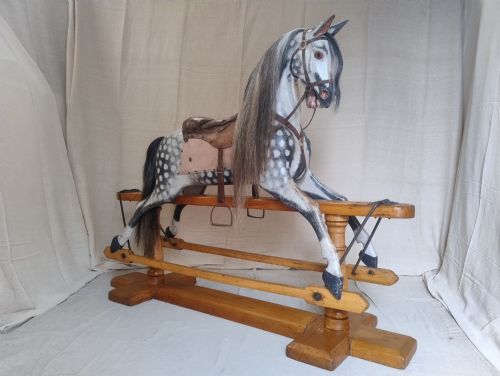


Grey Wooden Rocking Horse
A grey wooden rocking horse brings traditional craftsmanship and timeless charm into a room, offering both decorative presence and lasting amusement.
Grey Wooden Rocking Horse
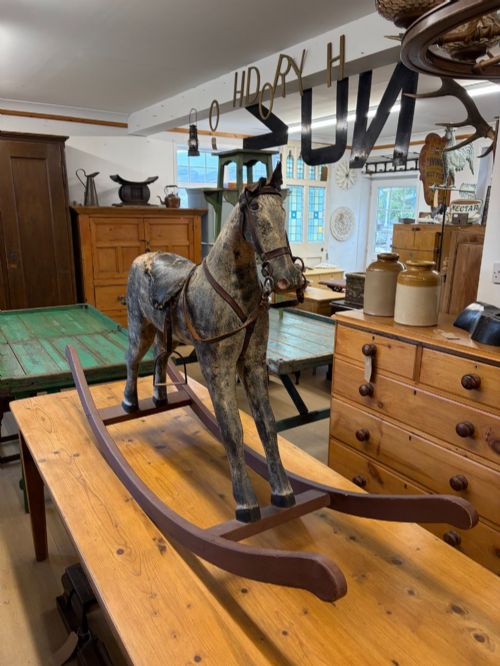
When searching for a grey wooden rocking horse, you are looking at traditional children's toys and decorative sculptures that span from the nineteenth century through to the mid-twentieth century. These pieces encompass various stylistic expressions, including Victorian, Edwardian, and folk art examples.
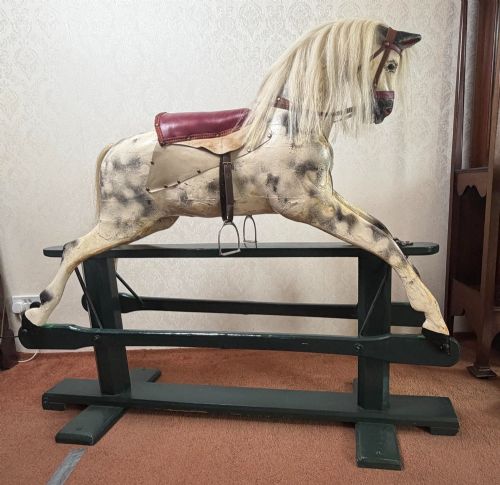
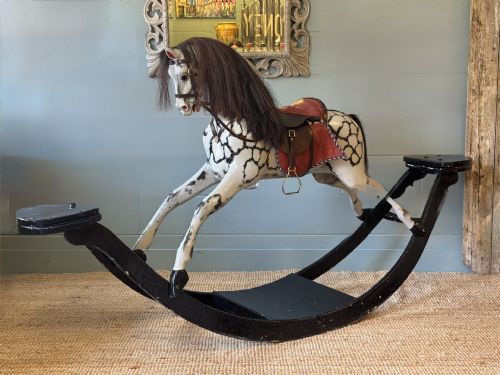
The versions most commonly met on this page range from early carved primitive models to substantial works produced by prominent makers like G & J Lines and F.H. Ayres. They typically appear mounted on curved wooden rockers or pine trestle bases.
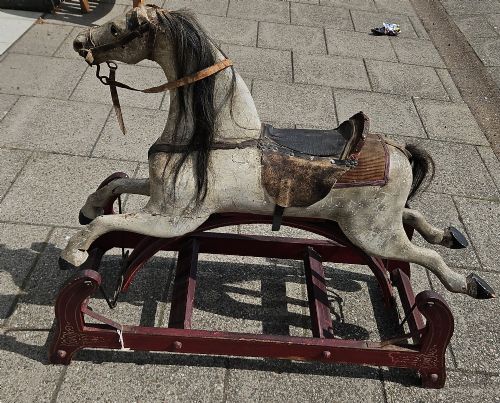
Makers utilised durable materials to construct these sturdy playthings, ensuring many survived decades of energetic use. You encounter examples finished in original paint, often featuring the characteristic dapple grey scheme alongside plain wood surfaces.
How they were made
Makers constructed these figures primarily from carved wood, utilising pine for the main bodies and structural components. Metal and iron elements, including steel fittings, provided essential reinforcement for the moving parts and swinging brackets.
Surface finishes relied upon traditional paint applied over the carved timber, with leather tack and genuine horsehair used to create realistic manes, tails, and bridles. Craftspeople shaped the wood by hand, resulting in distinctive carving styles ranging from primitive folk art to highly detailed Victorian and Edwardian representations.
Listings feature wooden rocking horses spanning from the nineteenth century through the interwar period, incorporating leather, horsehair, and iron elements.
What varies in quality
The standard of carving determines much of the distinction between pieces, with master carvers producing anatomical precision while simpler folk art items display charmingly naive proportions. The survival of original paint surfaces and early tack significantly elevates an example above those that have undergone extensive repainting.
Structural integrity and the presence of original rocking stands or trestles also define the upper tier of the range. Retaining authentic maker markings or labels provides historical context that separates standard workshop output from documented factory pieces.
G & J Lines of London·F.H.Ayres·Collinson·Collinson & Sons Liverpool·Lines Bros Sportiboy 2
The Grey Wooden Rocking Horse Glossary
- Trestle base
- A robust wooden supporting frame upon which the rocking horse body is mounted, offering stability during movement. These stands are frequently constructed from pine.
- Original paint
- The initial decorative surface coating applied during manufacture, highly prized by collectors for showing authentic age and wear. It contrasts with later repainted finishes.
- Folk art
- Items created by untrained or traditional craftspeople outside academic artistic traditions, often displaying charmingly direct carving methods. These pieces date across the nineteenth century.
- Tack
- The harness, saddle, reins, and stirrups fitted to the horse, historically fashioned from leather and metal. Complete original tack enhances the historical integrity of the piece.
Grey Wooden Rocking Horse: Frequently Asked Questions
How do I date a rocking horse?
Dating relies on examining the carving style, construction methods, and materials such as iron brackets or pine frames. Specific maker stamps and historical design shifts from Victorian to interwar periods also help narrow the timeline.
Comparing the type of paint and tack against known production eras provides further confirmation of age. Documentation or maker labels remaining on the wooden base offer definitive dating evidence.
Are these horses safe for children to ride?
Most antique pieces function primarily as decorative sculptures or collector items due to their age and historical value. Sturdy construction means they often remain mechanically sound, but modern safety standards do not apply to vintage toys.
Supervision is essential if younger children use them, as historical metal fittings and dried leather may require gentle handling. Many owners choose to display them as sculptural focal points rather than active playthings.
What is dapple grey finish?
A dapple grey finish is a traditional painted decorative pattern mimicking the mottled grey coat of a real horse. Artisans layered paint to create characteristic spots and tonal variations across the carved wooden body.
This technique was standard for high-end Victorian and Edwardian models produced by major firms. Surviving examples retain varying degrees of this original painted texture beneath decades of gentle patination.
How should I care for wooden rocking horses?
Maintaining these pieces involves keeping them away from direct sunlight and damp environments to protect the antique wood and painted surfaces. Gentle dusting with a dry cloth prevents dirt accumulation without risking damage to delicate horsehair manes.
Leather tack benefits from occasional specialist conditioning to prevent drying and cracking over time. Avoid harsh chemical cleaners that might strip original paint or historic finishes.