
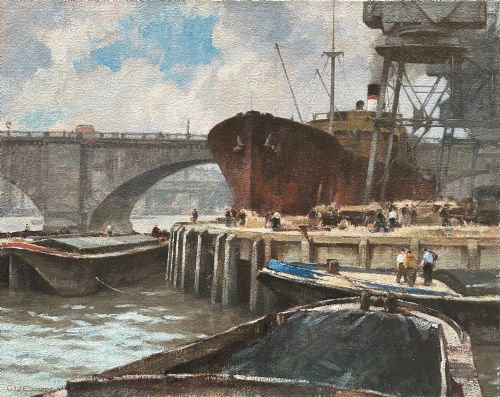


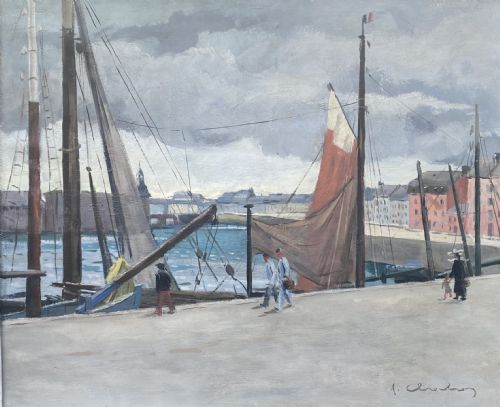


Grey Sky Maritime Painting
Grey sky maritime painting captures the atmospheric sweep of open water and busy harbours under subdued northern light.
Grey Sky Maritime Painting
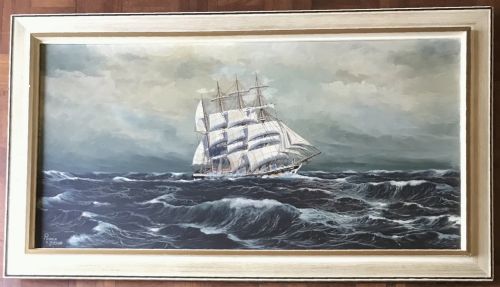
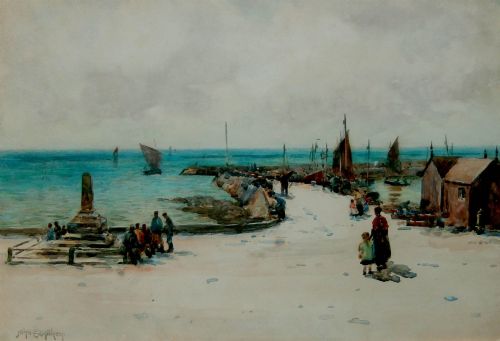
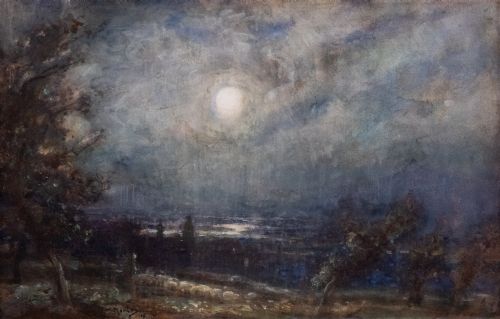
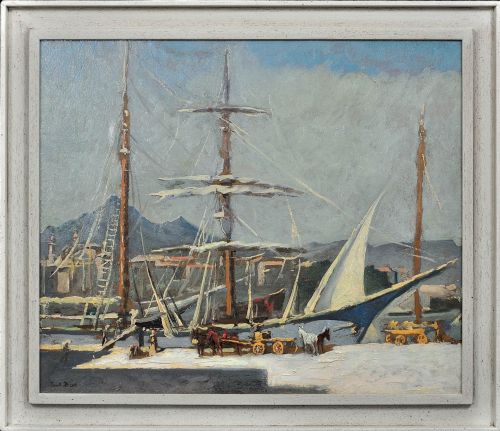
A grey sky maritime painting presents harbours, coastal views, and open water through the muted palette of British Impressionism, Victorian Maritime, and twentieth-century realism. These works focus on shipping, coastal figures, and marine environments rather than bright summer scenes.
Most examples found here date from the nineteenth century through the mid-twentieth century, spanning Victorian, Edwardian, and post-impressionist periods. They record working ports, river landscapes, and coastal vessels under overcast or moody skies.
Materials and Technique
Artists painted these marine subjects using oil on canvas, wood panels, and watercolour pigments on paper. The choice of medium dictates the texture, from the heavy impasto of modernist oils to the fluid washes of nineteenth-century watercolours.
Makers applied these oil and watercolour materials to capture shifting coastal weather, using restrained tones of grey, blue, and ochre to render water and heavy skies with direct observation.
Salt-air winds seem to blow right off the canvas when the brushwork captures a squall just right.
Judging Quality
Quality rests on the confidence of brushwork and the artist's command of atmospheric light over water. Stronger compositions convey the weight of overcast skies and the movement of vessels with economy and precision.
The integration of maritime architecture, shipping details, and coastal figures distinguishes accomplished works from simpler decorative topographical studies.
John E Aitken·Thomas William Morley·Paul Bret·Charles William Adderton·George Hamilton Constantine·Paul Jean Clays·Owen Bowen·Bertram Priestman·Thomas Bush Hardy·Edward Wesson·R I Barrow
The Grey Sky Maritime Painting Glossary
- Impressionism
- A nineteenth-century painting style focused on light, loose brushwork, and everyday subjects.
- Watercolour
- A paint medium consisting of pigments suspended in a water-based solution, traditionally applied to paper.
- Barque
- A sailing vessel with three or more masts, frequently depicted in nineteenth and twentieth-century marine art.
- Impasto
- Paint applied thickly to a canvas or panel, leaving visible brush or palette knife marks.
Grey Sky Maritime Painting: Frequently Asked Questions
What periods do these paintings cover?
The works span from the early nineteenth century through the mid-twentieth century, encompassing Victorian, Edwardian, and modernist approaches to coastal subjects.
Key movements represented include British Impressionism, Post-Impressionism, and twentieth-century realism.
How should I display a watercolour?
Watercolour paintings on paper require framing behind glass with conservation-grade mounts to protect the pigment from moisture and direct sunlight.
Placement away from direct heat sources ensures the paper remains stable over time.
What subjects appear most often?
Common subjects include working harbours, beached fishing boats, estuaries, and sailing vessels navigating coastal waters under overcast skies.
Scenes range from specific locations like Whitby and the Scottish Borders to continental European ports.
How do oil and watercolour differ?
Oil paintings utilise pigment bound in drying oils on canvas or wood panels, offering rich texture and deeper colour saturation.
Watercolours employ water-soluble pigments on paper, creating translucent washes and lighter tonal shifts.