

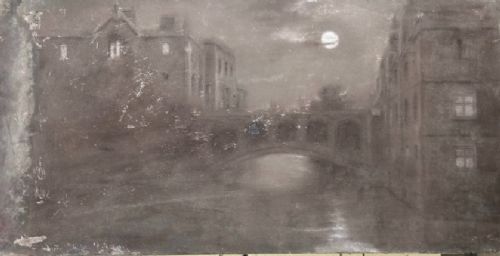
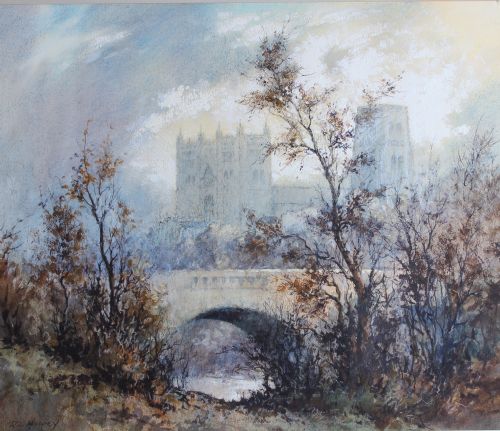


Grey River Painting
A grey river painting captures the quiet, mist-shrouded moods of waterways through historic brushwork.
Grey River Painting
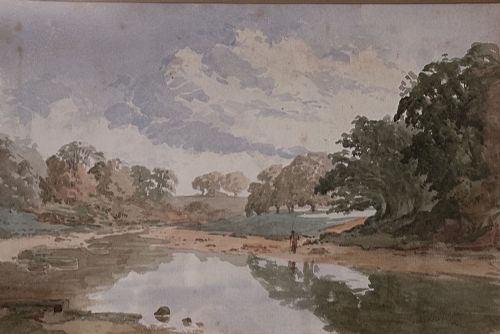
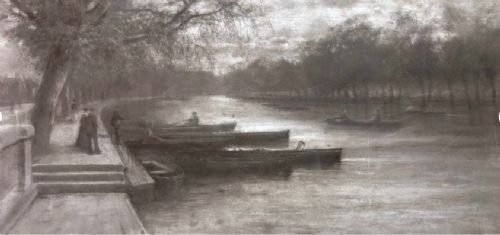
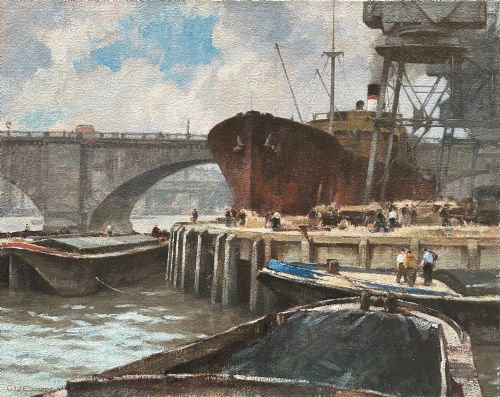
A grey river painting typically depicts moody maritime scenes, urban quays, and rural waterways under overcast skies. When exploring grey river painting selections, buyers encounter works spanning from the nineteenth century through the mid-twentieth century.
The prevalent forms include framed watercolours on paper and oil paintings executed on canvas, panel, or board. These artworks range from intimate topographical sketches to expansive provincial and metropolitan riverscapes.
Originating largely from British, Irish, Dutch, and French traditions, the pieces reflect diverse regional aesthetics including Edwardian tonalism and impressionistic movements. Common subjects feature barges, bridges, and damp towpaths rendered in muted palettes.
Materials and Techniques
Artists primarily applied oil paint and watercolour paint onto stretched canvas, wooden panels, or heavy paper supports. Oil mediums provided rich, buildable textures for water surfaces, whilst watercolour allowed for delicate, translucent washes of atmospheric grey.
Supporting materials include charcoal for initial sketching and wood for panel foundations or framing. Many works utilise traditional plein air methods to capture transient natural light and water reflections directly on location.
Several artists braved freezing European winters simply to paint gloomy grey canals.
Assessing Artistic Merit
Quality rests upon the artist's ability to manipulate tone and atmosphere to evoke the chill and movement of water. Superior compositions demonstrate confident brushwork and a sophisticated handling of light within a restrained colour scheme.
The depth of provenance and the clarity of attribution also influence the standing of a piece. Works by documented practitioners command greater regard than anonymous studio output due to their established technical mastery.
Kenneth Cozens·Cyril Walduck Edwards·Robert Leslie Howey·Florence Adelina Hess·Arthur Reginald Smith·Gabriel Dauchot·Ron Folland·Edward Henry Eugene Fletcher·William Grant Murray·Alfred Grey RHA·A. G. Hayward·Thomas James Lloyd·Walter Duncan·Pieter Cornelis Steenhouwer·Fred Lawson·Amos Green·Frank W. Scarborough·Noel Harry Leaver·Robert Winchester Fraser·Henry John Sylvester Stannard·Frank Wasley·Carleton Grant
The Grey River Painting Glossary
- Watercolour paint
- A water-soluble medium consisting of finely ground pigments mixed with a binder such as gum arabic. It is traditionally applied in translucent layers on paper.
- Oil paint
- A slow-drying medium composed of pigment particles suspended in a drying oil, typically linseed oil. This allows for smooth blending and thick impasto textures.
- Impressionism
- A nineteenth-century art movement characterised by relatively small, thin yet visible brush strokes and an emphasis on accurate depiction of light.
- Plein air
- The act of painting outdoors to capture the direct visual effects of light and atmosphere upon objects in natural surroundings.
Grey River Painting: Frequently Asked Questions
What periods do these paintings date from?
The available artworks span from the late nineteenth century through to the mid-twentieth century. They incorporate periods such as the Victorian era, Edwardian tonalism, and mid-century modernism.
Most pieces reflect early twentieth-century British and European artistic movements. The dates correspond directly to the creation eras documented in the individual listings.
How were these watercolours and oils framed?
Historic paintings typically feature period wooden frames suited to their respective decades of creation. These frames protect the edges of the canvas or paper support.
Many frames show patination and wear consistent with their age. Collectors often preserve these original housings to maintain the historical integrity of the artwork.
Where were these river scenes painted?
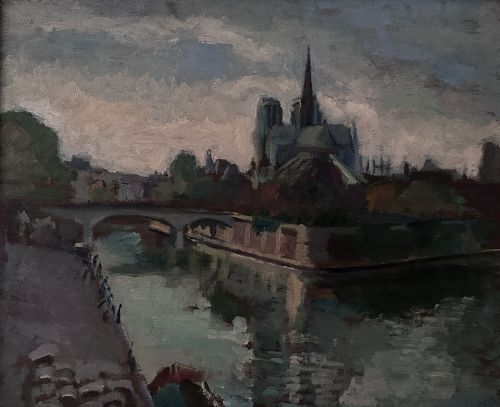
The locations include British waterways such as the Thames, the Tees, and Wharfedale. Other pieces depict continental European scenes including the Seine in Paris and Dutch winter landscapes.
Artists frequently travelled to major ports, bridges, and rural streams to record working barges and maritime traffic. These settings reflect the industrial and pastoral interests of the period.
How should I care for an antique painting?
Keep paper and canvas works away from direct sunlight to prevent fading of watercolours and oil pigments. Stable indoor humidity levels protect both wooden panels and paper supports from warping.
Glazed watercolours benefit from acid-free mounting materials behind glass. Oil paintings on canvas should be kept free of dust using a soft, dry brush.