



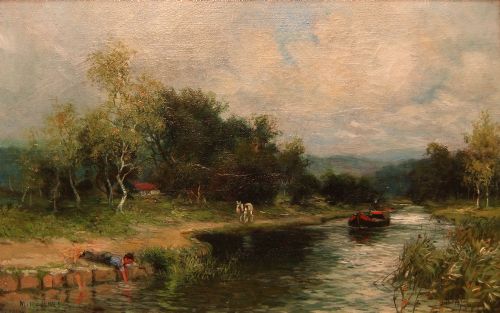


Vintage Barge Oil Painting
A vintage barge oil painting captures the industrial poetry of working waterways across centuries of British and European maritime life.
Vintage Barge Oil Painting
A vintage barge oil painting captures working vessels on rivers, canals, and estuaries, ranging from early canal scenes to mid-century industrial waterways. These works document the maritime heritage of rivers such as the Thames, Severn, and Tees through the eyes of various historical schools.
Buyers encountering this search phrase will find oil paintings executed on canvas or board, originating from periods spanning the seventeenth century through the post-war era. The subjects vary from quiet canal moorings to bustling industrial estuaries and French waterways.
The assortment includes works attributed to named artists as well as pieces from the broader British School and continental movements. Each piece records the changing appearance of working boats and their surrounding landscapes over time.
Materials and methods
Artists painted these river scenes using oil paint applied to prepared canvas, timber panels, or rigid boards. The medium allowed for both smooth, atmospheric blending in earlier marine works and heavier impasto texture in mid-century industrial depictions.
Frames often incorporate timber and gilt mouldings appropriate to the period of the artwork, complementing the depth and colour palette of the oil pigments.
Listings feature oil paintings on canvas and board, ranging from seventeenth-century maritime scenes to post-war British and French landscapes.
Assessing quality in maritime art
Quality rests in the handling of light on water and the convincing depiction of vessel structure rather than the mere subject matter. Superior works demonstrate a confident command of atmospheric perspective, rendering the heavy build of working boats against open skies and riverbanks.
Condition of the pigment and support surface plays a part, distinguishing well-preserved canvases and boards from those showing heavy degradation. The strength of the composition and the historical resonance of the specific waterway add distinction to individual pieces.
Kenneth Cozens·Edward Henry Eugene Fletcher·Benjamin Williams Leader·Paul Jean Clays·E Elliot·Maud Raphael Jones·Jacob Knyff
The Vintage Barge Oil Painting Glossary
- Canvas
- A woven fabric surface stretched across a wooden frame to receive oil paint. It provides a flexible yet durable support favoured by portrait and landscape artists alike.
- Board
- A rigid flat panel made of wood or wood pulp used as a painting support. Artists often selected board for smaller outdoor sketches and urban or rural studies.
- Impasto
- Paint applied thickly to a canvas or board so that the strokes stand proud of the surface. This technique creates a tangible texture that catches the light and adds physical depth to water and industrial elements.
- Riverscape
- A painting depicting a river, canal, or estuary as the primary subject. These compositions frequently feature bridges, wharves, and working watercraft.
- Gilt
- A thin layer of gold leaf or gold-coloured pigment applied to picture frames. It provides a decorative border that enhances the tones within the oil painting.
Vintage Barge Oil Painting: Frequently Asked Questions
What periods do these paintings cover?
The available works span from seventeenth-century maritime records to mid-century post-impressionist interpretations of canals and rivers.
Earlier pieces often focus on official or commercial river traffic, while twentieth-century examples lean towards industrial estuaries and impressionistic water scenes.
How do I care for an oil painting on board?
Keep the artwork away from direct sunlight and fluctuating humidity to prevent the board from warping and the oil paint from cracking.
Dust the surface gently with a dry, soft brush and avoid using liquid cleaners or hanging the piece near damp walls.
Where were these barge scenes painted?
The locations include British waterways such as the Thames, Severn, and Tees, alongside continental European scenes in France and Belgium.
Artists painted both rural canal stretches and busy urban shipyards where working vessels formed part of daily commerce.
Are these paintings signed by the artists?
Some pieces bear the signature or attribution of known painters, while others remain anonymous works from the broader British or continental schools.
Signatures help place the artwork within a specific period and artistic movement, though unsigned works can display equal technical merit.