


Brown Maritime Art
Brown maritime art brings together coastal scenes and naval history through nineteenth-century oils and watercolours.
Brown Maritime Art
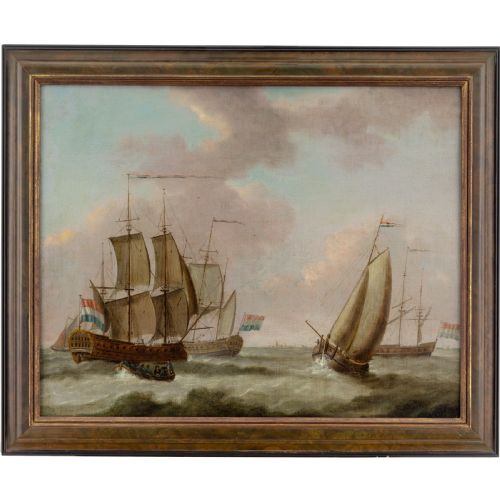
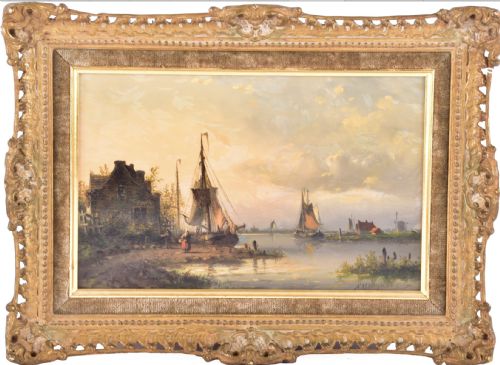
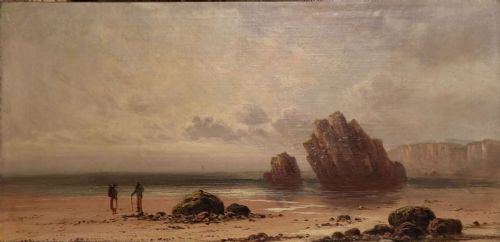
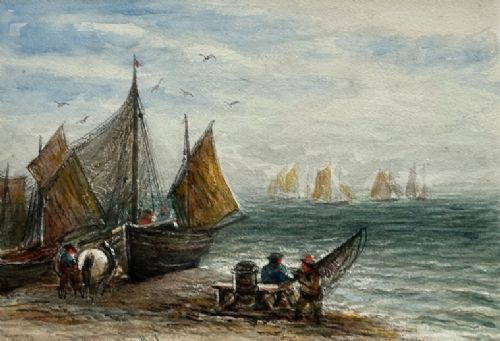
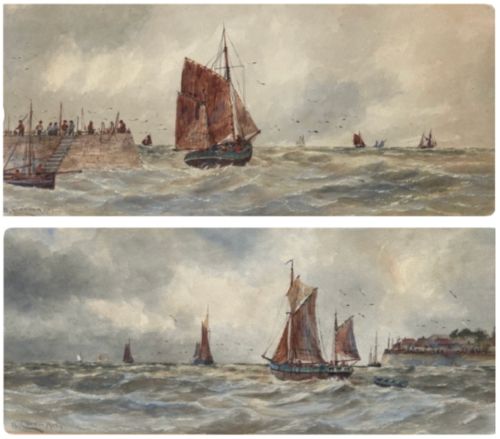
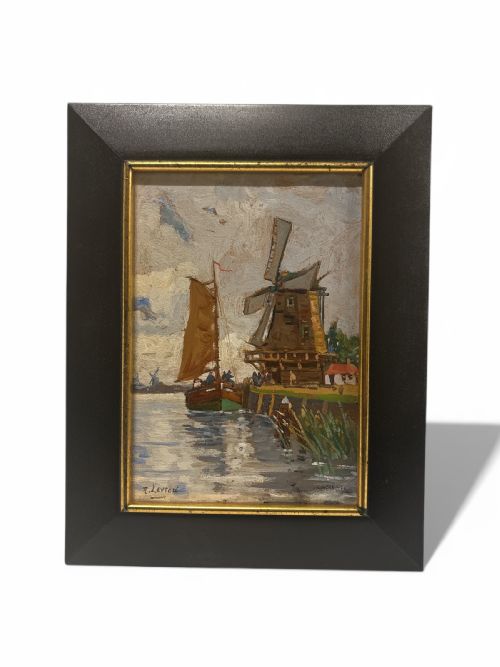
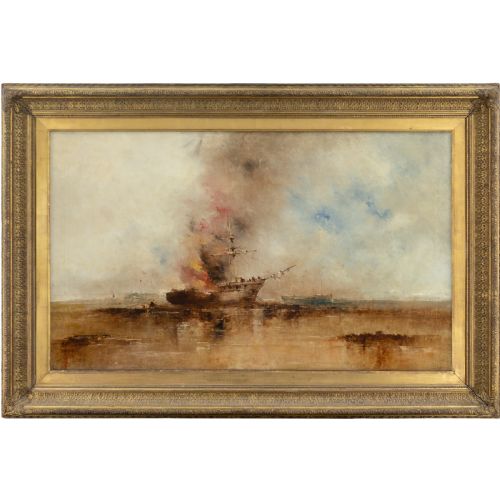
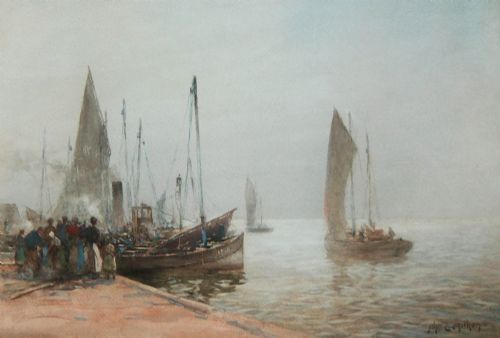
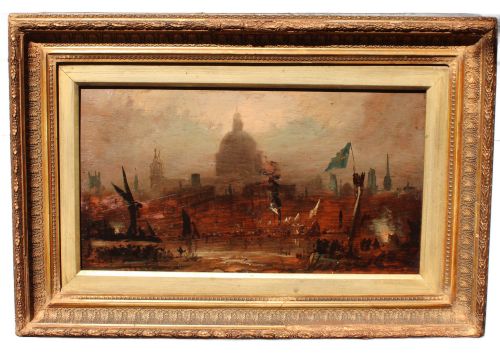
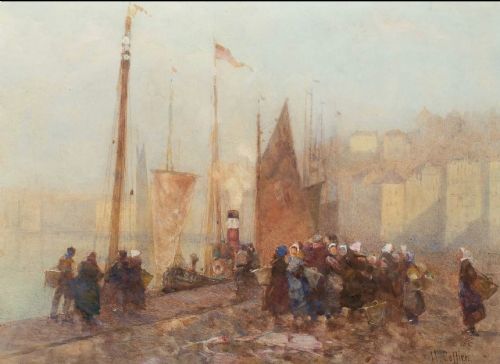
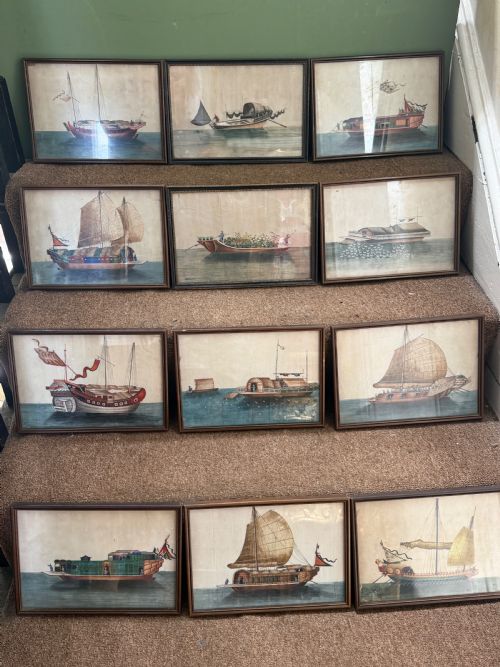
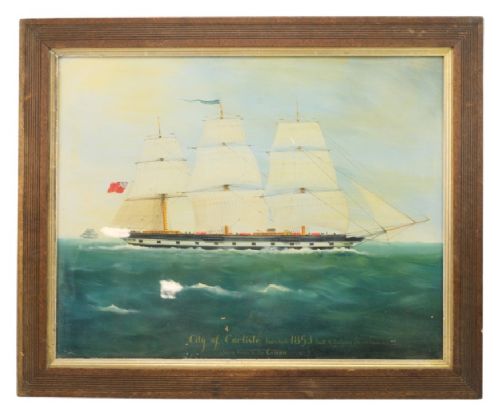
Brown maritime art covers a wide range of coastal views, harbour scenes, and ship portraits produced primarily across the nineteenth and early twentieth centuries. When searching for brown maritime art, collectors encounter framed oil paintings, delicate watercolours, and gouache works dominated by earthy tones of wood, canvas, and sepia ink.
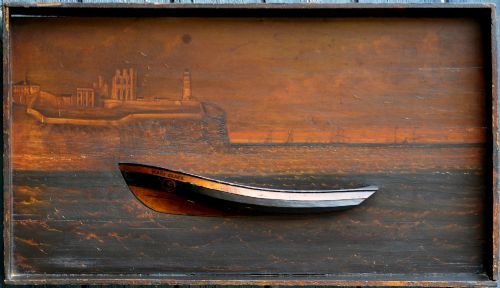
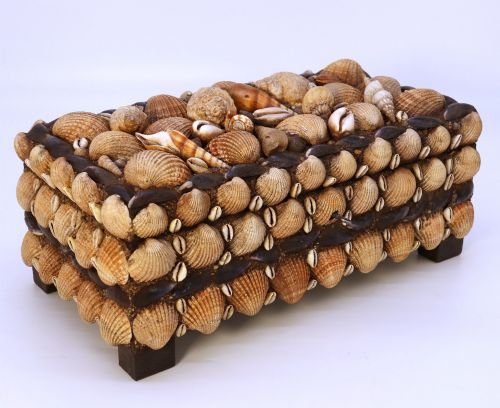
The most common pieces on this page are British and European watercolours and oil paintings depicting fishing boats, rough seas, and busy ports from the Victorian and Edwardian eras. Alongside these traditional paintings sit occasional items like shellwork boxes, wooden dioramas, and carved coconut flasks that reflect the broader maritime culture of the period.
How these pieces were made
Artists working in this field applied oil paint to canvas or board, and watercolours or gouache to paper, often mounting finished works within gilt frames. The physical materials reflect the traditional mediums of the nineteenth and early twentieth centuries, relying on stable grounds and layered pigments to capture light on water and the dark timber of vessels.
Three-dimensional objects utilise natural materials such as wood, glass, and shell, combining carpentry with sailor-made crafts like bottled ship dioramas and folk art boxes. These techniques showcase both professional studio painting and skilled maritime craftsmanship from coastal communities.
Listings feature works spanning the nineteenth and twentieth centuries, using oil paint, watercolour, canvas, and wood.
What varies in quality
Quality in these works rests upon the artist's handling of atmosphere, movement, and light, particularly in the depiction of shifting sea and sky. Stronger examples demonstrate confident brushwork and accurate perspective in rendering vessels and architectural elements like harbours and piers.
The distinction between standard decorative pieces and finer works also depends on provenance and signature, where identified artists command greater attention from collectors. Condition and original framing further separate everyday examples from exhibition-quality paintings.
Kenneth Cozens·James Orrock·William Cannon·Thomas Bush Hardy·John Moore of Ipswich
The Brown Maritime Art Glossary
- Seascape
- A work of art depicting the sea, coastlines, or marine vessels in motion. These subjects formed a major focus for nineteenth-century British and European painters.
- Gouache
- An opaque water-based paint that dries to a matte finish, frequently utilised alongside watercolour for sharp highlights on water and shipping.
- Diorama
- A three-dimensional scenic representation enclosed in a case or bottle, often constructed by sailors using wood, painted paper, and rigging.
- Gilt frame
- A wooden picture frame coated with gold leaf or metallic paint, commonly paired with nineteenth-century oil paintings and watercolours.
- Lugger
- A type of small fishing boat with lug sails, frequently recorded in British coastal watercolours and oil paintings from the Victorian era.
Brown Maritime Art: Frequently Asked Questions
What periods do these pieces date from?
The selections span the nineteenth and early twentieth centuries, covering the Victorian and Edwardian eras up to the mid-twentieth century.
Most dated works concentrate around the late 1800s and early 1900s, reflecting the height of British maritime painting and sailor craftsmanship.
Are these paintings original works?
The inventory consists largely of original oil paintings, watercolours, and gouache works created by named and regional artists.
Collectors will also find period framed artwork and folk art objects produced by hand during the nineteenth and early twentieth centuries.
How should I display maritime art?
These framed watercolours and oil paintings suit traditional interiors, studies, or rooms with neutral decor that complements their earthy tones.
Objects like dioramas and boxes require stable surfaces away from direct sunlight to protect the paper, wood, and glass components.
What subjects appear in these scenes?
Common subjects include coastal harbours, fishing boats, stormy seas, and historical ships operating in British and European waters.
Works range from busy dockyards at Whitby and Brighton to dramatic open-sea encounters and detailed ship portraits.