
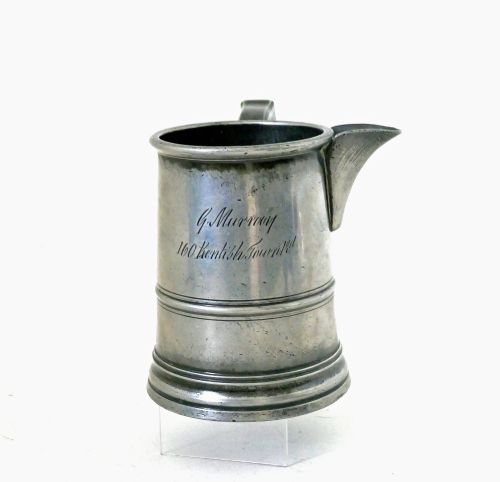
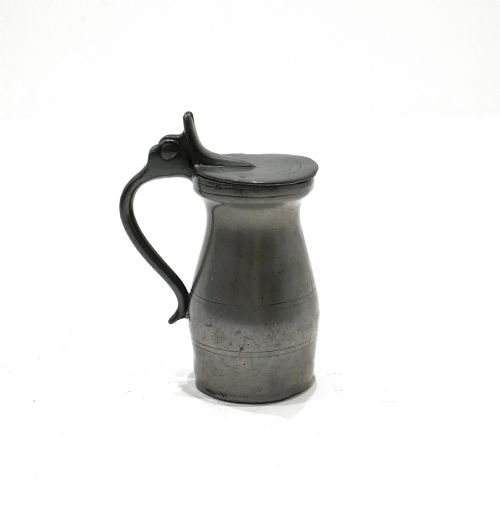
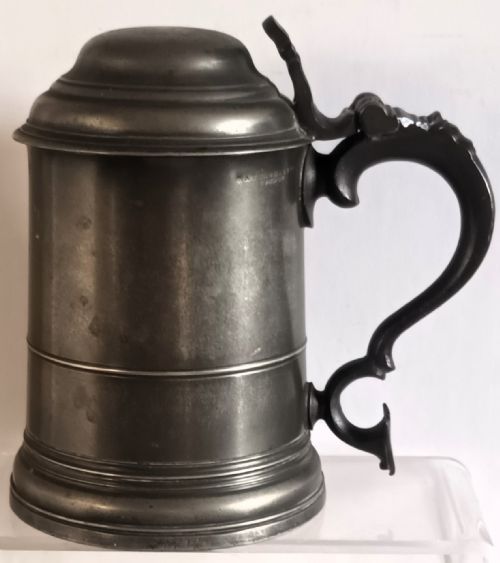
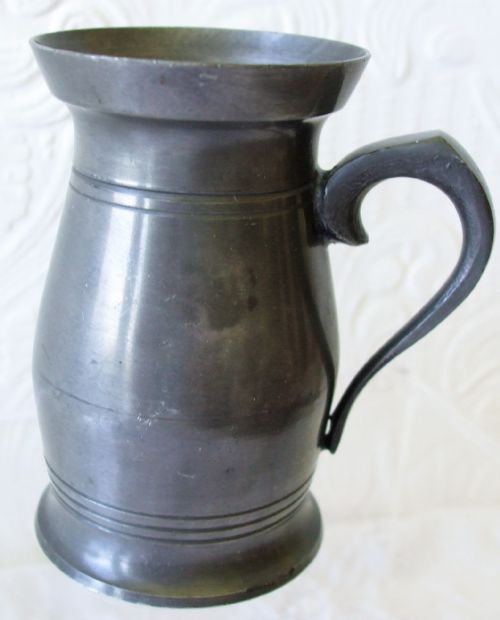
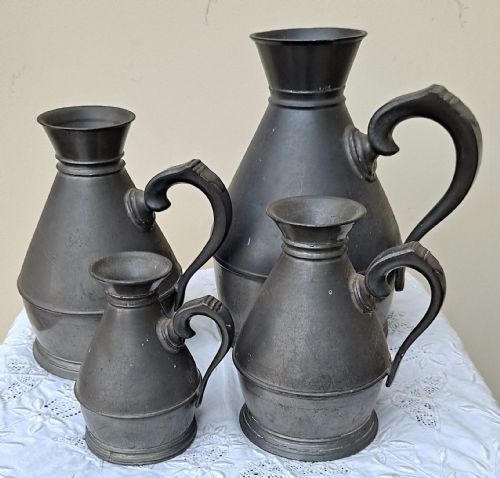
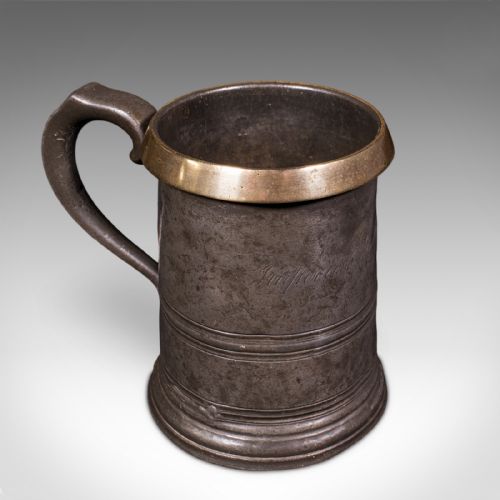


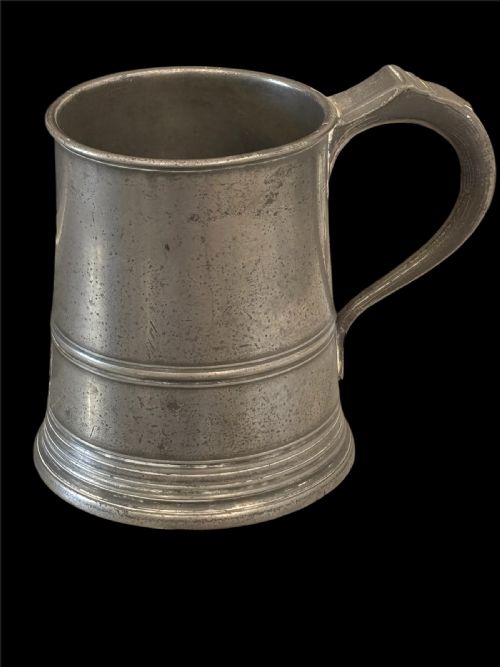
Grey Pewter Measure
A grey pewter measure is a utilitarian vessel built to dispense ale or spirits accurately.
Grey Pewter Measure
A grey pewter measure is a utilitarian drinking vessel or capacity standard found in forms such as tankards, flagons, jugs, and specific capacity measures. These items appear across 18th century, Georgian, 19th century, and Victorian periods.
The versions most common on this page include English, Irish, Scottish, and Channel Islands examples, ranging from small half gill spirit measures up to gallon ale jugs and haystack sets.
Assessing quality and form
Quality rests in the crispness of touchmarks, the integrity of the cast metal body, and the survival of original capacity stamps or ownership inscriptions.
Regional variations, such as Jersey, Guernsey, Irish, and Scottish forms, alongside maker attributions, distinguish standard utilitarian items from more notable workshop productions.
Some vessels carry names like the tappit hen, a Scots pint container whose peculiar title likely derives from the nesting shape of its lid.
Watts and Harton·Frederic Sanders·Thomas Phillips I·John De St Croix
The Grey Pewter Measure Glossary
- Pewter
- A malleable metal alloy composed chiefly of tin combined with lead, copper, or antimony. It provides the characteristic grey surface seen on historical measures and flagons.
- Flagon
- A large drinking vessel with a handle and lid, often used for ale or wine. In these listings, they appear in flat-lid and spire forms.
- Haystack measure
- A distinct regional Irish form of pewter measure featuring a bulbous body that tapers toward the top, resembling a stacked pile of hay.
- Tappit hen
- A traditional Scottish type of pewter drinking vessel and measure fitted with a lid and a tap or spigot, with a capacity roughly equivalent to a Scots pint.
- Touchmark
- A stamp or hallmark impressed into the metal by a maker or guild to indicate the origin and standard of the pewter.
Grey Pewter Measure: Frequently Asked Questions
What is a grey pewter measure?
A grey pewter measure is a historical container cast to hold exact volumes of liquid, such as ale, spirits, or wine, in public houses and domestic settings.
These pieces served commercial and daily functions before modern metric standards existed, relying on reliable capacities regulated by local authorities.
How do I identify a Victorian measure?
Victorian examples often display specific crown or verification stamps, such as the VR cipher, indicating use during the reign of Queen Victoria.
They sit alongside earlier Georgian and 18th-century forms, sharing similar utilitarian shapes but carrying later capacity markings.
What are Channel Islands measures?
Channel Islands measures originate from Jersey or Guernsey and exhibit distinct regional styling differing from mainland English or Scottish vessels.
These local variations include specific lidless designs and unique capacity terms such as the noggin or pot.
How should I display pewter?
Pewter objects require stable indoor environments away from excessive moisture to preserve their historical grey metal surfaces.
Displaying them on open shelves or counters highlights their utilitarian forms and allows the natural metal finish to remain undisturbed.