


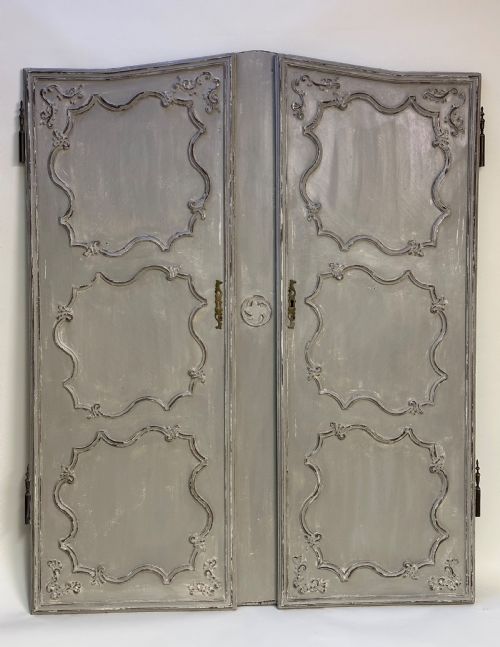

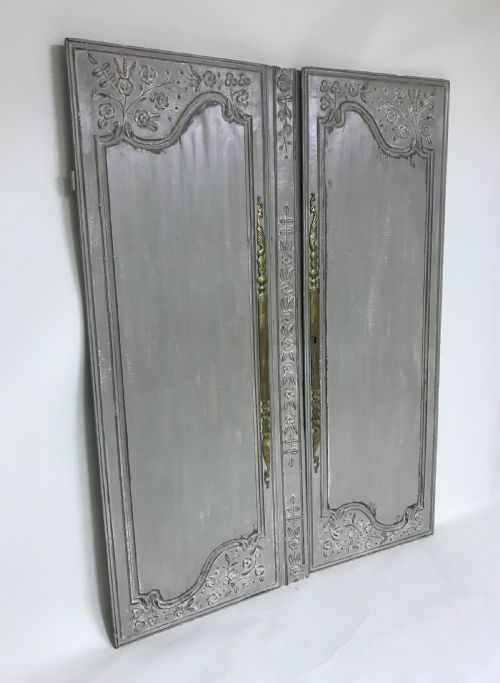


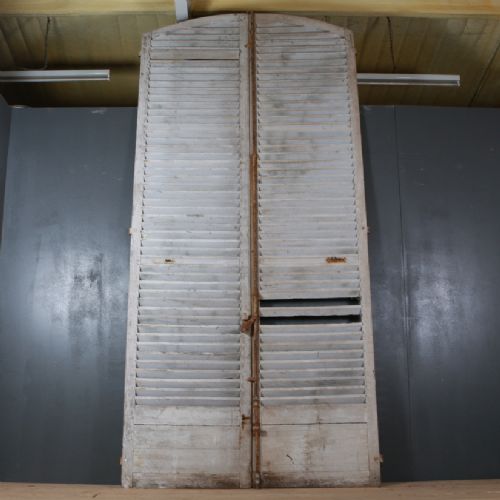
Grey Painted French Doors
Grey painted french doors bring architectural character to an interior, offering practical division between rooms while carrying the patinated finish of earlier periods.
Grey Painted French Doors
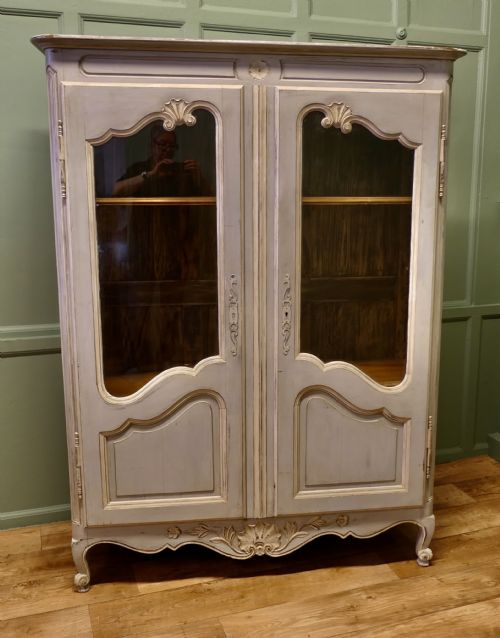
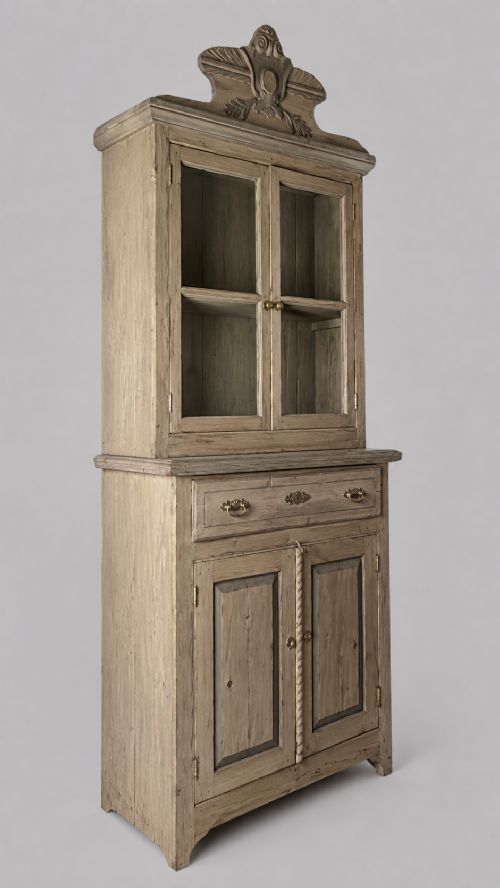
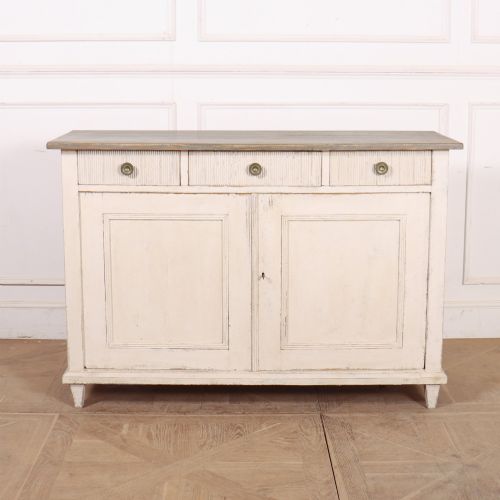
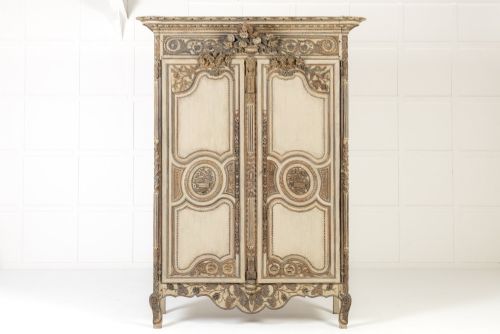
When you search for grey painted french doors, you encounter architectural salvage, standalone doors, and paired openings originating from nineteenth century Europe. The items on this page range from Victorian pine cupboards and armoires to dedicated pairs of wooden doors featuring hand carved details.
The selection includes pieces spanning the eighteenth century through to the early twentieth century, taking in styles such as French Provincial, Rococo, and Empire. Many examples present layers of historic paint in muted grey tones, sometimes highlighted with brass hardware.
Buyers frequently find that architectural elements like pelmets and shutters accompany the main door listings, offering matching woodwork for complete interior schemes. These pieces reflect the domestic and decorative traditions of their respective periods.
Materials and Construction
Makers utilised timber such as pine, oak, walnut, and cherrywood to construct these doors and cupboards, ensuring structural stability for domestic use. Hand carving formed decorative panels, moulding, and pelmets, requiring traditional woodworking joinery.
Surfaces received multiple coats of paint, often developing a genuine weathered texture over decades of exposure. Iron and brass hardware, including handles, hinges, and detailing, completed the construction of these functional architectural elements.
Listings feature items constructed from pine, oak, walnut, and cherrywood, spanning the eighteenth to the twentieth century.
Assessing Quality
Quality rests in the integrity of the timber joinery and the authenticity of the surface finish rather than a uniform standard. Hand carved elements display varying degrees of depth and precision, distinguishing provincial workshop production from finer urban cabinetmaking.
The character of the paint layer matters significantly, with original or early applied grey paint holding greater visual interest than modern repainting. Well preserved structural frames and intact brass or iron fittings further separate superior pieces from simpler utilitarian salvage.
The Grey Painted French Doors Glossary
- Architectural salvage
- Building components rescued from older structures for reuse in interior design. These items retain historic patination and original materials.
- Enfilade
- A suite of rooms formally aligned with doorways in a straight line. The term also describes long sideboards designed for dining rooms.
- Pelmet
- A wooden framework placed above a window or doorway to conceal curtain fixtures. Many feature hand carved ornamentation.
- Vitrine
- A glass fronted cabinet or bookcase designed for displaying precious objects. They often incorporate painted wooden frames and glazed doors.
- Patina
- The surface appearance altered by age, wear, and use over long periods. It indicates the historic nature of the painted wood.
Grey Painted French Doors: Frequently Asked Questions
How do I install vintage doors?
Installation requires careful measurement of the timber frame to accommodate historical tolerances and potential warping from age. Carpenters often need to plane edges or adjust antique iron hinges to ensure proper hanging.
Supporting heavy wooden panels securely demands robust wall framing or sturdy door casings. Professional fitting helps protect fragile paint surfaces during the mounting process.
How do I clean painted wood?
Cleaning requires a soft, dry cloth to remove dust without disturbing the delicate surface layers of historic paint. Moisture should be kept to a minimum to prevent softening the underlying finish.
Harsh chemical detergents strip away aged patination and must be avoided entirely. Gentle dusting preserves the matte character accumulated over centuries.
Can I use these outdoors?
Most antique painted items were created for sheltered interior environments and lack modern weatherproofing treatments. Exposure to rain and fluctuating temperatures causes timber to swell and historic paint to flake rapidly.
Placing them inside protects both the structural integrity of the wood and the decorative surface. Interior placement remains the standard approach for preserving these pieces.
How do I date these pieces?
Dating relies on examining construction techniques, tool marks left by woodworkers, and the type of timber utilised. Hand cut joints and period specific hardware styles offer reliable clues to the decade of origin.
Stylistic influences, such as Empire or Rococo motifs, provide further chronological context. Comparing the paint layers to known historical palettes helps confirm the age of the finish.