



Grey Ocean Wall Art
Grey ocean wall art brings the raw movement and atmosphere of the sea into your interior space.
Grey Ocean Wall Art
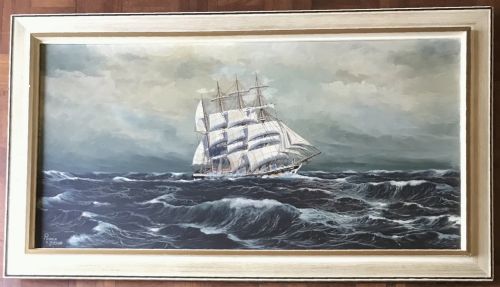
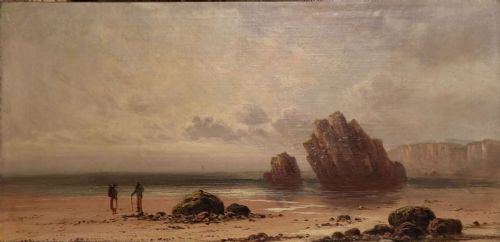
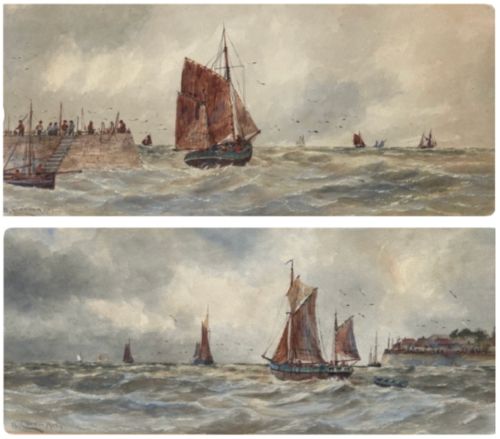
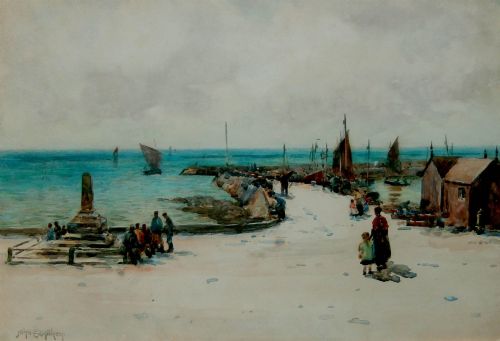
When you search for grey ocean wall art, you encounter historical paintings capturing maritime scenes, coastal landscapes, and stormy seas. These works range from Victorian watercolours to mid-century British compositions, focusing on coastal views, shipping vessels, and rugged shorelines.
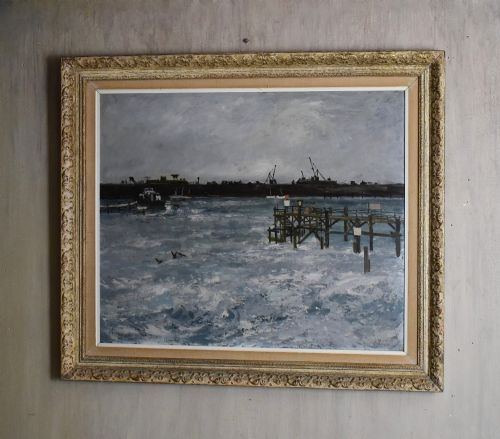
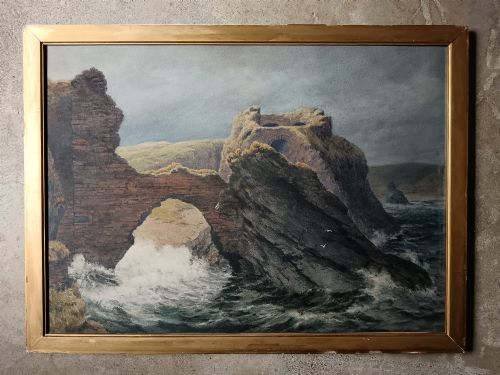
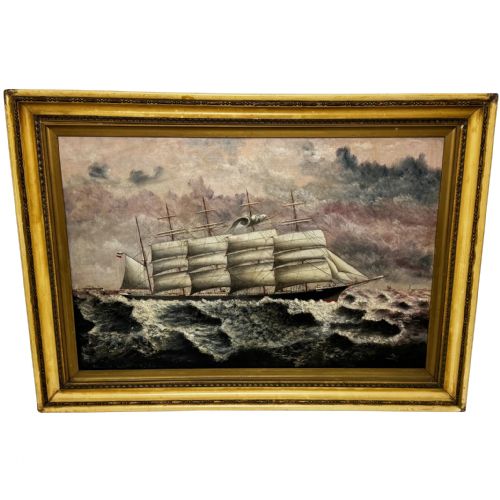
The selections available here lean heavily towards 19th-century maritime pieces, Victorian watercolours, and early 20th-century British oils. You find depictions of rocky beaches, harbour havens, and tall masted ships navigating choppy waters.
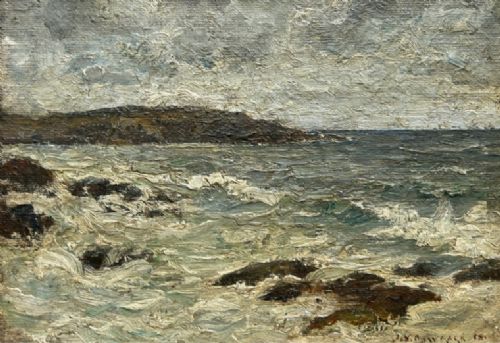
Artists across these periods utilised varied approaches, from detailed realism to impasto techniques and modernist abstraction. The colour palettes naturally centre on muted greys, deep blues, and overcast coastal tones.
Materials and Techniques
The works utilise traditional supports such as paper, canvas, and wood panels. Artists applied watercolours, oil paint, or gouache to capture the texture and shifting light of coastal environments.
Oil paintings often feature impasto application, building up thick layers of pigment to give physical weight to stormy seas and rocky cliffs. Watercolours rely on fluid washes on paper to render atmospheric skies and transparent coastal waters.
Several artists braved stormy British headlands just to capture the exact shade of grey water crashing against Filey Brigg.
Evaluating Quality
Quality rests upon the artist's ability to convey the movement of water and atmospheric conditions with economy and precision. Stronger pieces demonstrate a confident handling of light on breaking waves and accurate perspective in maritime rigging.
The strength of composition and the subtlety of the grey and neutral palette separate accomplished works from standard decorative depictions. Provenance and clear attribution to documented painters also elevate the standing of a piece.
Thomas Bush Hardy·John E. Aitken·Peter Brannan·Charles Sim Mottram·Samuel Owen
The Grey Ocean Wall Art Glossary
- Impasto
- Paint applied thickly to a surface, leaving visible brush or palette knife strokes. This technique adds tactile dimension to turbulent seas and rocky shores.
- Seascape
- A work of art depicting the sea, coast, or marine vessels. These subjects formed a major focus for British artists throughout the nineteenth and early twentieth centuries.
- Gouache
- An opaque water-based paint that dries to a matte finish. It allows artists to combine the fluidity of watercolour with solid passages of colour.
- Provenance
- The documented history of ownership of a work of art. Clear provenance helps verify the authenticity and origin of historical paintings.
Grey Ocean Wall Art: Frequently Asked Questions
What periods do these paintings date from?
The selection spans from the Victorian era and the nineteenth century through to the mid-twentieth century. You encounter works created across several decades of British art.
Each period brings distinct stylistic approaches, moving from detailed Victorian maritime realism towards modernist abstraction by the nineteen-sixties.
How should I frame a vintage oil painting?
Historical oil paintings on canvas or wood usually require traditional wooden frames that complement their period and subject matter. Proper framing protects the edges and maintains structural stability.
Ensure the glazing, if used, is appropriate for the medium, noting that oil paintings on canvas generally stay unglazed to allow the surface to breathe.
Are these works original paintings?
The inventory consists of original hand-painted works executed in oil, watercolour, or gouache by period artists. Each piece represents a unique historical creation rather than a modern reproduction.
Signatures, attributions, and exhibition labels often help trace the specific origin of individual coastal scenes and maritime views.
How do I care for antique watercolours?
Watercolour paintings on paper require careful placement away from direct sunlight to prevent the pigments and paper stock from fading. UV-protective glass during framing helps preserve the delicate washes.
Keep the works in stable humidity conditions to avoid paper distortion and deterioration of the original support over time.