





Grey Nautical Wall Art
Grey nautical wall art brings maritime history into your home through antique paintings and watercolours depicting ships, coasts and harbours.
Grey Nautical Wall Art
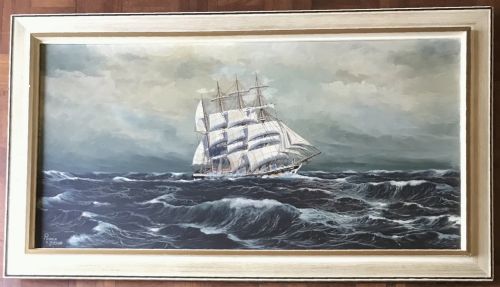
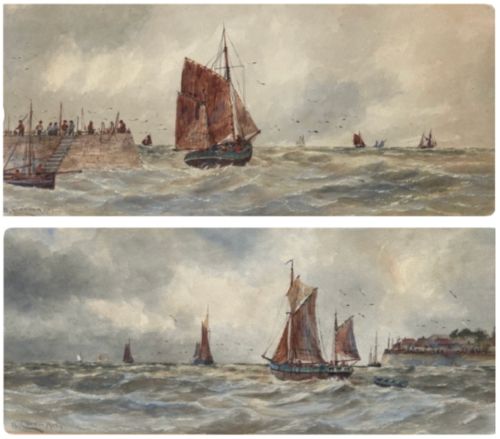
When you search for grey nautical wall art, you are looking at original paintings and watercolours capturing maritime scenes, coastal landscapes and historic vessels. The pieces on this page span the Victorian era through the mid twentieth century, featuring British and European harbours, rivers and seascapes.
You will most frequently meet watercolours and oil paintings on canvas or board, created between nineteen-ten and nineteen-sixty. These works range from detailed depictions of battleships and fishing boats to moody coastal views rendered in muted, atmospheric tones.
How They Were Made
Artists utilised watercolour pigment on paper and oil paint applied to canvas or wood panels, often framing the finished works behind glass. The handling of these materials creates the characteristic atmospheric light and subdued maritime palette.
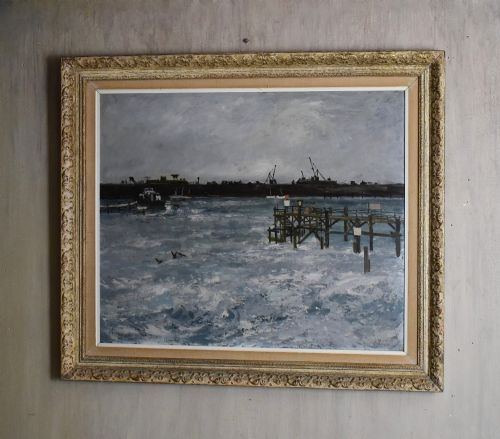
Techniques varied from delicate pencil sketches and fluid watercolour washes to heavy impasto oil paintings, depending on whether the artist sought to capture a calm harbour or a stormy sea.
Periods represented span from the nineteenth century through the nineteen-twenties, nineteen-forties and nineteen-fifties.
What Varies in Quality
Quality rests upon the artist's command of light, water and atmospheric perspective, distinguishing a masterly marine composition from a routine harbour sketch. The confidence of the brushwork and the accuracy of the rigging or vessel architecture also define the standing of a piece.
Preservation of the paper or canvas matters greatly, as does the harmony of the framing. Works that retain their original pigment intensity without excessive fading or damp damage sit at the higher end of the scale.
Kenneth Cozens·William Cannon·John E Aitken·Peter Brannan·Paul Bret·Eric Tufnell·Thomas Bush Hardy·Robert Leslie Howey·Edward Henry Eugene Fletcher·William Greaves·Charles Sim Mottram·Owen Bowen·Samuel Owen·Ernest F Hill·Don Wilson·George Gregory·Paul Jean Clays·Fred Mayor·John Davison Liddell·Joseph Newington Carter·William Boyce·Frederick William Booty
The Grey Nautical Wall Art Glossary
- Watercolour
- A paint consisting of colour suspended in a water-soluble vehicle, traditionally applied to paper to achieve translucent washes.
- Impasto
- The process of laying paint thickly on a canvas or board, so that the brush or palette knife marks stand out visibly.
- Seascape
- A type of fine art painting that depicts the sea, coastal views, ships or marine engagements.
- Provenance
- The chronology of the ownership, custody or location of a historical artwork, establishing its authenticity.
- Board
- A rigid flat material, such as wood or millboard, used as a sturdy support for oil paintings.
Grey Nautical Wall Art: Frequently Asked Questions
What periods do these pieces come from?
The works on this page originate from the Victorian period, Edwardian era, and the mid twentieth century up to nineteen-sixty. They reflect the artistic styles of their respective decades.
You will find everything from nineteenth century maritime watercolours to modern twentieth century abstract coastal paintings.
How should I hang these paintings?
Watercolours require protection from direct sunlight to prevent the pigments from fading over time. Ensure they are hung on interior walls away from excessive moisture.
Oil paintings on canvas are more resilient but still benefit from stable room temperatures and secure wall fixings.
Are these works signed by the artists?
Many of the listed paintings and watercolours feature artist signatures, monograms, or contemporary inscriptions on the front or verso. Signed works often include biographical details from the period.
Attributions are also noted where stylistic evidence links a piece to a specific hand or school.
What subjects are depicted in these artworks?
The subjects range from historic battleships and commercial sailing barges to quiet fishing ports and rugged cliffs. Common scenes include harbour views, stormy seas, and estuary landscapes.
Locations span British coastal towns as well as European harbours in France, Italy, and Portugal.