



Grey Maritime Oil Painting
Grey maritime oil painting works capture the shifting moods of coastal waters through muted palettes, bringing historic shipping scenes and turbulent seas into focus.
Grey Maritime Oil Painting
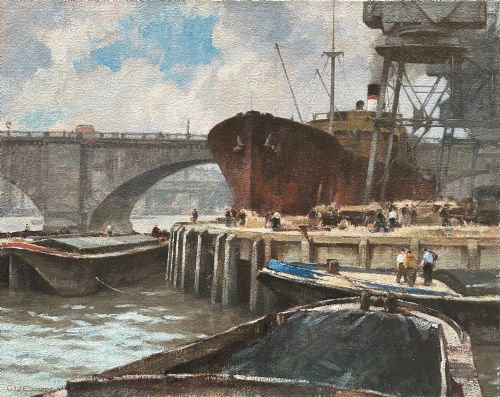
A grey maritime oil painting centres on marine subjects such as coastal waters, harbour basins, and sailing vessels rendered in subdued, overcast tones. These works frequently date from the Victorian era through the mid-20th century, capturing commercial shipping and quiet coastal ports.
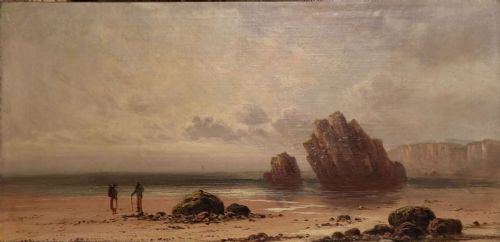
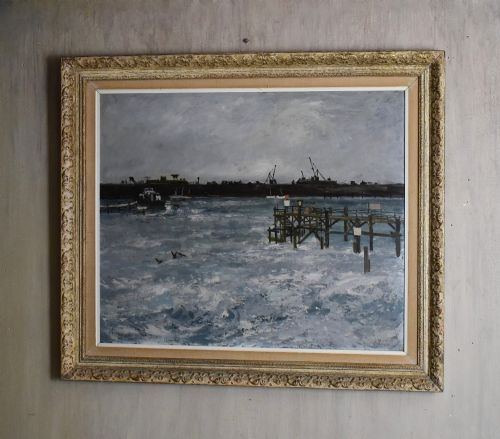
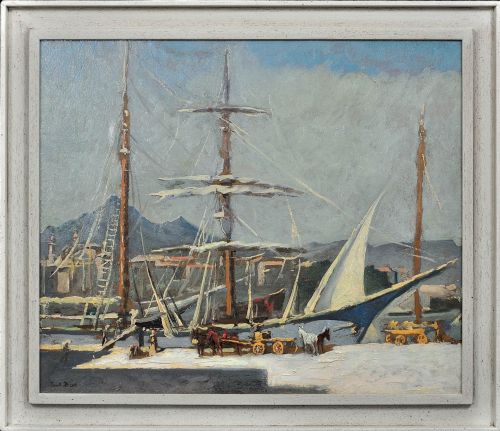
The pieces on this page range from early 19th-century coastal scenes with dramatic sea stacks to mid-century French and British harbour views. Buyers typically encounter depictions of barges, pilot boats, and fishing ports executed in oil on canvas or board.
Stylistically, these works span British Impressionism, Victorian marine art, and 20th-century realism. The emphasis remains firmly on atmospheric weather, choppy grey seas, and industrial estuaries rather than bright tropical palettes.
Factors of distinction
Quality rests on the artist's ability to handle atmospheric light and atmospheric perspective using a restrained grey palette, distinguishing confident brushwork from rigid or flat execution. The coherence of the composition, particularly in complex harbour scenes involving shipping and figures, separates standard topographical records from accomplished artistic interpretations.
The integration of material condition matters, where original canvas tension, stable paint layers, and period framing preserve the visual integrity of the seascape without disruptive overpaint.
Grey Maritime Oil Painting Retail Price Guide 2026
Typical asking prices for grey maritime oil painting among the pieces listed under this phrase on Sellingantiques today, from the lower quarter to the upper quarter. They describe what is for sale here now, not the wider market.
Several canvases manage to smell faintly of linseed oil and imaginary salt spray decades after leaving the easel.
Kenneth Cozens·Peter Brannan·Paul Bret·Raymond Picque·Fred Pailhes·Edward Henry Eugene Fletcher·William Greaves·Charles Sim Mottram·Owen Bowen·George Gregory·John Callow·Herbert Royle·Paul Jean Clays·John Davison Liddell·John Sanderson Wells·Frank Myers Boggs·Fred Dade·Bertram Priestman
The Grey Maritime Oil Painting Glossary
- Impasto
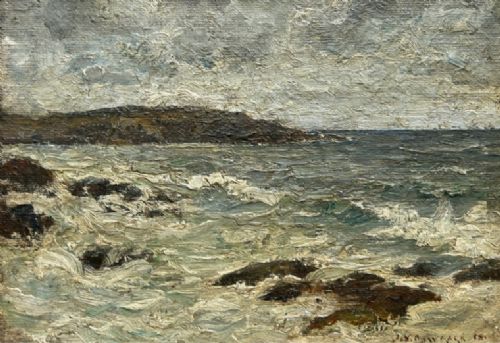
- Paint applied thickly to a canvas or board, standing out in relief from the surface. This technique allows artists to render the physical churn of sea foam and choppy water.
- Gilt
- A thin layer of gold leaf applied to wood to create decorative frames. Period frames often feature detailed moulding that suits traditional marine artworks.
- Marine art
- Painting or visual representation celebrating the sea, ships, and coastal views. This genre encompasses historical naval engagements, commercial shipping, and quiet fishing harbours.
- Board
- A rigid wooden or manufactured panel used as a painting support instead of woven fabric. Many 20th-century artists favoured this firm surface for plein air studies.
Grey Maritime Oil Painting: Frequently Asked Questions
What subjects appear in these paintings?
The works depict coastal views, busy harbour ports, and open sea lanes featuring sailing ships, commercial barges, and fishing boats. Scenes range from quiet estuaries to stormy coastal waters under overcast skies.
Industrial riverscapes and historical maritime locations across Britain and Europe also feature prominently in the selection.
How do I date a maritime oil painting?
Dating relies on stylistic clues, clothing styles of any figures present, and the types of vessels shown, such as steamships versus traditional sailing barges. Canvas stamps, stretcher construction, and framer labels provide additional chronological markers.
Pictorial evidence is often supported by the artist's recorded active dates or signatures inscribed on the front or verso.
Are these paintings executed on canvas or board?
Artists used both stretched canvas and rigid wooden board as supports for their oil pigments. Canvas was standard for larger exhibition works, while board was frequently utilised for smaller plein air studies.
Both supports carry distinct textures that influence how the oil paint ages and holds its surface tension.
How should I display a marine oil painting?
Hang the artwork away from direct sunlight and fluctuating heat sources to protect the oil paint and wooden support. Pairing the piece with a supportive period frame preserves its historical context.
Ensure the wall fixings are secure, as framed oil paintings on canvas or board carry significant weight.