
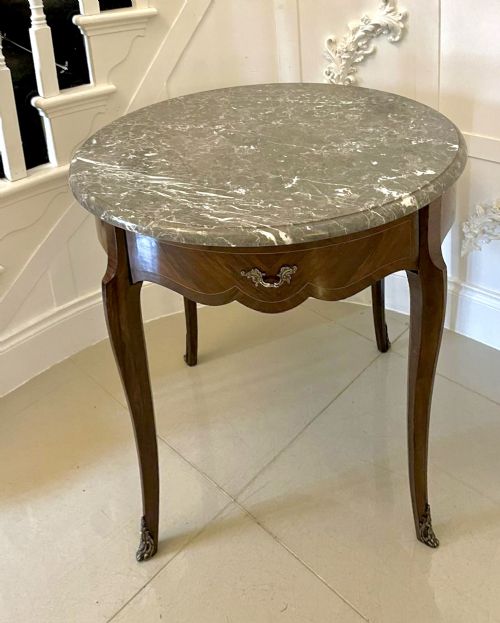
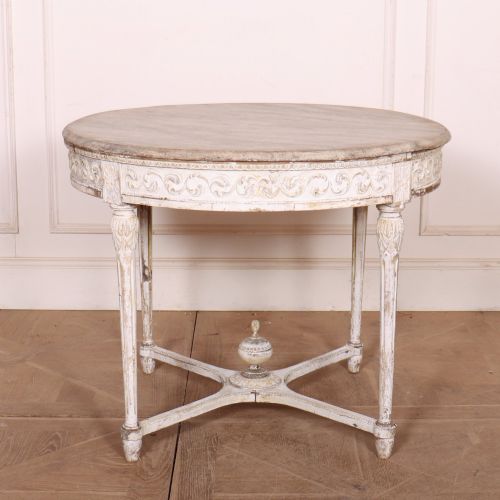
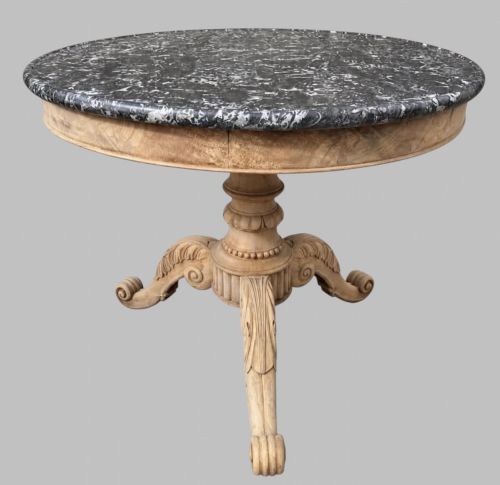
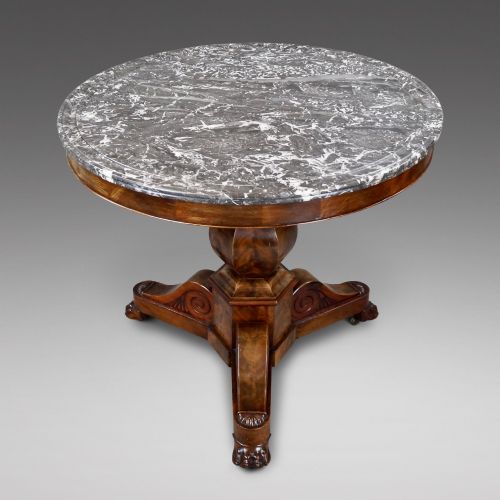
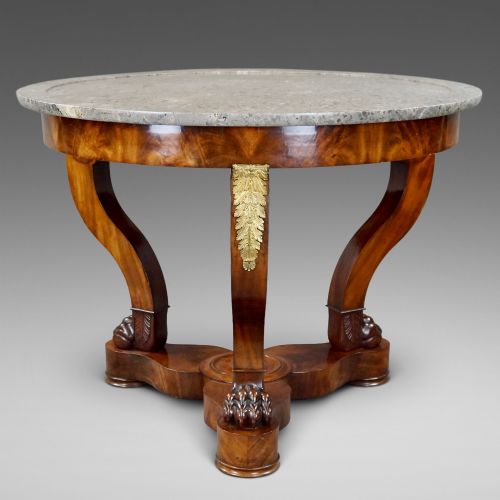


Grey Marble Centre Table
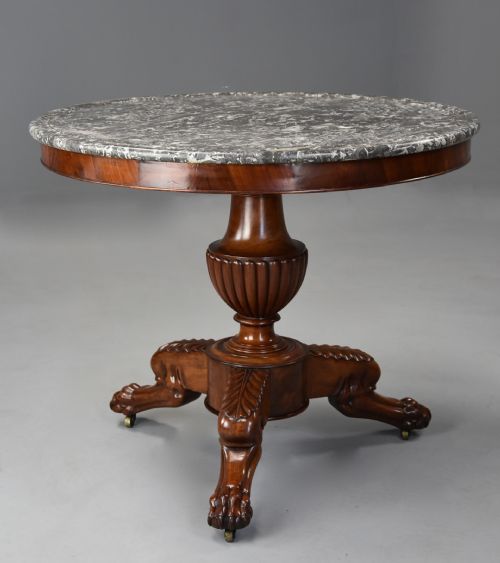
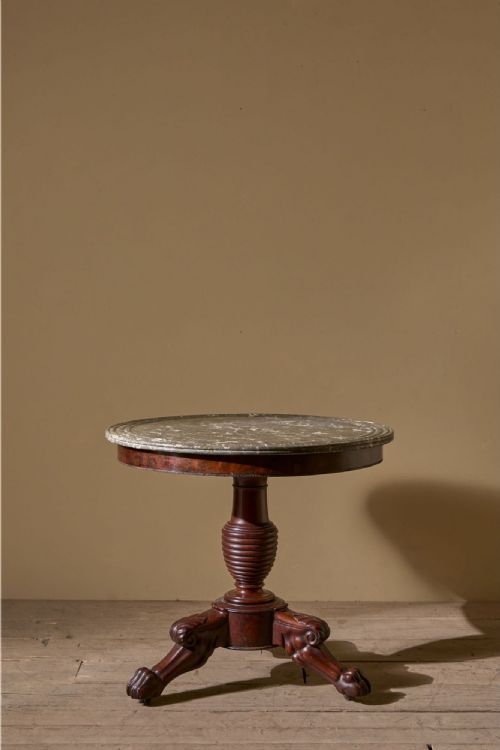
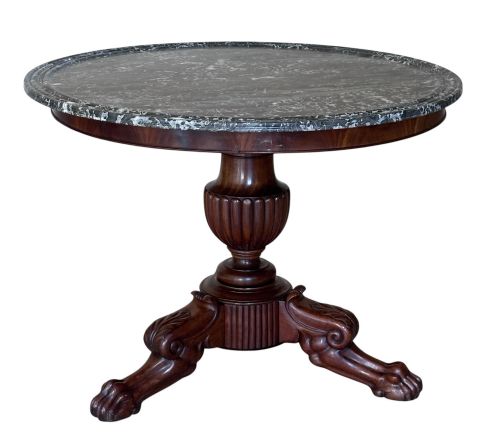
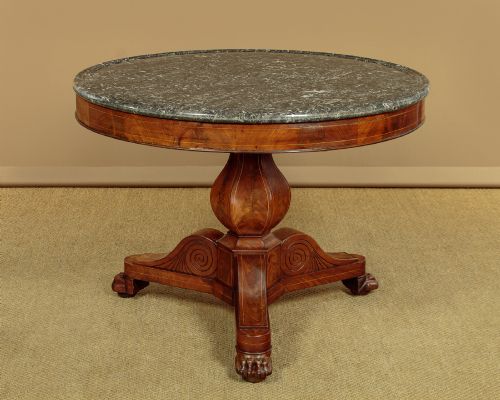
These grey marble centre table pieces combine mahogany and marble to anchor a room with substance and French Empire style.
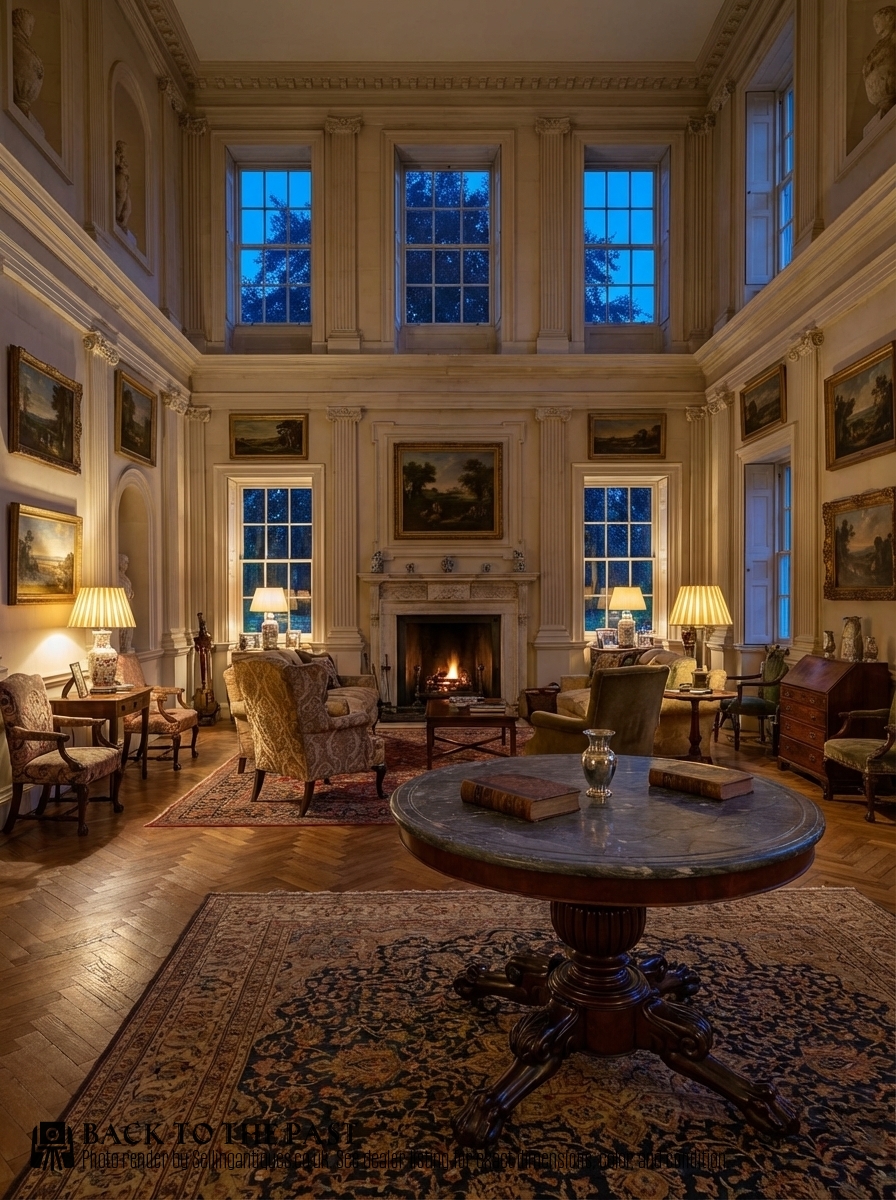
What a grey marble centre table is
A grey marble centre table stands as a striking focal point in a room, traditionally designed for the middle of a grand interior space. These pieces function as occasional tables or pedestal tables, providing a solid surface framed by classical proportions.
Most examples you encounter on this page date from the nineteenth century, reflecting French design sensibilities from the Charles X period and French Empire style. The form typically centres on a circular top supported by a substantial pedestal base.
Makers designed these items using mahogany alongside distinctive stone surfaces, creating heavy and stable furniture. The presence of a grey marble top defines the visual weight of each piece, distinguishing them from standard occasional tables.
How they were made
Cabinetmakers constructed the structural carcasses primarily from mahogany, utilising the dense timber to build sturdy pedestals and aprons that could support heavy stone tops. Joinery techniques from the nineteenth century ensured these large pedestals remained rigid under daily use.
The defining feature involves the insertion of a heavy marble slab, frequently veined in grey, fitted precisely into the wooden framework. Artisans occasionally integrated brass or gilt bronze mounts to accent the mahogany and stone components.
Retail Price Guide 2026
Typical UK retail prices for grey marble centre table, calculated from the Sellingantiques database of over a million retail prices indexed since 2003. This retail price guide relies exclusively on Sellingantiques data; no external sources or auction records are used, so the figures do not describe the wider market.
Listings feature nineteenth century pieces utilising mahogany, grey marble, brass, and gilt bronze within French Empire and Charles X styles.
What varies in quality
Quality rests upon the selection of materials, specifically the depth of the mahogany grain and the character of the veined marble top. Superior examples display carefully matched stone surfaces and rich timber patination developed over generations.
The architectural presence of the pedestal and the precision of the French Empire or Charles X styling separate standard items from finer works. Heavier proportions and refined bronze or brass detailing indicate a higher level of nineteenth century craftsmanship.
The Grey Marble Centre Table Glossary
- Gueridon
- A small French table, often round and supported by a single central pillar or pedestal. This form accommodates the heavy marble tops seen in nineteenth century examples.
- Centre table
- A freestanding piece designed to be viewed from all sides rather than pushed against a wall. These items occupy the middle of a room.
- French Empire
- A neoclassical design style spanning the late eighteenth and early nineteenth centuries. It relies on architectural symmetry and classical motifs.
- Charles X period
- A French stylistic era bridging the early to mid nineteenth century. Furniture from this time often showcases clean mahogany surfaces and subtle classical restraint.
- Pedestal table
- A table supported by a single central column rather than four corner legs. This construction allows for unhindered seating placement around the perimeter.
Frequently Asked Questions
What is a gueridon table?
A gueridon is a traditional French round table supported by a single central pedestal. These pieces were designed to stand in the middle of a room as a decorative and functional surface.
Nineteenth century versions frequently feature heavy stone tops paired with mahogany woodwork, aligning with French Empire and Charles X aesthetics.
Where do these tables go?
These pieces function best as freestanding objects placed in the middle of a spacious room. Their design allows them to be viewed from every angle.
They serve effectively as large occasional tables in reception rooms or entrance halls where a strong visual anchor is required.
How do I date a table?
Dating relies on identifying stylistic markers from the nineteenth century, such as French Empire or Charles X proportions. The combination of mahogany timber and specific stone types points directly to this era.
Construction methods and the specific treatment of the pedestal base provide further clues to the manufacturing period around eighteen fifty.
What materials are used?
The structural elements consist primarily of mahogany, chosen for its strength and rich grain. Gilt bronze and brass appear as decorative mounts on select pieces.
The defining surface material is marble, specifically featuring grey veining, which provides a heavy and durable top for the central pillar.