


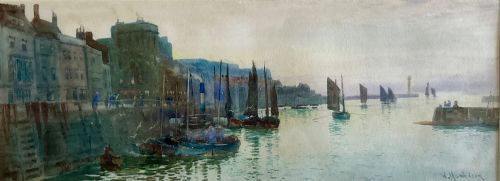
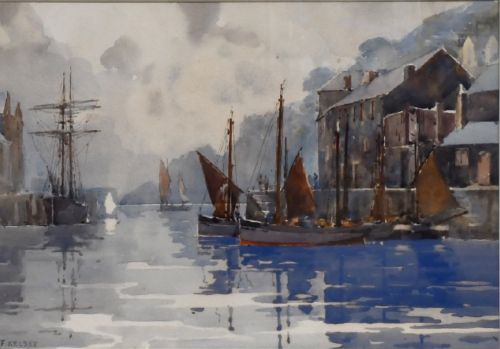
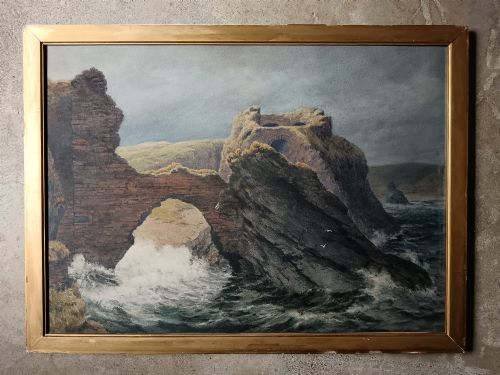


Grey Coastal Watercolour
A grey coastal watercolour captures the atmospheric shores, harbours and fishing fleets of Britain and beyond through fluid pigment on paper.
Grey Coastal Watercolour
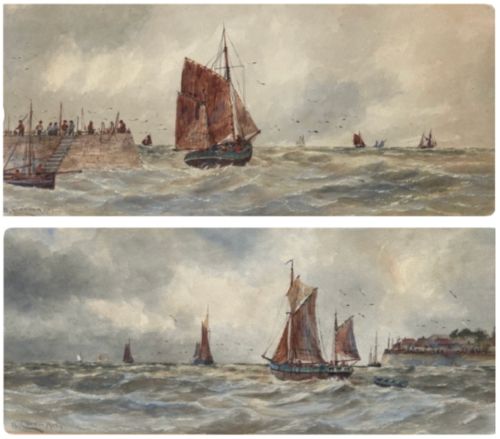
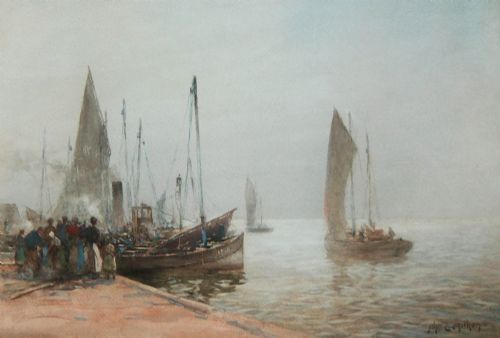
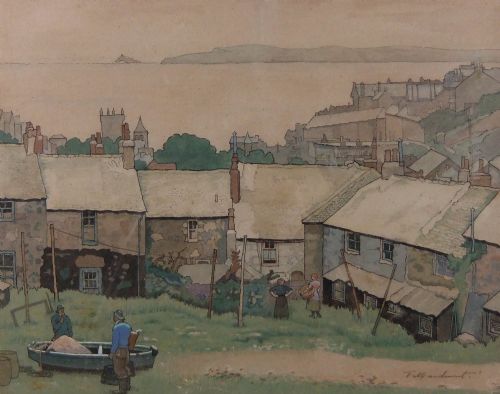
A grey coastal watercolour presents maritime scenes, fishing boats, and shorelines rendered in subdued tones across the Victorian period, the Edwardian era, and the mid twentieth century. These works frequently depict specific coastal locations, harbours, and seaside towns across Britain, from Yorkshire and Cornwall to Scotland.
The selections available here range from late nineteenth century Victorian pieces to mid twentieth century examples, executed in watercolour paint on paper and housed behind glass within wooden frames. Buyers seeking these watercolours often find works reflecting British Impressionism, Victorian marine art, and modern British painting traditions.
How they were made
Artists executed these works using watercolour pigment and ink applied directly onto paper supports, often building up coastal atmospheres through washes of grey and muted colour. Many pieces combine transparent watercolour techniques with touches of opaque pigment to render sea spray, clouds, and rigging.
Finished works were typically mounted and framed behind glass within wooden mouldings designed to protect the delicate paper surface from moisture and atmospheric dust.
Several artists clearly braved harsh North Sea gales, returning with damp paper and wind-swept depictions of Yorkshire harbours.
What varies in quality
Quality in a grey coastal watercolour rests upon the artist's handling of light, atmosphere, and maritime architecture, separating works of confident brushwork from rigid or formulaic depictions. The luminosity of the pigment and the subtlety of the grey tones define the visual depth of the composition.
The fidelity of the framing and the preservation of the paper support also contribute to the standing of an individual piece, as watercolours exposed to excessive light suffer fading of their delicate pigments.
Thomas Bush Hardy·Edward Seago·William Collins·James E. Aitken
The Grey Coastal Watercolour Glossary
- Watercolour
- A painting method in which the paints are made of pigments suspended in a water-based solution. The paper support remains partially visible to let light reflect back through the transparent washes.
- Seascape
- A work of art depicting the sea, coastal views, ships, or marine activities. These compositions focus heavily on maritime weather and tidal conditions.
- Gouache
- An opaque method of watercolour painting often utilised to add highlights and solid areas of colour to a paper support. It creates dense, flat passages that contrast with transparent washes.
- Provenance
- The chronology of the ownership or location history of a historical painting. Documented backgrounds help establish authenticity and attribution.
Grey Coastal Watercolour: Frequently Asked Questions
What subjects appear in these watercolours?
These works focus primarily on maritime environments, featuring fishing vessels, harbours, coastal architecture, and stormy seas. Common motifs include piers, sailing barges, and cliffside villages recorded by nineteenth and twentieth century artists.
Many paintings document specific British and European coastal communities, capturing the daily routines of fisherfolk and coastal trade against changing weather conditions.
How should I display a watercolour?
Watercolours require careful placement away from direct sunlight to prevent the pigments from fading over time. Framing behind glass protects the paper surface from environmental dust and atmospheric moisture.
Maintaining stable indoor humidity levels ensures that both the paper support and the wooden frame remain well preserved for years to come.
How do I identify the period?
Dating typically relies on stylistic indicators, artist signatures, framing materials, and accompanying documentation or labels on the reverse. Victorian pieces often exhibit heavier gilding and ornamentation on the frames compared to later twentieth century examples.
Subject matter and clothing styles of any figures depicted within the coastal landscape also offer clear clues to the decade of creation.
Are these works original paintings?
The inventory consists entirely of original hand-painted watercolours executed directly onto paper by individual artists rather than mechanical reproductions. Each piece bears the unique brushstrokes and pigment variations of its creator.
Monograms, signatures, or historical inscriptions frequently appear on the face or reverse of the paper to confirm authorship.