

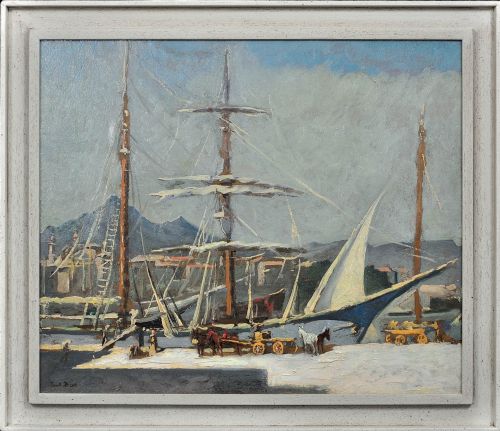
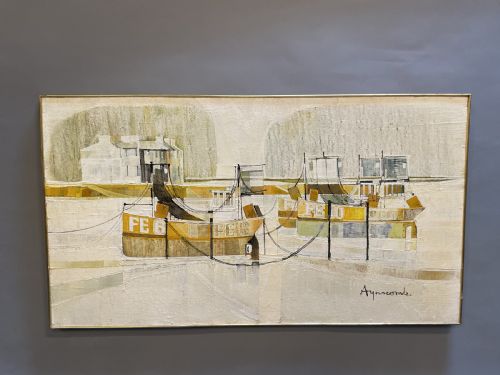


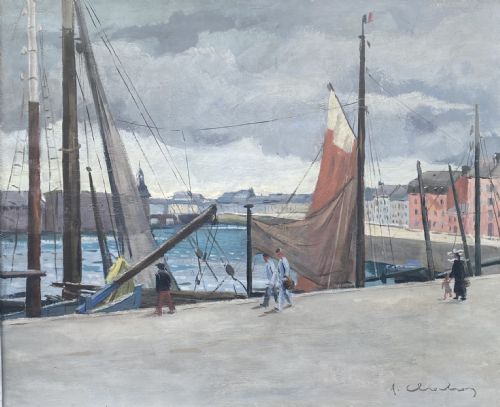

Grey Boat Oil Painting
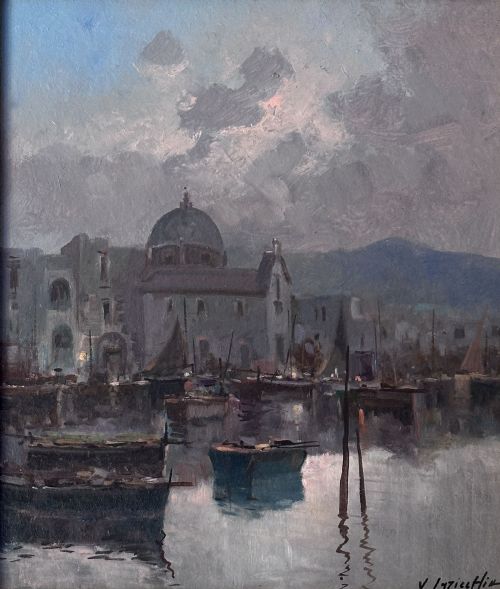
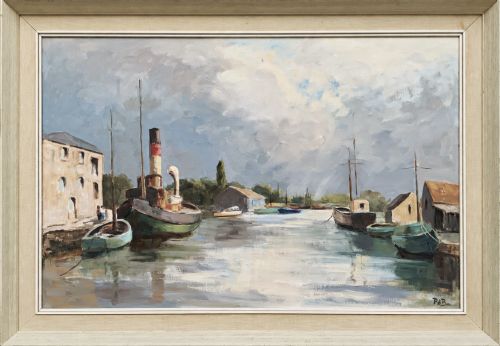
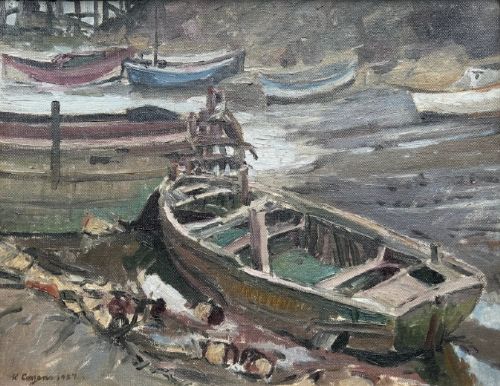
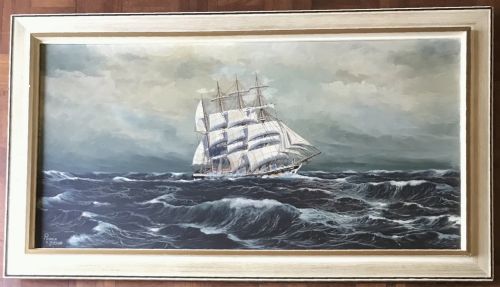
A grey boat oil painting captures coastal and river scenes through the varied lens of marine art, offering muted palettes and historic watercraft.
Grey Boat Oil Painting
A grey boat oil painting brings together marine landscapes, harbour scenes, and river views created across the nineteenth and twentieth centuries. These works range from early nineteenth-century coastal depictions to mid-century modern interpretations of barges and pilot boats.
Buyers encounter subjects spanning British rivers, French canals, Mediterranean ports, and industrial estuaries. The depictions focus on vessels at work, moored on shores, or navigating rivers under changing skies.
The aesthetic leans toward Impressionism, Post-War British art, and twentieth-century realism. Many compositions utilise canvas or board supports, often retained within period wood and gilt frames.
Distinctions in quality
Quality rests in the handling of light and atmosphere across the water, distinguishing skilled marine observation from generic harbour sketches. Stronger works demonstrate confident brushwork that captures the motion of waves and the heavy build of working barges.
Provenance and attribution elevate certain pieces, particularly those linked to documented artists or exhibited through established galleries. The integrity of the original surface and the harmony of the framing also influence the standing of each painting.
Grey Boat Oil Painting Retail Price Guide 2026
Typical asking prices for grey boat oil painting among the pieces listed under this phrase on Sellingantiques today, from the lower quarter to the upper quarter. They describe what is for sale here now, not the wider market.
Listings feature works executed in oil paint upon canvas and board, originating from periods between 1800 and the 1960s.
Kenneth Cozens·Paul Bret·Raymond Picque·Edward Henry Eugene Fletcher·John Callow·Herbert Royle·John Davison Liddell·Frank Myers Boggs·E Elliot·Fred Dade·Bertram Priestman·John W Gilroy·Henri Cadiou
The Grey Boat Oil Painting Glossary
- Impasto
- Paint applied thickly to a canvas or board, leaving visible brush or palette knife marks that stand out from the surface. This technique adds tactile depth to depictions of water and skies.
- Provenance
- The documented history of ownership of an artwork, tracing its path from the creator or original gallery to current holdings. Clear records help confirm the authenticity of nineteenth and twentieth-century paintings.
- Marine art
- Artistic representation of ships, shipping, boats, and coastal views. This genre includes harbour scenes, open sea views, and river traffic.
- Board
- A rigid flat panel used as a painting support instead of stretched canvas. Artists frequently utilised wooden boards or millboard for outdoor oil sketches.
Grey Boat Oil Painting: Frequently Asked Questions
What periods do these paintings cover?
The works span from the early nineteenth century through to the mid-twentieth century, encompassing Victorian marine art, Edwardian coastal scenes, and post-war interpretations.
Dates align with broader movements including British Impressionism, Post-Impressionism, and mid-century modernism.
What subjects appear in these scenes?
Compositions feature working vessels such as barges, pilot boats, and shipping freighters set in rivers, estuaries, and international harbours.
Locations range from British ports like North Shields and Sunderland to French canals, the Seine, and Mediterranean coasts.
Are these works framed?
Many examples retain their period wood or gilt frames, which correspond to the era in which the painting was produced.
Framing styles vary from simple wooden mouldings to ornate gilt designs that suit the maritime aesthetic.
How do support materials differ?
Painters utilised both stretched canvas and rigid boards as supports for their oil pigments.
Canvas allows for traditional tension and weave texture, whereas board provides a solid ground frequently used for swift plein air studies.