

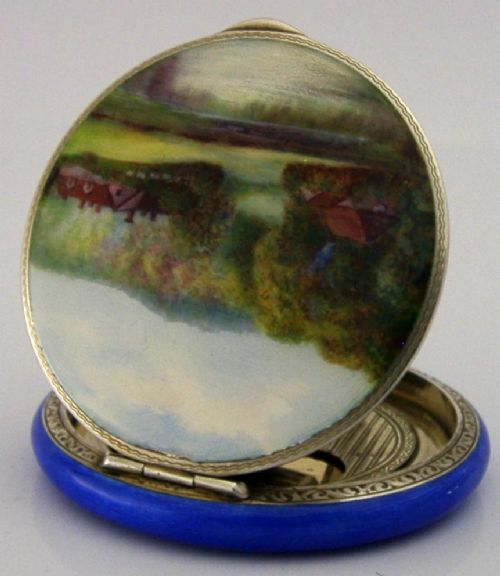


Art Deco Landscape
Art deco landscape pieces capture the spirit of the interwar years through stylised scenery on canvas, metal, and ceramic.
Art Deco Landscape
When you search for art deco landscape, you encounter a selection of works spanning paintings on canvas and paper, alongside decorative objects and furnishings from the early twentieth century. These items depict natural scenery, coastal views, and rural vistas through the geometric simplification and distinct palette characteristic of the period.
You are most likely to meet French and English oils on canvas or board, alongside watercolours, silver photo frames, enamel compacts, and ceramics carrying characteristic motifs. The selection ranges from Staffordshire countryside watercolours to Mediterranean coastal scenes and prints of woodland bathers.
The objects cross several categories, uniting functional items like powder compacts and tableware with fine art paintings and wall mirrors. Each piece reflects the stylistic preferences of the nineteen-twenties and nineteen-thirties, applying period design principles to traditional outdoor subjects.
Materials and methods
Painters of the period utilised oil paint on canvas, wood panel, board, and paper, capturing countryside and coastal views with distinct brushwork. Watercolours and collotype prints offer alternative mediums on paper, recording figures and woodland settings.
Craftsmen applied vitreous enamel onto sterling silver bases for compacts and photo frames, producing smooth surfaces with vibrant coloured details. Earthenware ceramics received glazes and hand-painted decoration, as seen on plates bearing specific factory patterns.
Art Deco Landscape Retail Price Guide 2026
Typical asking prices for art deco landscape among the pieces listed under this phrase on Sellingantiques today, from the lower quarter to the upper quarter. They describe what is for sale here now, not the wider market.
Listings feature works spanning the nineteen-tens through the nineteen-thirties, executed in oil, watercolour, enamel, and glaze.
Distinguishing finer examples
The strength of the composition and the handling of paint distinguish the most accomplished canvases from standard decorative works. Stronger pieces demonstrate confident draughtsmanship, subtle colour relationships, and a coherent application of period aesthetic principles.
In metalwork and ceramics, the crispness of the enamel application, the precision of the silver hallmarks, and the clarity of the glazed patterns elevate the standing of an object. Superior items retain their original framing and surface condition without extensive restoration.
Raymond Moritz·Samuel Timmins·Clarice Cliff·Royal Doulton·Margaret Fisher Prout·Roméo Charles Aglietti
The Art Deco Landscape Glossary
- Collotype
- A planographic printing process using gelatin, capable of producing highly detailed monochrome or colour reproductions of artworks. It yields a continuous tone without a standard printing dot pattern.
- Earthenware
- A porous pottery type fired at lower temperatures, requiring an impermeable glaze to hold liquids. It forms the body of many decorated decorative plates and tableware items.
- Overmantel mirror
- A large looking glass designed to hang specifically above a fireplace mantelpiece. These pieces often feature horizontal proportions typical of the period.
- Sterling silver
- An alloy consisting of ninety-two point five percent silver and seven point five percent other metals, typically copper. It provides the durable structural base for decorative frames and compacts.
- Watercolour
- A painting method where water-soluble pigments are suspended in a water-based solution on paper. It creates translucent washes of colour suited for rapid outdoor sketching.
Art Deco Landscape: Frequently Asked Questions
What defines an art deco landscape?
Art deco landscapes combine natural scenery with the streamlined geometry, stylised forms, and simplified compositions characteristic of the interwar period. The trees, hills, and buildings are rendered with a deliberate emphasis on pattern and rhythmic design rather than strict realism.
These works reflect the modern aesthetic of the nineteen-twenties and nineteen-thirties, applying contemporary artistic theory to traditional outdoor subjects across paintings, prints, and decorative objects.
How were these paintings displayed originally?
Paintings from this era were typically framed in timber mouldings, sometimes featuring gilt finishes or simple clean lines designed to complement contemporary interior architecture. Overmantel mirrors and wall art hung prominently in domestic reception rooms.
The frames themselves often form an integral part of the piece, sharing the geometric sensibility and restrained ornamentation favoured by designers of the period.
Are these items purely decorative?
Many pieces serve a practical function alongside their artistic merit, including sterling silver photo frames, enameled powder compacts, ceramic sandwich plates, and woven carpets. These functional objects carried the same artistic motifs into daily domestic use.
Other items, such as oil paintings, watercolours, and collotype prints, were created solely as wall art to enrich the visual atmosphere of a room.
How do I care for antique painted surfaces?
Protect paintings and works on paper from direct sunlight and stable atmospheric humidity to prevent canvas slackening and pigment degradation. Dust wooden and gilt frames gently with a dry, soft cloth without applying liquid cleaners.
Silver and enamel items benefit from occasional careful cleaning with appropriate non-abrasive cloths to maintain the metal lustre without disturbing the fragile enamel work.