
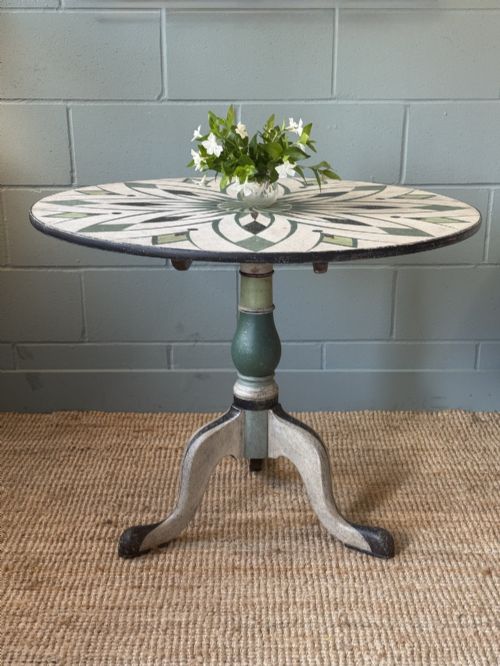


Grey Accent Tables
Grey accent tables bring useful surface space and subtle neutral tone to a room, drawing on periods from the eighteenth century to the early twentieth.
Grey Accent Tables
Grey accent tables encompass side tables, lamp tables, occasional tables, and console tables designed for placement around living spaces and bedrooms. These surfaces appear in diverse regional idioms, including French provincial and chateau styles, Swedish country pieces, and English country designs.
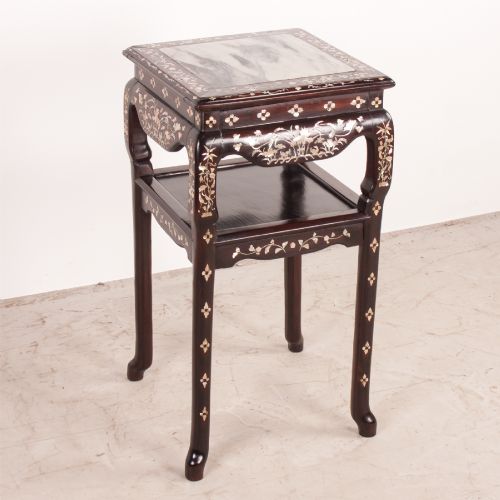
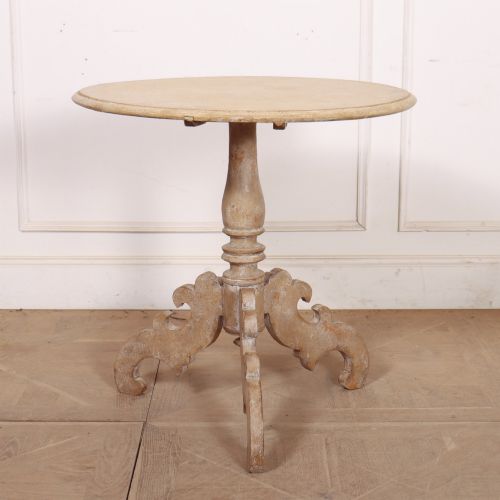
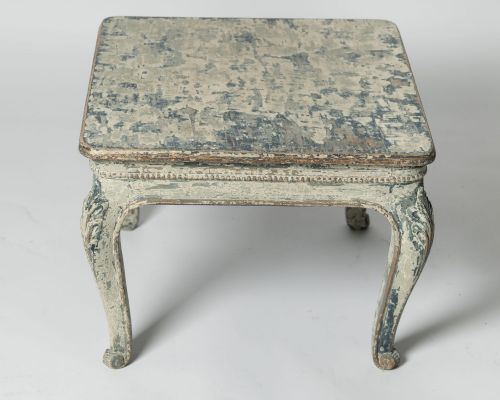
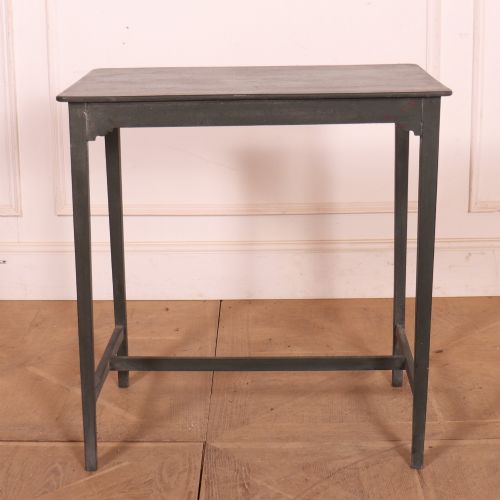
The most common examples on this page are painted timber pieces dating from the nineteenth century, often finished in soft greys or limed shades. Alongside these timber tables, you will encounter marble-topped guéridons and occasional tables incorporating brass or mother of pearl inlay.
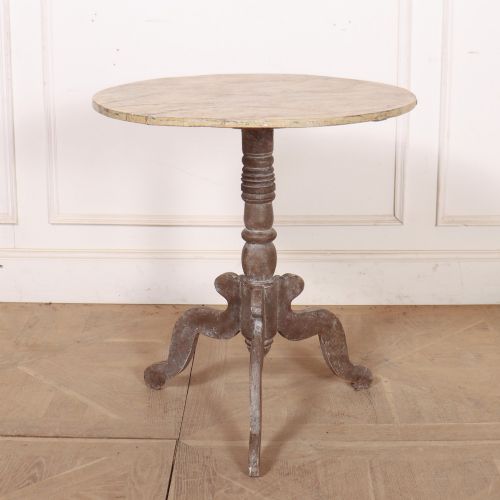
Construction dates span from the eighteenth century through the Victorian era and into the early twentieth century, reflecting varied European cabinet-making traditions. Forms range from simple tripod cricket tables to elaborate Empire and Regency pedestal tables.
Materials and construction methods
Makers utilised native and imported hardwoods alongside softer timbers like pine and softwood as substrates for painted finishes. Mahogany and walnut appear in natural polished states or beneath decorative paint schemes, while oak serves both structural and surface roles.
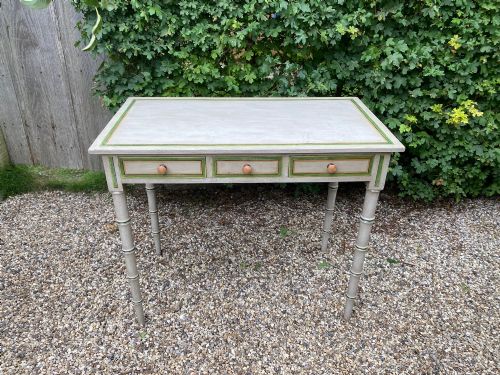
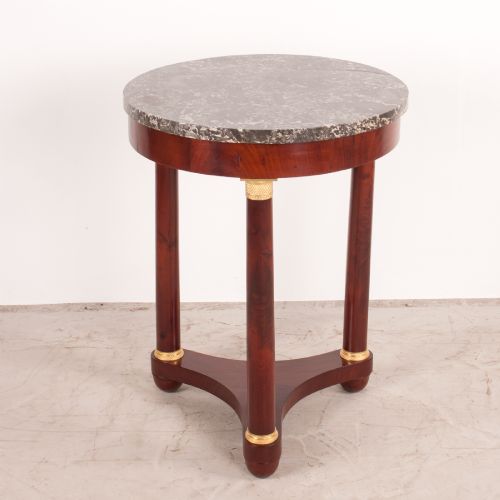
Marble tops provide durable, cool surfaces on many French and continental guéridons, frequently paired with gilt-bronze mounts or carved wooden bases. Applied decoration includes painted floral motifs, faux bamboo turnings, parcel-gilt details, and mother of pearl inlay set into the timber.
Joinery methods follow traditional period techniques, from pegged tripod legs on cricket tables to central pillar supports on round occasional tables. Painted surfaces often show successive layers of historic colour, with some pieces receiving later decorative paint applications over older timber bases.
One enthusiastic nineteenth-century craftsman clearly loved exotic travel, turning ordinary pine into convincing bamboo before topping the whole thing with a writing surface.
Distinctions in quality and execution
Quality rests in the harmony of proportion, the crispness of carved details like rams' heads or parcel-gilt highlights, and the stability of the central pillar or leg assembly. Superior examples display balanced joinery that keeps heavy marble tops secure without wobble.
The integrity of the surface finish dictates much of the visual character, distinguishing period painted treatments and patinated wood from later, heavy-handed overpainting. Finer tables integrate hardware, such as brass mounts or subtle inlay work, with precise craftsmanship that sits flush within the surrounding timber or stone.
Zwiener Jansen Sucesseur
The Grey Accent Tables Glossary
- Guéridon
- A small round occasional table, typically supported by a central column and tripod base. These French tables frequently feature marble tops and decorative mounts.
- Cricket table
- A small, lightweight English table with three splayed legs and a round wooden top. This vernacular form offered stable placement on uneven floors.
- Parcel-gilt
- Partially gilded woodwork where gold leaf highlights specific carved details or mouldings. This technique adds contrast against painted or dark timber surfaces.
- Faux bamboo
- Wood turned and carved to imitate the segmented stalks of natural bamboo. This decorative treatment became popular during the nineteenth century under Regency and Asian influences.
Grey Accent Tables: Frequently Asked Questions
Where should I place a grey accent table?
These tables fit easily beside armchairs, sofas, or beds where you need a compact surface for lamps or books. Console tables work well along hallways or living room walls.
Choose smaller tripod or lamp tables for tight corners, while larger marble-topped guéridons serve as striking centre tables in reception rooms.
Are marble tops original to these tables?
Many continental occasional tables and guéridons were constructed specifically to carry heavy marble slabs, particularly nineteenth-century French pieces. The stone provides a durable, heat-resistant surface that contrasts with wooden frames.
Inspect the seating rebate beneath the tabletop to see if the marble rests securely within the original wooden moulding.
How do I care for a painted wooden table?
Dust regularly with a soft, dry cloth to prevent grit accumulation on delicate painted or wax finishes. Avoid using harsh chemical sprays or abrasive cleaners that might strip historic paint layers.
Use coasters beneath glasses and plates to protect vintage wood and painted surfaces from moisture rings and heat marks.
How can I tell the age of these tables?
Examine the underside of the tabletop and the joints for signs of hand tools, handmade screws, and timber shrinkage appropriate to the period. Turnings, joinery techniques, and the composition of the paint layers offer strong clues to whether a piece dates to the nineteenth century or earlier.
Stylistic markers, such as Empire-period mounts or Regency faux bamboo turnings, help narrow down the decade of manufacture.