



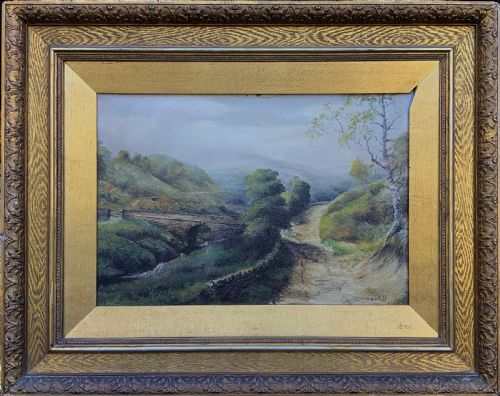
Green River Landscape Painting
Green river landscape painting captures tranquil rural waterways across the eighteenth, nineteenth and twentieth centuries.
Green River Landscape Painting
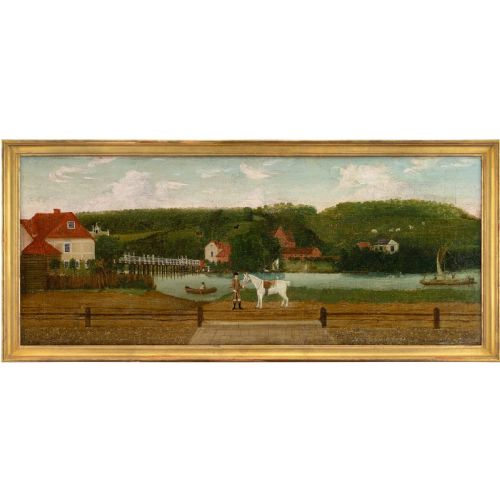
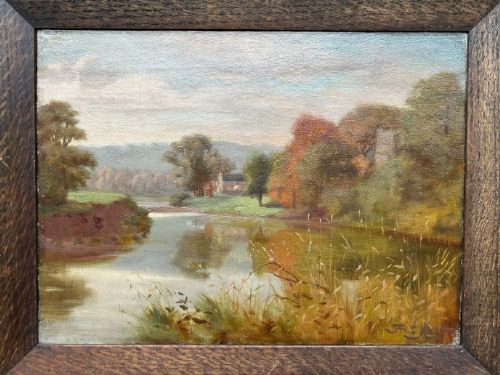
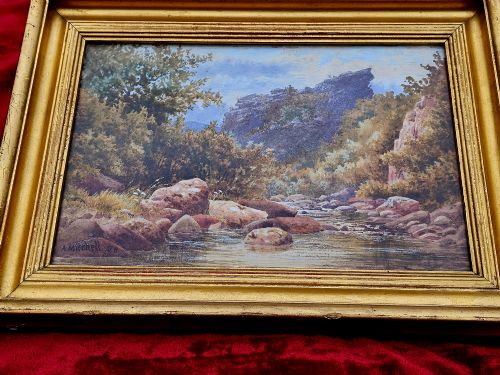
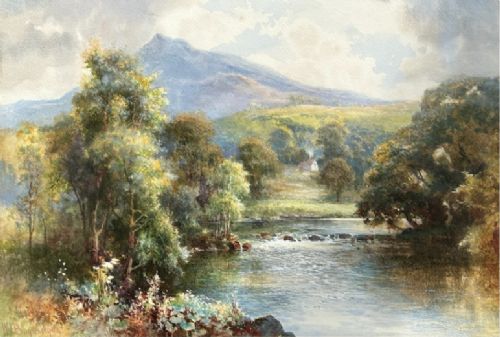
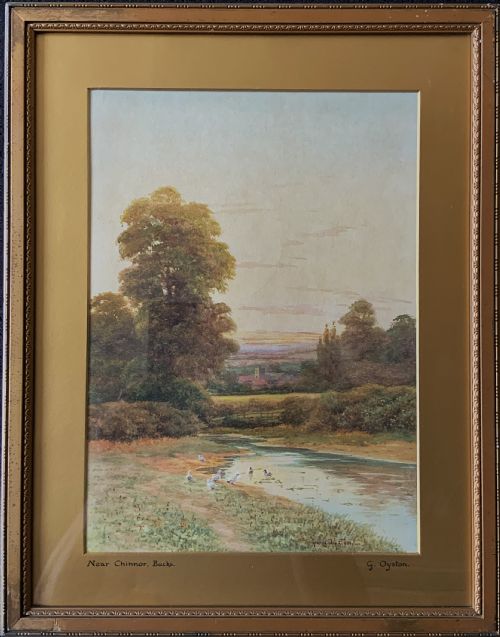
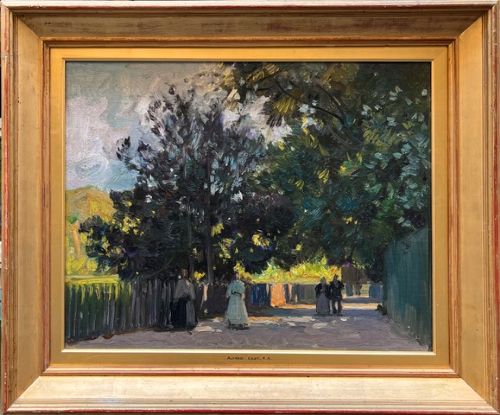
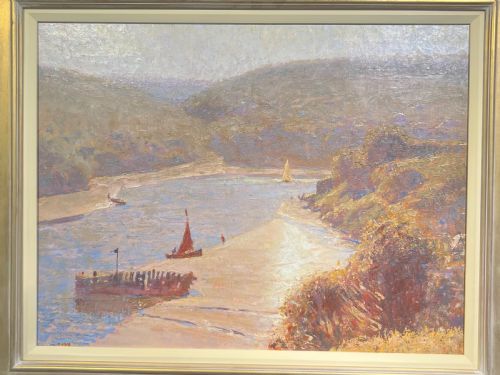
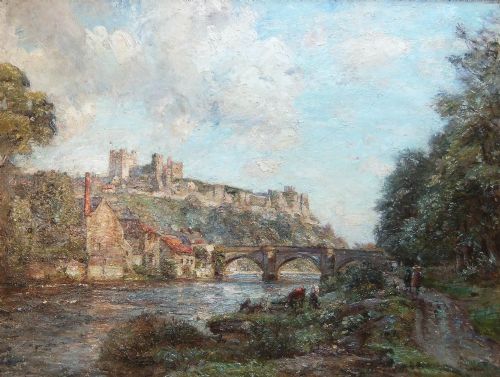
A green river landscape painting depicts natural waterways, riverbanks and verdant valleys, originating from British, French and Flemish traditions. These works span the eighteenth century through to the mid-twentieth century, capturing rural scenes in oil and watercolour.
The most common examples encountered on this page date from the Victorian and Edwardian periods, often depicting English rivers, Welsh streams and French rural views. Artists recorded these scenes using oil on canvas, wood panels and paper.
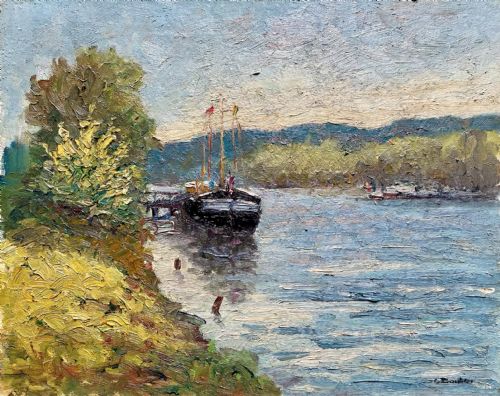
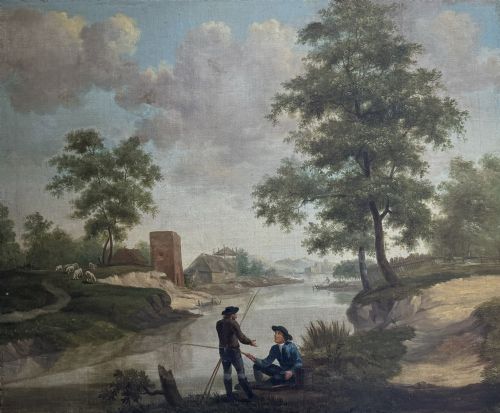
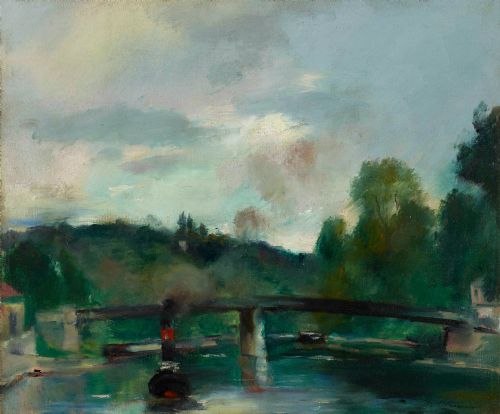
Compositions frequently incorporate figures fishing, walking paths or bridges crossing slow-moving water surrounded by lush foliage. These paintings reflect shifts from traditional academic styles toward impressionist and post-impressionist handling.
How they were made
Painters worked primarily with oil paint on stretched canvas or wooden panels, whilst others applied watercolour pigments to paper. Canvases were occasionally laid onto board in later conservation treatments.
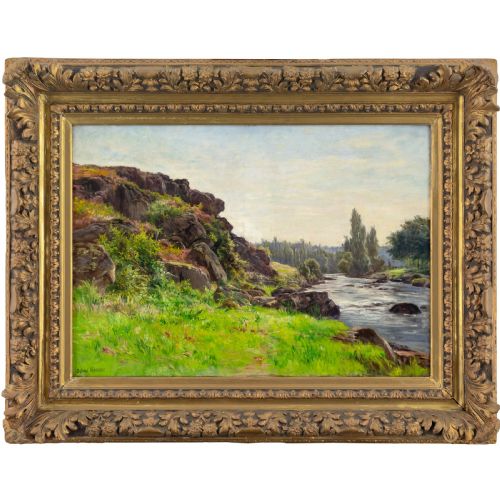
Frames fashioned from giltwood and ornamented with gesso frequently accompany these works, complementing the palette of the canvas. Pigments were built up using both thin glazes and heavier impasto techniques.
Listings feature works executed in oil on canvas, oil on wood panel, and watercolour on paper across various nineteenth and twentieth-century schools.
What varies in quality
The strength of the composition and the dexterity of brushwork separate individual works, distinguishing academic precision from looser impressionist interpretations. Handling of natural light upon water and foliage demonstrates the painter's capability.
Condition of the support material, whether canvas, wood panel or paper, influences the integrity of the piece. The retention of original framing elements, such as period giltwood and gesso mouldings, adds context to the artwork.
George Graham·Alfred Young Nutt·Frederick Marriott·William Joseph Boyes·Gabriel Mathieu·Henri Ottmann·George Oyston·Sir Alfred East·Cecil Allan Mould·Herbert Royle·Paul Desire Trouillebert·E Brown·Henry H Parker·Sydney Yates Johnson·John Horace Hooper·William George Tennick·Hubert Wellington·Honore Cavaroc·Archibald Kay·Henri Jaques Delpy·Sir David Murray·Mario Pinetti·Carl Johan Fahlcrantz·Henry John Kinnaird·Alfred Augustus Glendening Jnr
The Green River Landscape Painting Glossary
- Impasto
- Paint applied thickly to a canvas or panel, standing visibly above the surface. This technique allows brush or palette knife marks to catch the light.
- Gesso
- A plaster-like mixture applied to wood panels or frame mouldings to provide a smooth surface for gilding and painting. It creates a rigid base for decorative work.
- Giltwood
- Timber carved and coated with gold leaf or metallic powder, commonly utilised for traditional picture frames. It provides a reflective border around the artwork.
- Barbizon School
- A nineteenth-century French movement focused on realistic landscape painting en plein air. Artists sought to capture natural light and unidealised rural scenery.
- Watercolour
- Pigments suspended in a water-soluble vehicle, typically painted on paper. This medium relies on the white of the paper to show through translucent washes.
Green River Landscape Painting: Frequently Asked Questions
Where were these river scenes usually painted?
Artists typically painted along navigable rivers, streams and rural backwaters in Britain and France. Locations frequently include the Thames, Welsh valleys and French countryside settings.
Many painters worked directly outdoors to capture natural lighting conditions along the waterbanks.
How do I identify the period of a landscape?
Period identification relies upon stylistic clues, framing materials and recorded biographical dates of the artist. Victorian works often show meticulous detail, whereas mid-century examples lean towards impressionist brushwork.
Canvas stamps, handwritten inscriptions on the reverse and stretcher construction also offer chronological indicators.
Can I hang these paintings in direct sunlight?
Direct sunlight damages oil and watercolour pigments, causing fading and degradation over time. Paper supports are particularly sensitive to ultraviolet exposure.
Positioning works away from intense natural light preserves the integrity of both the paint and the original backing materials.
What is the difference between canvas and panel works?
Canvas paintings utilise woven fabric stretched across a wooden frame, providing slight flexibility to the painted surface. Wood panels offer a rigid, stable support that resists punctures.
Both supports were widely utilised across the nineteenth and twentieth centuries depending on the artist's preference.