

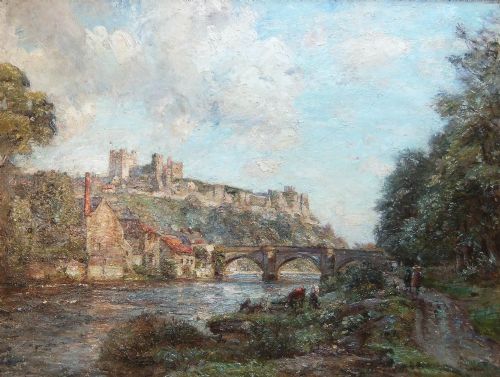


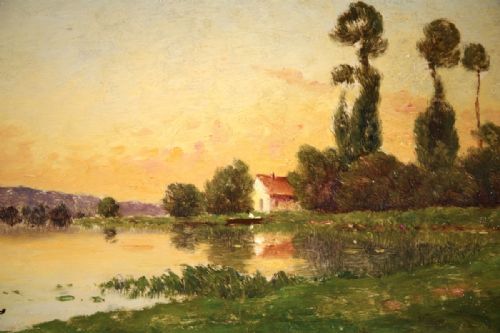


Impressionist River Scene
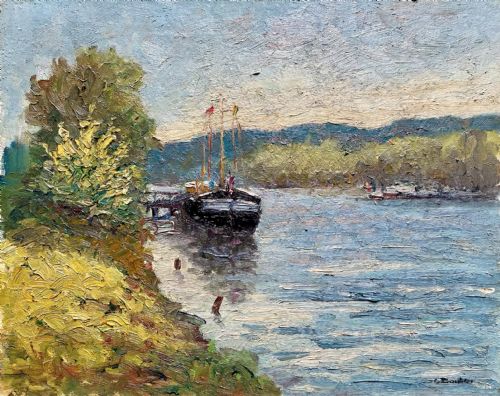
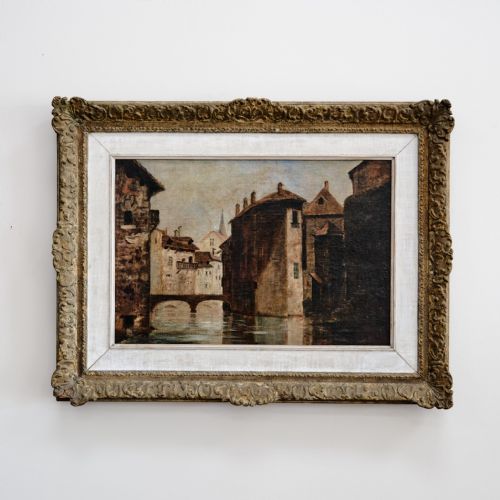
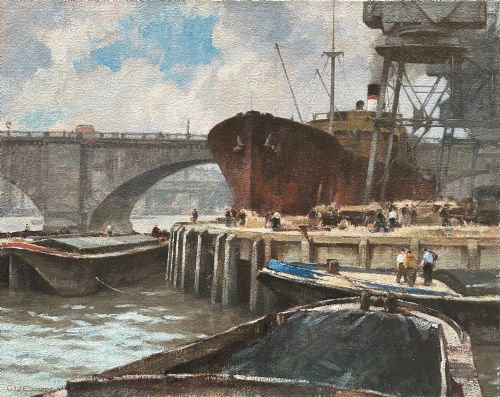
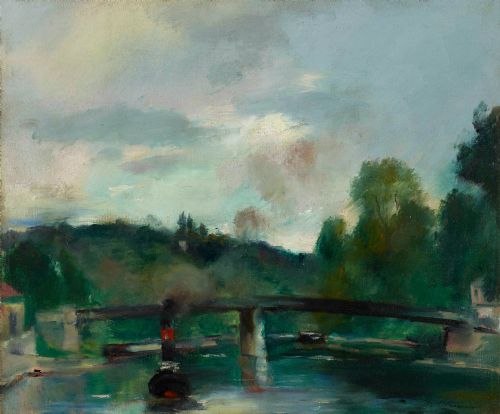
An impressionist river scene captures light on water through loose brushwork, bringing the quiet movement of a nineteenth or twentieth-century waterway directly into a room.
Impressionist River Scene
An impressionist river scene represents waterways, canals, and riverbanks painted in open-air settings across the nineteenth and twentieth centuries. The selection includes British, French, Dutch, and Flemish interpretations rendered primarily as oil paintings on canvas or wood panel, alongside occasional watercolours and pastels.
Buyers frequently encounter works depicting notable European waterways such as the Seine or the Thames, as well as pastoral rural riversides. These pieces span from Victorian academic realism shifting towards looser brushwork through to mid-century impressionism and post-impressionism.
How They Were Made
Artists typically applied oil paint directly onto stretched canvas or prepared wood panels, often working plein air to capture transient atmospheric conditions. Support materials include gesso grounds applied to wood or canvas to stabilise the surface before painting.
Brushwork ranges from smooth blended tones to thick impasto application that creates physical texture across the water and foliage. Painters utilised varied strokes to register the play of light on ripples, bridges, and moored boats.
The listings span periods from the nineteenth century through the nineteen-sixties, utilising canvas, wood, oil paint, and gesso.
What Varies in Quality
Quality rests upon the artist's handling of natural light and tonal harmony within the water and surrounding atmosphere. Superior works achieve a convincing sense of depth and movement through confident, economical brushwork rather than laboured detail.
The distinction between standard decorative pieces and finer works lies in the subtlety of the colour palette and the compositional balance of riverbanks, architecture, and sky. The vigour of the application determines whether a landscape feels immediate or static.
George Graham·Henri Ottmann·Herbert Royle·Florence Adelina Hess·Hubert Wellington·Honore Cavaroc·Archibald Kay·Henri Jaques Delpy·Arthur Herbert Rigg·Ron Folland·David Watts·William Grant Murray·Berthe des Clayes·Armand Guillaumin·William Tatton Winter·Edmond Defonte·Robert Lesley Howey·Henry Sykes·Alois Arnegger·Franz Reder-Broili·George F. Wetherbee
The Impressionist River Scene Glossary
- Impasto
- Paint applied thickly to a canvas or panel, standing out in relief from the surface. This technique allows the artist to build visible texture that catches the light.
- Plein air
- Painting outdoors in direct natural light rather than inside a studio. Artists adopted this method to observe the shifting colours of water and sky accurately.
- Panel
- A rigid support for a painting, commonly made of wood. Panels provide a firm foundation that prevents the flexing associated with stretched canvas.
- Post-Impressionism
- An art movement extending impressionism while rejecting its limitations, favouring more symbolic colours and heavier outlines. Artists explored structural forms rather than purely optical effects.
Impressionist River Scene: Frequently Asked Questions
Are these paintings original works?
The selection consists of original oil paintings, watercolours, and pastels created by individual artists rather than mechanical reproductions.
Each piece reflects the distinct hand of its maker through unique brushwork and pigment choices.
How do I date an impressionist river scene?
Dating relies on stylistic clues, the framing materials, and the canvas or wood panel preparation standard to particular decades.
Signatures, biographical records of the artist, and inscribed titles on the reverse also provide precise chronological markers.
How should I frame an antique oil painting?
Traditional gilt wood frames complement the palette of nineteenth and twentieth-century landscapes without overwhelming the canvas.
Ensuring proper ventilation behind the glass or keeping the canvas unglazed prevents moisture accumulation.
What is the difference between British and French impressionism?
British works often retain a stronger structural adherence to landscape traditions, while French pieces frequently push towards lighter, brighter optical palettes.
Both schools focus on outdoor lighting and water reflections but handle the transition of pigment differently.