


Green River Landscape Art
Green river landscape art brings the quiet pull of flowing water and open banks directly onto the wall through the rich medium of paint.
Green River Landscape Art
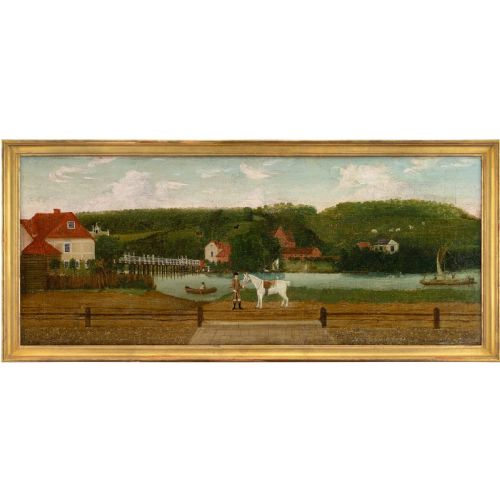
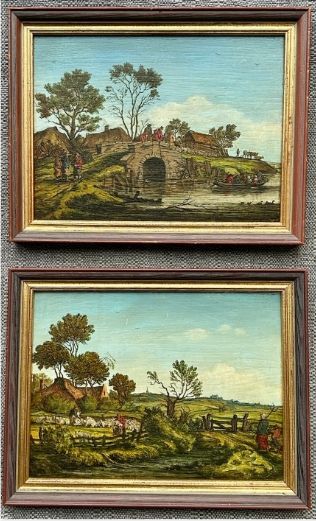
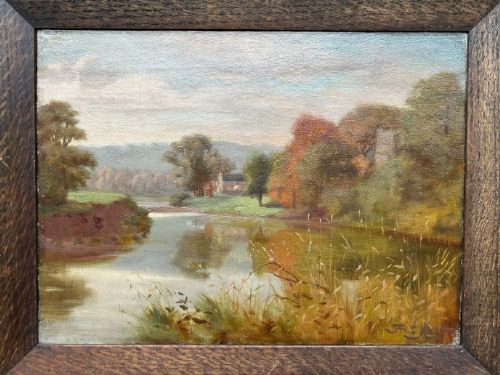
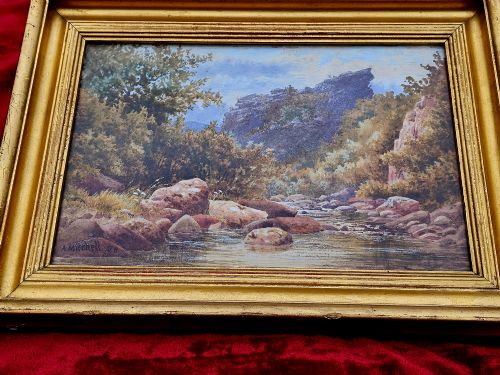
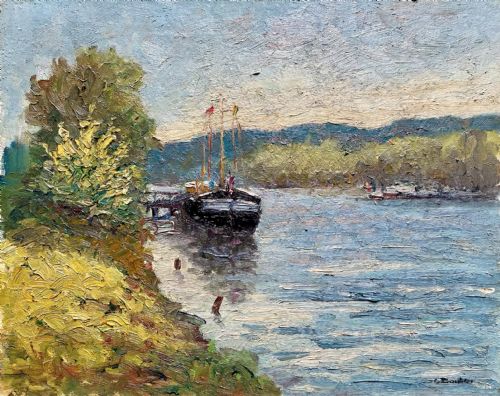
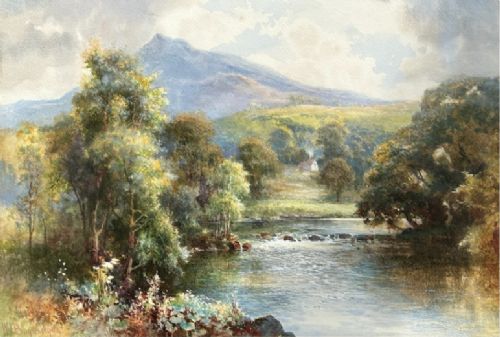
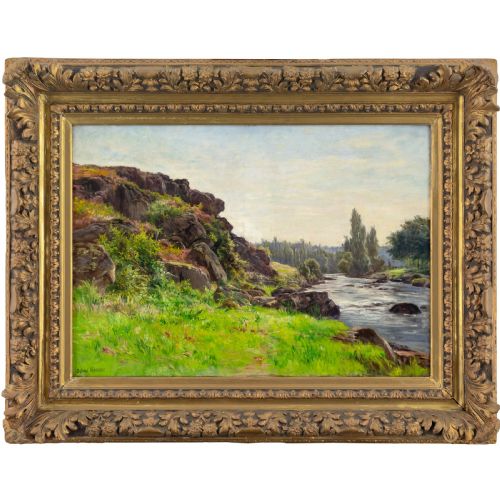
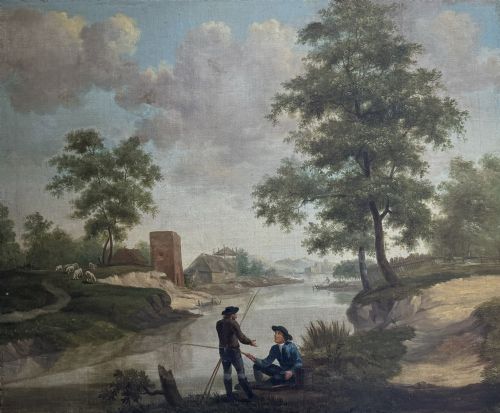
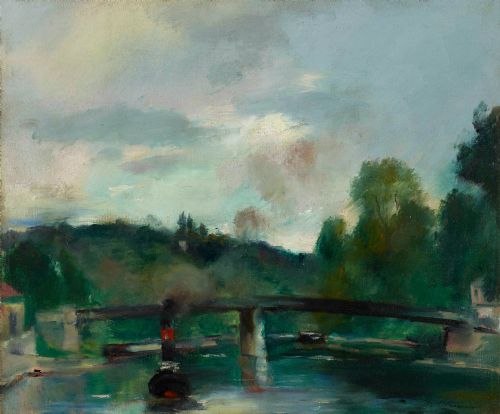
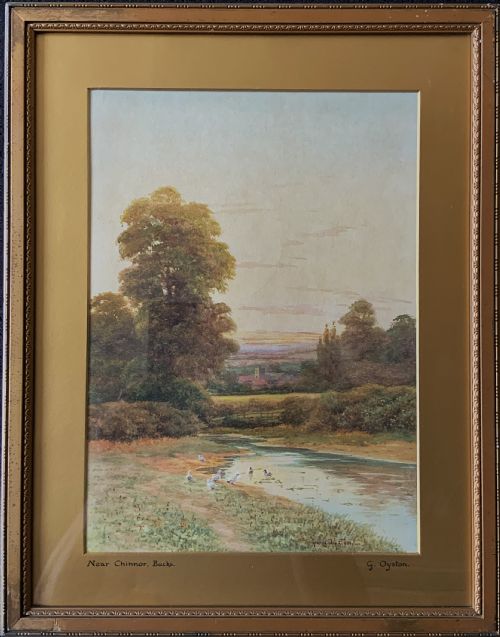
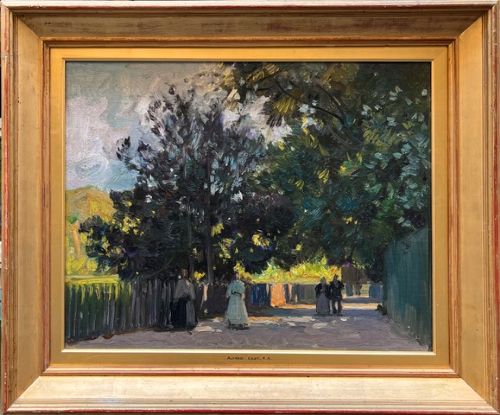
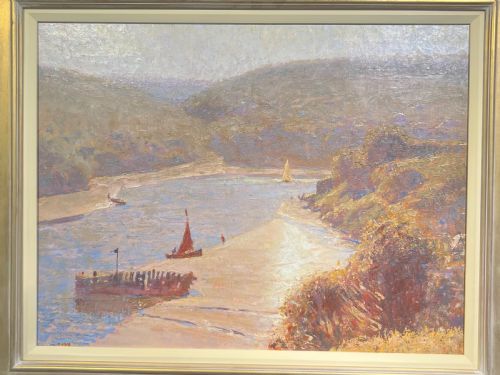
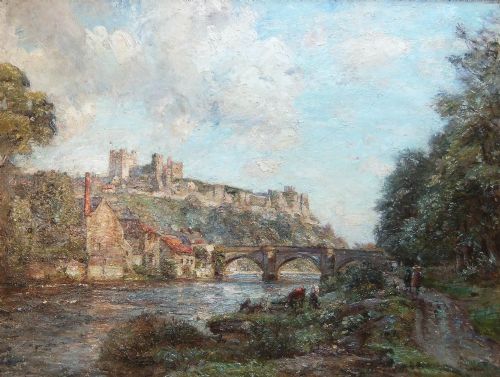
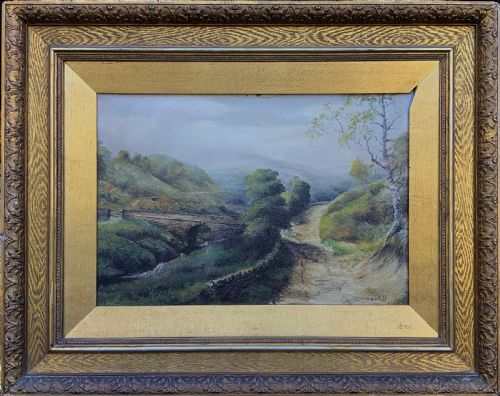
Green river landscape art encompasses painted scenes of waterways, banks, and pastoral views created across the nineteenth and twentieth centuries. When searching for green river landscape art, buyers most frequently encounter nineteenth-century and early twentieth-century oil paintings and watercolours on canvas, paper, or wood panels. These works capture rivers and streams through the lenses of British Impressionism, Victorian naturalism, and the Barbizon School.
The selections span British, French, and Flemish scenes, ranging from quiet Welsh rivers to rural English backwaters and French country streams. Painters render these views with varying degrees of impressionistic freedom, some applying heavy impasto while others use delicate watercolour washes. The subject matter consistently centres on natural bodies of water framed by foliage, meadows, and trees.
What varies in quality
The distinction between standard and superior pieces rests upon the confidence of the brushwork and the artist's command of light and atmosphere. Stronger works demonstrate a deliberate handling of tone along the water and banks, creating spatial depth rather than flat fields of colour.
The integration of the support and framing also dictates the overall standard, with original giltwood and gesso frames complementing the painted surface. Provenance and the artist's established exhibition record elevate certain pieces above anonymous school works.
Artists working in Britain, France, and Flanders are represented through oil paintings, watercolours, and heavy gouache studies.
George Graham·Alfred Young Nutt·Frederick Marriott·William Joseph Boyes·Gabriel Mathieu·Henri Ottmann·George Oyston·Sir Alfred East·Herbert Royle·Paul Désiré Trouillebert·Henry H Parker·Sydney Yates Johnson·John Horace Hooper·William George Tennick·Hubert Wellington·Honore Cavaroc·Archibald Kay·Henri Jaques Delpy·Sir David Murray·Mario Pinetti·Carl Johan Fahlcrantz·Henry John Kinnaird·Alfred Augustus Glendening Jnr·David Mead
The Green River Landscape Art Glossary
- Impasto
- Paint applied thickly to a canvas or panel, leaving visible brush or palette knife marks that stand proud of the surface. This technique adds tactile three-dimensional quality to foliage and water.
- Gesso
- A plaster-like mixture applied to wood or canvas as a base for painting, or moulded onto wooden frames to create decorative relief details. It provides a smooth, stable ground for gilding and ornamentation.
- Barbizon School
- A nineteenth-century French movement focused on direct observation of nature, plein-air painting, and realistic landscape scenery. Artists in this circle heavily influenced subsequent impressionist treatments of rivers and fields.
- Giltwood
- Wood that has been coated with a thin layer of gold leaf or gold paint, commonly used for nineteenth-century picture frames. It provides a warm, reflective border that isolates and enhances the artwork.
Green River Landscape Art: Frequently Asked Questions
What periods do these paintings come from?
The available selection spans the nineteenth and twentieth centuries, encompassing Victorian works, Edwardian pieces, and mid-century modern interpretations.
Earlier nineteenth-century examples often reflect traditional British and Flemish naturalism, while later twentieth-century works lean towards impressionist and post-impressionist brushwork.
How should I care for an oil painting on wood panel?
Oil paintings on wood panels require stable indoor humidity and temperature to prevent the wood from warping or cracking over time. Keep them away from direct sunlight and strong heat sources.
Dust the surface gently with a soft, dry brush and avoid applying any liquid cleaners or commercial restoration products to the paint.
What is the difference between canvas and panel works?
Canvas works are painted on flexible woven fabric stretched over a wooden frame, which can yield slightly to pressure and display distinct textural weave. Wood panels provide a rigid, solid support that allowed artists to execute finer details without canvas flex.
Both supports were widely utilised across the nineteenth and twentieth centuries depending on the artist's preference.
How do I identify a watercolour from an oil painting?
Watercolours are painted on paper, often showing the texture of the sheet beneath translucent washes of pigment, and require glass framing for protection. Oil paintings use thick binders on canvas or wood, presenting a textured or glossy finish that does not require glass.
Looking closely at the surface will immediately reveal whether the medium is water-based on paper or oil-based on a heavy support.