



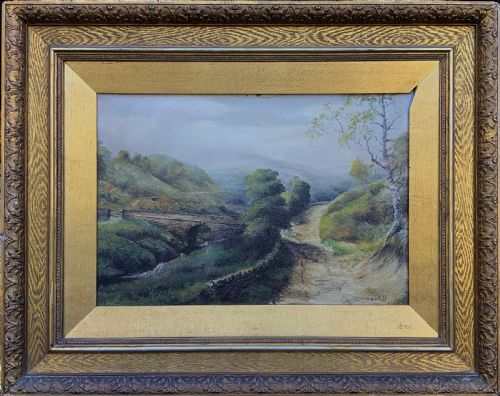
Original River Scene Artwork
Original river scene artwork captures pastoral waterways and bustling bridges through oil paint and watercolour across the nineteenth and twentieth centuries.
Original River Scene Artwork
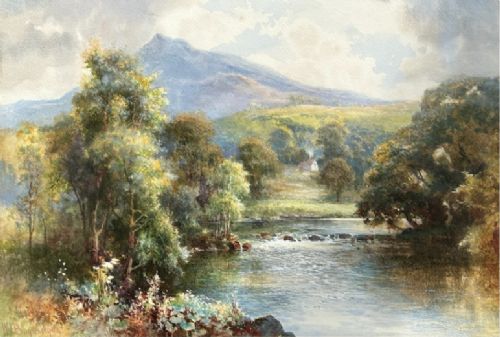
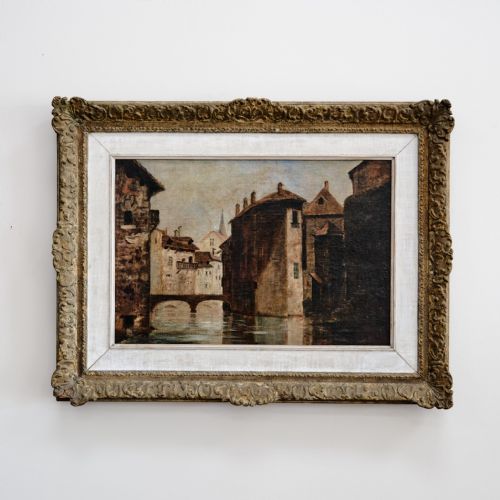
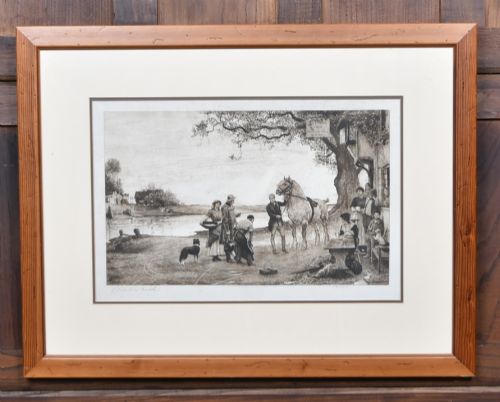
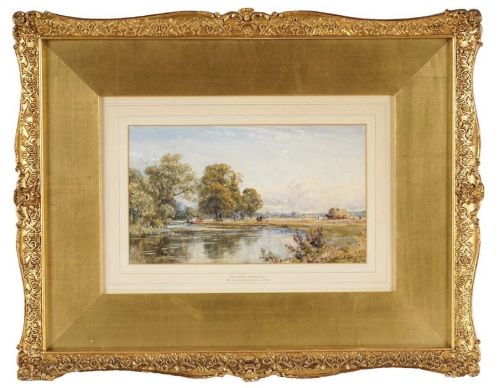
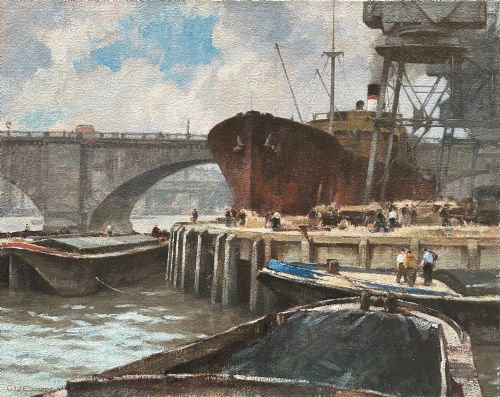
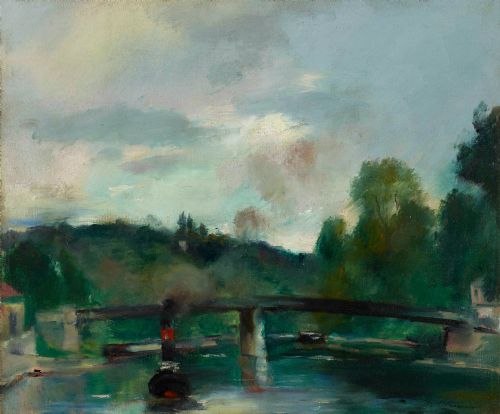
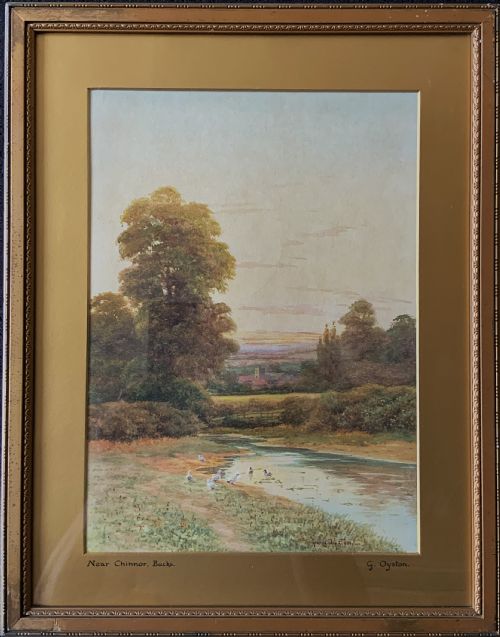
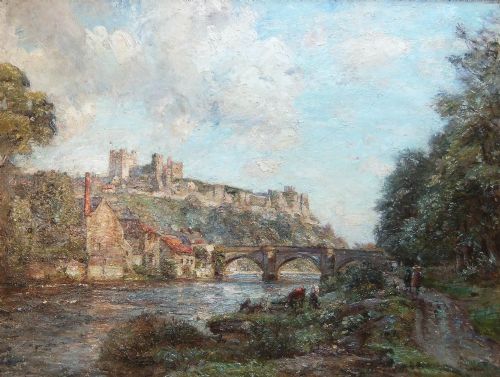
Original river scene artwork encompasses framed paintings, watercolours, etchings, and drawings depicting banks, bridges, and waterways. The pieces range from Victorian pastoral watercolours to mid-century French post-impressionist canvases and 20th-century British landscapes.
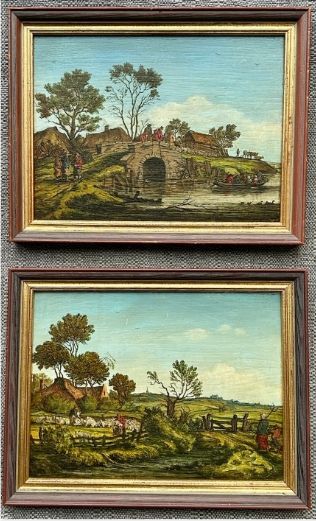
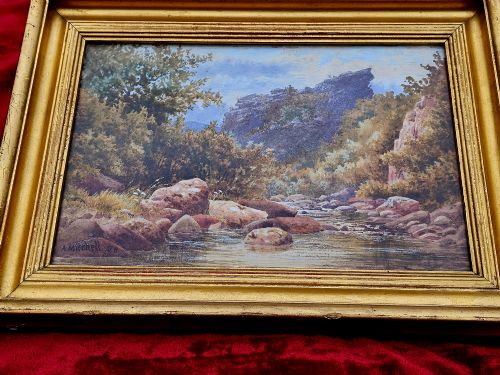
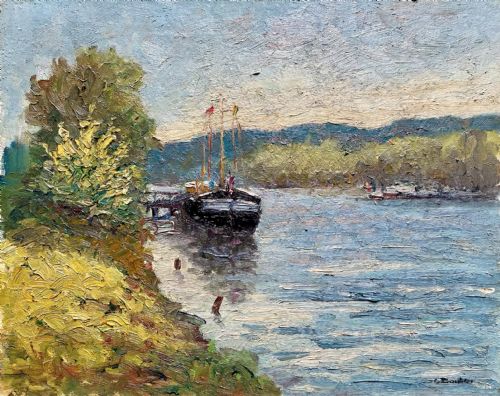
Buyers encounter Victorian scenes of the Thames, Welsh river valleys, Flemish wood panels, and French impressionist views of the Seine. Formats span from intimate panel paintings to large panoramic canvases signed by known artists or originating from British and continental schools.
Materials and Techniques
Painters utilised oil paint on canvas, wood panels, and board, applying pigments with varied brushwork from smooth academic finishes to thick impasto. Watercolours were worked on paper, often capturing light and movement along riverbanks through transparent washes and charcoal or ink underdrawing.
Supports include stretched canvas, wooden boards, and heavy paper, frequently housed behind glass or within gilt frames. Etchings and drawings on paper utilise ink and charcoal to map topographical details along embankments and bridges.
Object types on this page include framed oil paintings, watercolours, etchings, and drawings of British and European rivers.
Assessing Quality and Execution
Execution of light, atmospheric perspective, and water reflection determines the distinction between standard topographical recording and masterly composition. Skilled hands render the movement of currents and the play of sunset or autumn light with confidence.
The integration of brushwork, pigment stability, and the preservation of the original canvas or paper surface govern the condition and aesthetic integrity of each piece. Framed works retain character when the framing complements the period of the painting.
Kenneth Cozens·Alfred Young Nutt·Frederick Marriott·William Joseph Boyes·Henry H Parker·George Oyston·Herbert Royle·Florence Adelina Hess·Ron Folland
The Original River Scene Artwork Glossary
- Impasto
- Paint applied thickly to a canvas or panel, standing visibly above the surface. This technique creates texture and catches light to emphasise water or foliage.
- Watercolour
- A painting method where fine pigment is suspended in a water-soluble binder on paper. It allows translucent washes that capture luminous skies and river surfaces.
- Panel painting
- Artwork executed on a flat piece of wood rather than stretched canvas. Wooden panels provide a rigid, stable surface frequently utilised in earlier and Flemish schools.
- Etchings
- Printmaking technique where lines are bitten into a metal plate with acid before being inked and pressed onto paper. This method produces fine, detailed monochromatic lines.
- Post-Impressionism
- An art movement extending beyond impressionism to emphasise symbolic motifs and expressive brushwork. Artists explore structured compositions and heightened colour palettes.
Original River Scene Artwork: Frequently Asked Questions
What periods do these river scenes cover?
The works span from the early nineteenth century through the Victorian and Edwardian eras into the mid-twentieth century, including post-impressionist examples from the nineteen-sixties.
Styles transition from detailed pastoral realism and British impressionism to continental post-impressionist interpretations of waterways and bridges.
How do I care for antique watercolours?
Watercolour paintings on paper require protection from direct sunlight to prevent fading of pigments and yellowing of the paper support.
Keep them away from excessive moisture and maintain stable indoor humidity levels behind protective glass framing.
What is the difference between oil on canvas and oil on panel?
Oil on canvas involves stretched fabric primed to receive oil paint, offering slight give and a textured weave beneath the brushwork.
Oil on panel utilises a rigid wooden board or wood panel, providing a completely firm support that resists canvas slackening over decades.
How do I identify a Victorian river painting?
Victorian river scenes often feature narrative elements such as figures fishing, harvesting by the river, or historical bridges rendered in naturalistic light.
Signatures, framing styles, and the mellowed tonality of the oil or watercolour pigments further point to nineteenth-century execution.